Federal dollars aid push in composting, environmental programs
Published 10:30 pm Monday, November 20, 2023
Look for composting to take on a higher profile in the world of environmental programs, as both the Central Council of the Tlingit and Haida Indian Tribes of Alaska and the City and Borough of Juneau move forward with efforts to divert millions of pounds of food waste from landfills.
The $22.4 million in Solid Waste Infrastructure for Recycling (SWIFR) grants for Alaska announced last week include $1.5 million earmarked for Tlingit and Haida. U.S. Sens. Lisa Murkowski and Dan Sullivan, both Alaska Republicans, sent out a joint statement on Friday about the latest money coming from the bipartisan infrastructure bill Build Back Better (BBB).
Tlingit and Haida will use the funds to establish a more broad tribal network and regional solid waste management hub for Southeast Alaska, expand its composting and food waste reduction program, and bolster its recycling program.
“This is just another step in building our sovereignty while enhancing our programs and building good community relationships within the region,” said Raymond Paddock III, environmental manager for Tlingit and Haida.
“We have a lot of great people working behind us that have the knowledge and the know-how,” said Paddock. ”Instead of reinventing the wheel — if we’ve got the wheel — let’s just use it.”
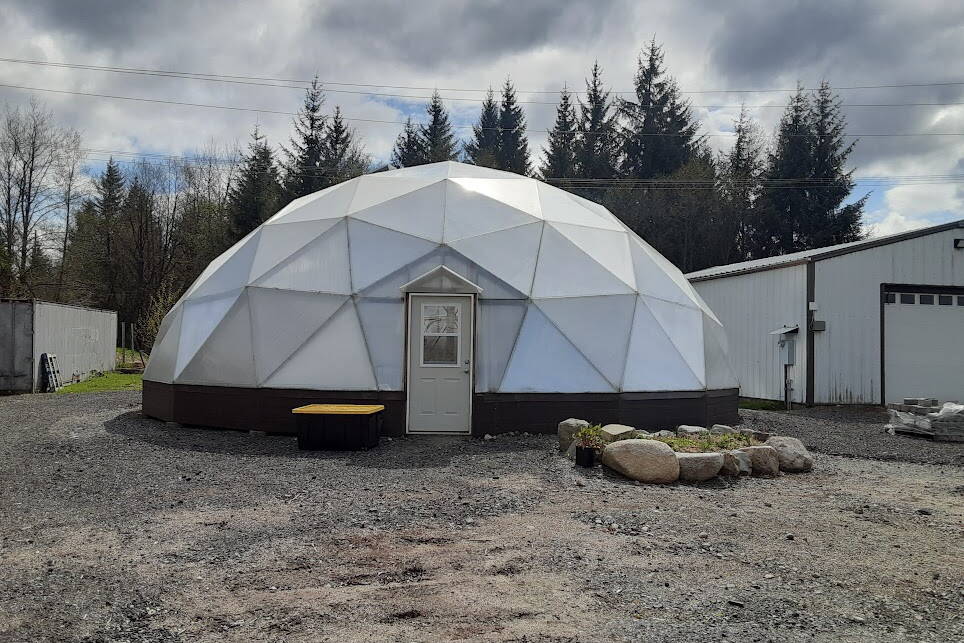
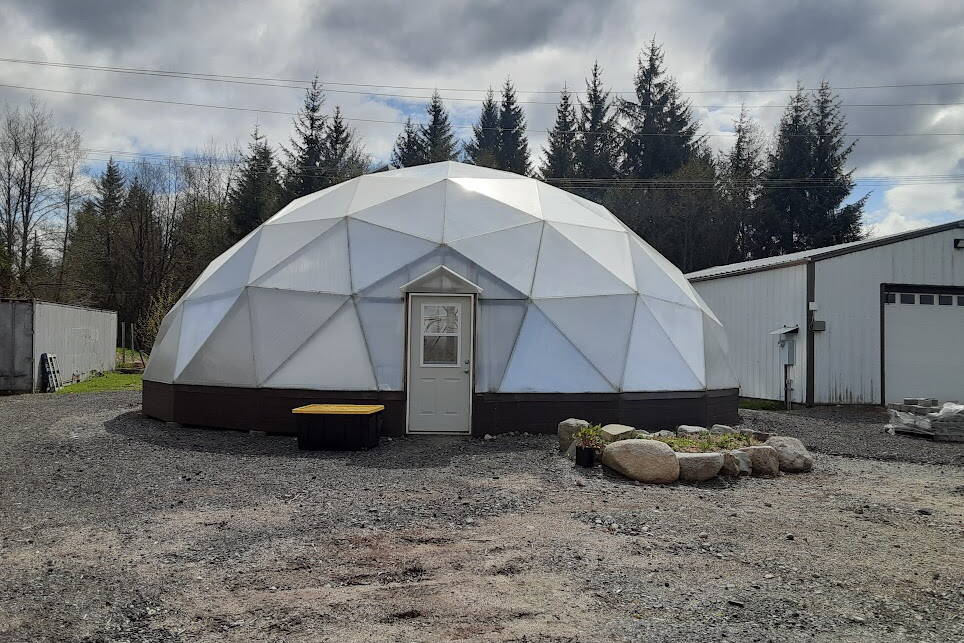
Cer Scott, environmental coordinator with Tlingit and Haida, said the SWIFR grants broadly encompass solid waste issues and recycling while linking several projects already in process for Tlingit and Haida. One is the dome-shaped greenhouse known as Taay Hít, located behind the Edward K. Thomas Building in Juneau.
Another is the two-year Composting and Food Waste Reduction (CFWR) cooperative agreement, itself the recipient of a $300,000 grant this year from the USDA.
The idea of CFWR is to increase access to compost for agricultural producers and improve soil quality. Encouraging innovative waste management plans, particularly if they can be used in numerous places, will meaningfully reduce and divert food waste from landfills, according to a description of Tlingit and Haida’s solid waste program.
“The SWIFR grant is what’s going to kind of tie them all together,” said Scott, noting the projects are connected. “The greenhouse produces food products and composting can be used to support the greenhouse.”
“Essentially, if there’s compost or organic waste issues in these surrounding communities, our plan is to hopefully get them to properly set up a composting system right in their own backyard, or link them to some operations that are already there,” said Scott. “It’s just further reducing the waste that’s going into their landfills.”
While the CBJ program is separate from Tlingit and Haida’s, they work together, said Dianna Robinson, an environmental project specialist with the city’s Department of Engineering and Public Works. “These are similar efforts, so we try to keep in touch,” she said, noting they had a meeting on Monday.
CBJ was approved for $2.5 million in BBB funding for the design and construction of a commercial-scale compost facility last December, and is getting to the next stage in its process, Robinson said.
The Environmental Protection Agency, Region 10 is expected to open the comment period for environmental review of the compost facility in the next week or two. That is part of the process required under the National Environmental Policy Act (NEPA).
Robinson said it is essential to come up with longer-range solutions. The general time frame for Capitol Disposal Landfill in the Lemon Creek area is generally quoted in-house at CBJ as 20 years, but nobody knows for sure. The Alaska Department of Environmental Conservation uses a range of between 17 and 26 years for the landfill to remain operational.
“These projects have the potential to lengthen the lifespan of landfills, which gives us more time to plan for the future.” Big picture, that means thinking about what Juneau will need in terms of landfills, or alternatives, in the second half of the century. “These projects are big and expensive and take a lot of time and effort,” said Robinson. “On top of that is the environmental impact of finding better uses for the waste stream.”
The $22.4 million in funding announced Friday will support Alaska’s solid waste infrastructure for recycling, trash processing and solid waste collection.
“This multi-year program will build out efficient waste management programs and prevent pollution, helping ensure that our lands and waters are some of the most pristine in the world,” Sullivan said in the prepared statement. “I often say that Alaska is a resource rich, infrastructure poor state, and this extends to waste and trash management.”
Sullivan has a special claim to the effort. These BBB grants are authorized through the Save Our Seas 2.0 Act, which he co-sponsored with Sheldon Whitehouse (D-RI).
Signed into law in 2020, Save Our Seas 2.0 enhances federal domestic programs to address marine debris, supports international engagement to combat marine debris, and includes domestic infrastructure to prevent marine debris.
Murkowski, who has been credited for her effectiveness in ensuring Alaska was well-represented as a beneficiary of the monolithic infrastructure law that keeps on giving, noted the broad impact of the SWIFR money.
“[T]hese awards to communities and Tribal governments will help us build out waste management and processing systems across the state,” said Murkowski, in the same prepared release. ”Trash, and our ability to deal with it — while not a glamorous issue — is critical to everyone.”
“These funds will result in better waste processing by investing in recycling and composting infrastructure, waste collection, and more,” said Murkowski.
• Contact Meredith Jordan at meredith.jordan@juneauempire.com or (907) 615-3190.