
FAA adds two passes in Brooks Range to charts

The addition comes as part of a push by FAA for improved aviation safety in Alaska.

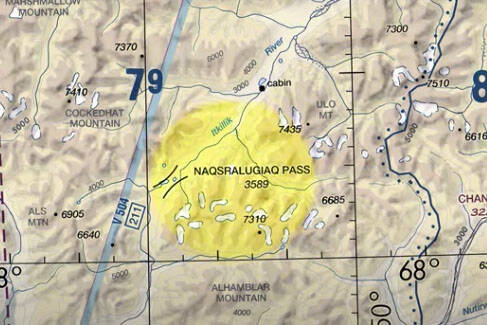
The Naqsralugiaq Pass in the Brooks Range is one of two passes added to FAA charts in a recent update after consulting with Alaskan aviators. (Courtesy photo / FAA)

The Naqsralugiaq Pass in the Brooks Range is one of two passes added to FAA charts in a recent update after consulting with Alaskan aviators. (Courtesy photo / FAA)

The Federal Aviation Administration, responding to aviators in Alaska, has added two new passes to its charts in the Brooks Range.

The Naqsralugiaq and Carter passes were added for fliers, improving access to the region for visual flight rules flying, said an FAA news release.

“For years, pilots used routes known primarily to local fliers to navigate these passes,” said FAA Administrator Steve Dickson in a news release. “Now, all pilots will have the critical terrain information they need to fly safely.”

The move comes as part of the FAA Alaska Safety Initiative, said Kiiva Williams, an FAA media relations specialist. The initiative, which was announced last October, identified five areas of improvement to focus on, one of which was improved charting of passes. There are more than 60 mountain passes charted in Alaska.

[Juneau man named All-American college rugby player]

“Naqsralugiaq Pass: that pass in particular is wider and lower than the commonly used pass on the charts in that in the area. Wider and lower is safer, generally,” said Andy McClure, a flight service specialist with the FAA who helped get the charts changed. “If we’re talking about VFR pilots, staying out of the clouds is important. Staying out of freezing weather is important. It gives pilots more options for staying out of the clouds and avoiding the weather. There’s more room to make a U-turn if necessary. All of that contributes to safer flying.”

The data on the passes was known to local pilots in many cases, McClure said, but perhaps not to those unfamiliar with Alaska’s vast and rugged ranges.

“The formal work group was in response to some pilots in Alaska noticing that some names of the charts that never get flown through, or that some passes were perhaps even better than the ones we were flying through,” McClure said. “It’s about finding out where people are actually flying because they’re telling us. Most pilots are not terribly shy about telling us what they want.”

The FAA also announced the installation of eight new automated weather observing systems across Alaska, primarily in the west of the state. The installation and upgrade of the AWOS stations was another of the five recommendations. Others include adapting existing programs for better safety and expanding some services to areas that currently don’t have the capability, the Empire reported previously.

“Adding these Brooks Range mountain passes is beneficial, especially to pilots not familiar with these areas,” said the Aircraft Owners and Pilots Association Alaska regional manager Tom George in the news release. “This is part of a larger joint industry/FAA effort to improve aviation safety by providing additional information on visual charts related to mountain passes. While currently focusing on Alaska, these processes will eventually extend to other mountainous parts of the country.”

• Contact reporter Michael S. Lockett at 757-621-1197 or mlockett@juneauempire.com.

More in News

The northern lights are seen from the North Douglas launch ramp late Monday, Jan. 19. A magnetic storm caused unusually bright northern lights Monday evening and into Tuesday morning. (Chloe Anderson/Juneau Empire)
Rare geomagnetic storm causes powerful aurora display in Juneau

The northern lights were on full display Monday evening.

teaser
Juneau activists ask Murkowski to take action against ICE

A small group of protesters attended a rally and discussion on Wednesday.

A female brown bear and her cub are pictured near Pack Creek on Admiralty Island on July 19, 2024. (Chloe Anderson for the Juneau Empire)
Pack Creek permits for bear viewing area available now

Visitors are welcome from April 1 to Sept. 30.

Cars pass down Egan Drive near the Fred Meyer intersection Thursday morning. (Clarise Larson / Juneau Empire file photo)
Safety changes planned for Fred Meyer intersection

DOTPF meeting set for Feb. 18 changes to Egan Drive and Yandukin intersection.

Herbert River and Herbert Glacier are pictured on Nov. 16, 2025. (Mari Kanagy / Juneau Empire)
Forest Service drops Herbert Glacier cabin plans, proposes trail reroute and scenic overlook instead

The Tongass National Forest has proposed shelving long-discussed plans to build a… Continue reading

A tsunami is not expected after a 4.4-magnitude earthquake northwest of Anchorage Wednesday, Feb. 4, 2026. (U.S. Geological Survey)
No tsunami expected after 4.4-magnitude earthquake in Alaska

U.S. Geological Survey says 179 people reported feeling the earthquake.

ORCA Adaptive Snowsports Program staff member Izzy Barnwell shows a man how to use the bi-ski. (SAIL courtesy photo)
Adaptive snow sports demo slides to Eaglecrest

Southeast Alaska Independent Living will be hosting Learn to Adapt Day on Feb. 21.

Cars drive aboard the Alaska Marine Highway System ferry Hubbard on June 25, 2023, in Haines. (Photo by James Brooks)
Alaska’s ferry system could run out of funding this summer due to ‘federal chaos problem’

A shift in state funding could help, but a big gap likely remains unless a key federal grant is issued.

Photo by James Brooks/Alaska Beacon
U.S. Sen. Dan Sullivan stands with acting Coast Guard Commandant Adm. Kevin Lunday during the after the commissioning ceremony for the Coast Guard icebreaker Storis on Sunday, Aug. 10, 2025, in Juneau, Alaska.
Coast Guard’s new Juneau base may not be complete until 2029, commandant says

Top Coast Guard officer says he is considering whether to base four new icebreakers in Alaska.

Most Read