
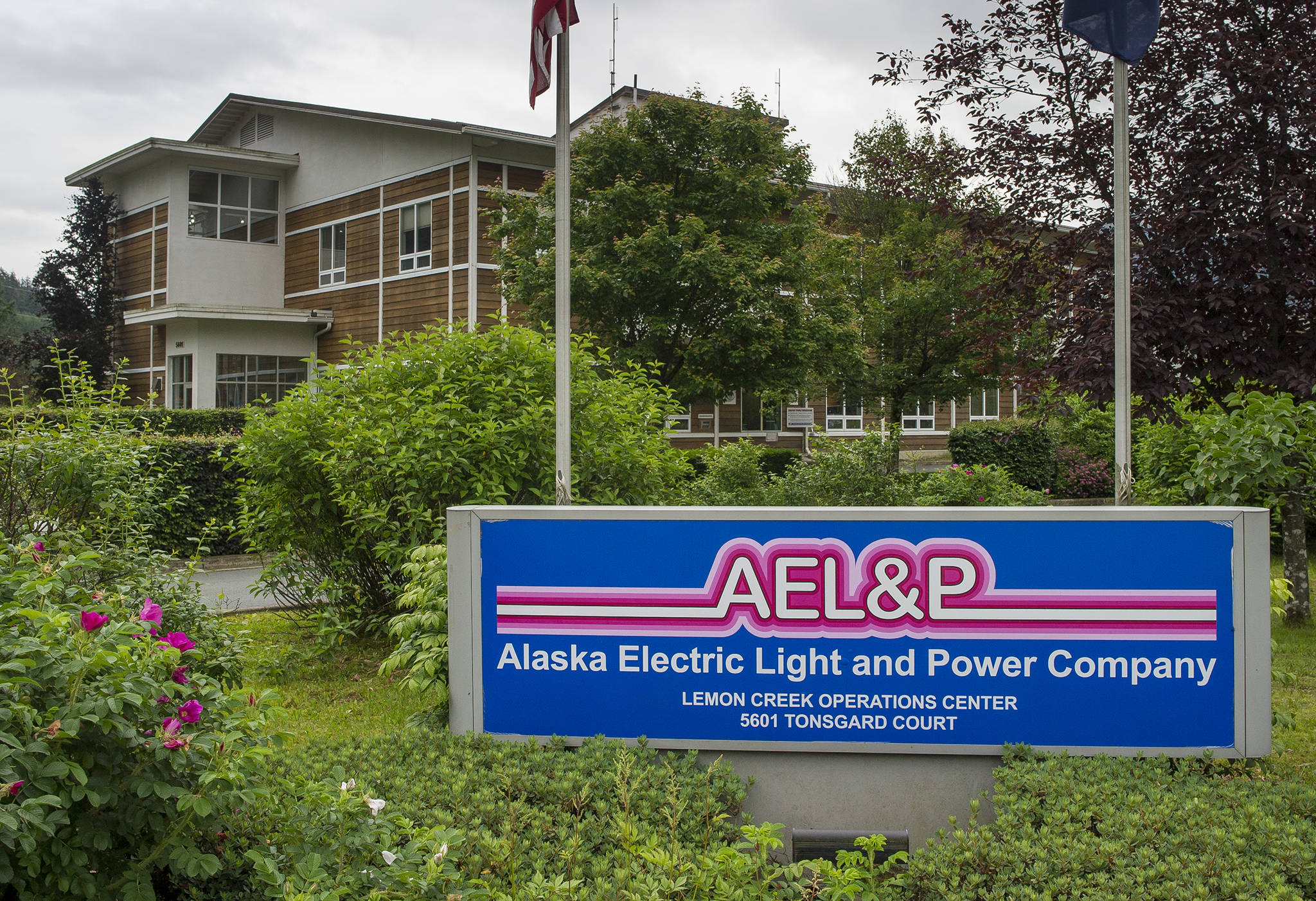
Last year’s dry summer is still affecting Juneau’s electric utility and its customers, according to a quarterly report filed last month.
Alaska Electric Light & Power (AEL&P) doesn’t have the surplus energy that it usually has, Chief Financial Officer Brandon Cullum wrote in a quarterly report to the Regulatory Commission of Alaska, due to the dry conditions in the region for the past year. As a result, so-called “interruptible” customers will continue to be without power from the company, Cullum wrote.
Years ago, AEL&P entered into an agreement with Greens Creek Mine, Princess Cruise Lines and customers with multiple heating systems to have them buy energy when surplus water is available. AEL&P refers to these customers as “interruptible” because the company can disconnect them when water levels are low, according to an AEL&P press release in December.
The money that these customers pay for surplus energy is used to offset the cost of electricity for other customers, the release states. With reservoir levels lower than usual this year, AEL&P isn’t producing enough extra power to sell it to these customers.
[AEL&P sale officially dead]
This is the first time in five years that AEL&P has fully interrupted the interruptible customers. Over those five years, this arrangement has reduced the average electricity customer’s monthly bill by $29.50, according to AEL&P. With these interruptible customers now not paying for surplus energy, average electricity customers now are bearing a cost instead of getting a credit.
In December, AEL&P announced a temporary rate increase, which is about $13.62 per month for average electricity customers until June. This temporary rate change remains in effect, AEL&P Vice President and Director of Consumer Affairs Deb Driscoll said in an email Saturday. This rate change is known as a Cost of Power Adjustment (COPA), and Driscoll said customers will likely continue to pay a little extra on every bill even after the current COPA expires at the end of March.
This is all happening because of the dry summer, fall and winter that Southeast Alaska is experiencing, AEL&P officials have explained. The Snettisham Hydroelectric Project is AEL&P’s main source of power, Cullum wrote to the RCA, and Snettisham has gotten much lower rainfall totals since last year.
Snettisham normally gets about 172 inches of rainfall per water year (from October to October), Cullum wrote, but Snettisham only got about 136 inches of rainfall from October 2017 to October 2018. In the current water year to date, he wrote, Snettisham has gotten about 79 inches of rainfall compared to the usual 90 inches of rainfall that usually comes from October to the end of February.
In a follow-up email to the RCA, Cullum wrote that AEL&P’s system is working as intended.
“The system is designed so that in years with normal precipitation our interruptible customers share the cost of our system with our firm customers, reducing the cost burden to firm customers,” Cullum wrote. “In times with extended periods of below average precipitation — like the one we are in now — our system is dedicated to our firm customers.”
Others aren’t so sure about this system working well.
The sole public comment on the RCA filing is from Juneau resident Danielle Redmond, who argued that AEL&P should be finding new sources of power instead of being so dependent on Snettisham. Redmond, from local nonprofit Renewable Juneau, pointed out in her letter to the RCA that these interruptible customers are now using diesel to fuel their operations.
[Dunleavy dissolves climate change action team]
Most of all, Redmond was critical of the fact that Cullum requested that there be no public notice about this report.
“The public needs more information on this issue, not less,” Redmond wrote.
Driscoll said the request for not having public notice is normal when there are regular quarterly updates on interruptible customers (called dual fuel filings). Cullum’s report to the RCA states that only 18 interruptible customers are affected.
“We always ask for a waiver of public notice on the dual fuel filings because it only affects interruptible dual fuel customers,” Driscoll said via email. “This is consistent with dual fuel filings to the RCA over the years.”
• Contact reporter Alex McCarthy at amccarthy@juneauempire.com. Follow him on Twitter at @akmccarthy.
