
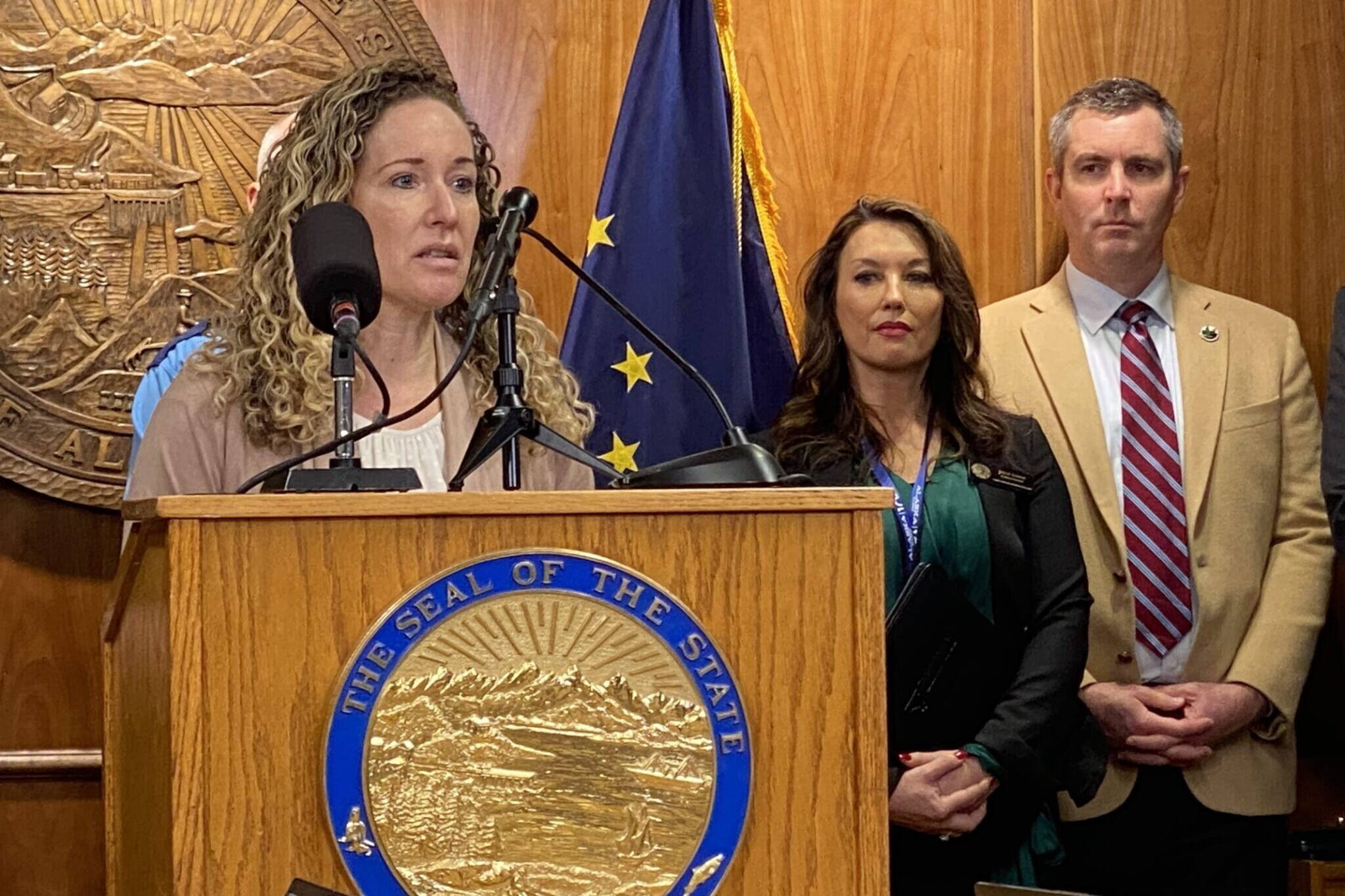
The crisis in the state’s management of the federal Supplemental Nutrition Aid Program prompted a response in Gov. Mike Dunleavy’s proposed budget, which was released on Thursday.
Alaska’s backlog of SNAP applications doubled between August and November; more than 12,000 Alaskans have been waiting more than a month for food stamp benefits.
The governor proposed spending $8.8 million on 30 additional full-time employees to process applications at the Division of Public Assistance and $5 million to bolster supplies at the state’s food banks.
This year’s food security funding puts more money towards staff and food banks than last year’s. Then, the backlog was bigger: 15,000 applications were late and many Alaskans waited months for food aid. The governor added millions to the FY24 budget, including $3.7 million for contract workers, $1.7 for food banks and $54 million for computer upgrades. At the time, the state said its full-time staff was sufficient.
Dunleavy Chief of Staff Tyson Gallagher briefly addressed the issue at the governor’s budget news conference Thursday. He said food security is a “huge priority” for the administration.
He said the latest backlog is fueled by inflation, difficulties with staff recruitment and retention, an outdated process and delays from implementing the technology overhaul that is intended to fix the outdated process. He added that “onerous” federal requirements are also causing slowdowns: The federal government required the state to begin interviewing clients again after a pause due to the pandemic.
Department of Health Commissioner Heidi Hedberg said the goal is to clear the backlog in 90 days. She said 154 state employees are working to process SNAP applications and they aim to complete between 950 to 1,200 applications weekly.
She said she directed the Division of Public Assistance to take unusual time-saving measures on a temporary basis to expedite processing. The federal government denied the state’s request for a waiver to stop the required interviews to determine eligibility, but Hedberg is allowing workers to break the rules: The agency has paused interviews and is not verifying financial claims made in applications. “I want to make sure that Alaskans have the benefits in a timely manner,” she said.
Division of Public Assistance Director Deb Etheridge said they are in contact with their federal partners and have told them what they are doing. When the state waived processing requirements earlier this year, Etheridge said they could possibly face sanctions.
Hedberg also pointed to systemic changes aimed at preventing future delays in the program. An online application for food assistance is slated to be operational by the end of this month, which she said will help Alaskans file complete applications and reduce paperwork for the Division of Public Assistance.
She said in the months to come Alaskans can expect an online self-service portal where they can upload documents and check the status of their applications. Missing documents are a reason many applications are denied or caught up in the backlog, employees have said, and Alaskans who have been waiting months for food stamps say long hold times when they call the agency are a frustration.
By late summer, Hedberg said people will be able to sign up for email notifications if they prefer them to regular mail. “Right now all notifications are snail mailed out; they get lost in the mail,” she said.
The IT upgrades from last year’s budget should be online by the end of 2024 or the beginning of 2025, Hedberg said.
“We are rapidly working through eliminating this SNAP backlog, but we also need to care for these IT system changes. As we make these IT upgrades, it’s really going to create a more resilient system so that we can prevent these backlogs from happening in the future,” she said.
“Right now, we are just working against time.”
• Claire Stremple is a reporter based in Juneau who got her start in public radio at KHNS in Haines, and then on the health and environment beat at KTOO in Juneau. This article originally appeared online at alaskabeacon.com. Alaska Beacon, an affiliate of States Newsroom, is an independent, nonpartisan news organization focused on connecting Alaskans to their state government.
