
By BECKY BOHRER
Associated Press
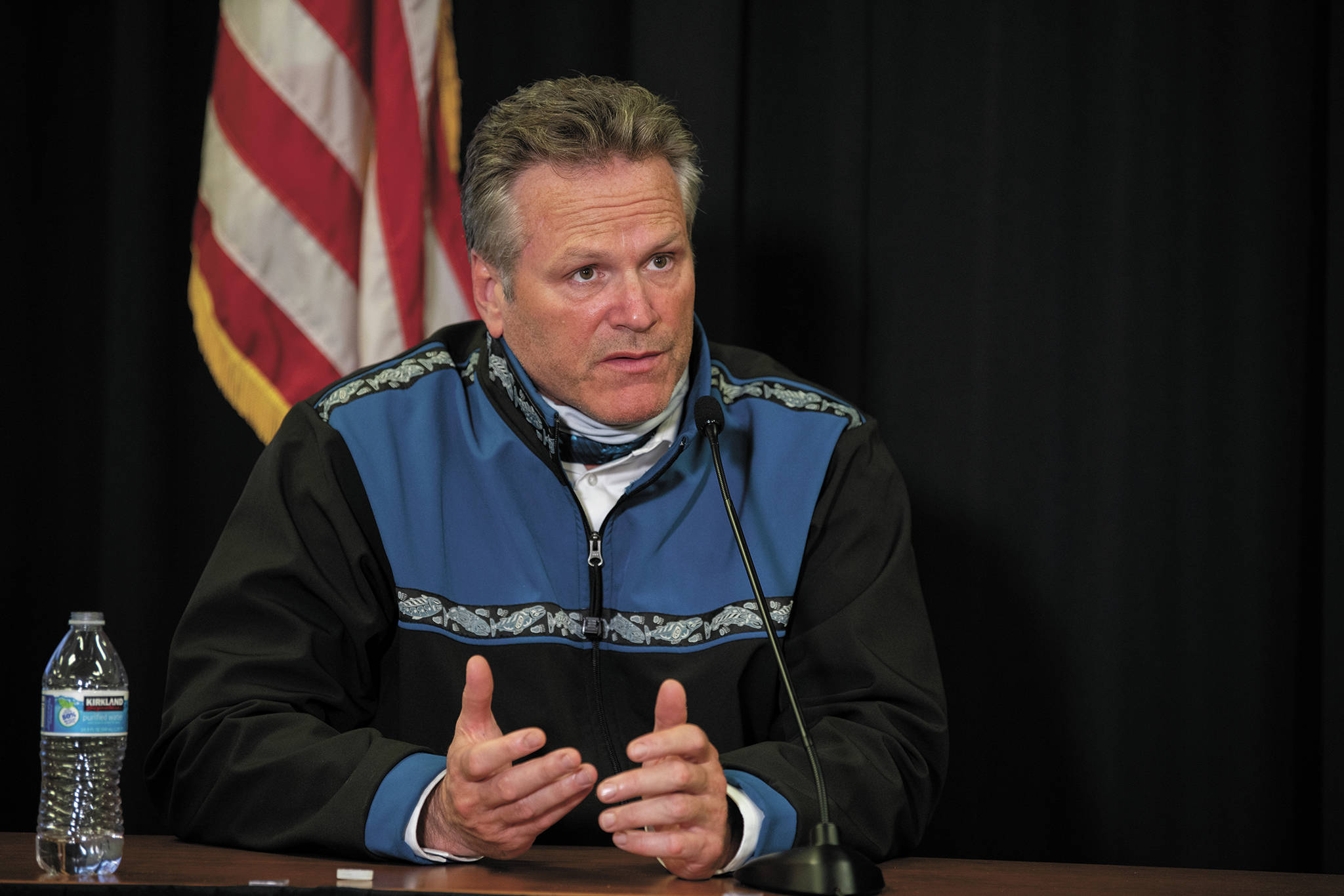
Gov. Mike Dunleavy proposed checks of nearly $5,000 to residents as part of an effort aimed at reviving the state’s pandemic-stunted economy, with the money to come from Alaska’s oil wealth fund.
But there was a hitch.
The Republican, in his budget plan rolled out last month, proposed that the calculation last used in 2015 amid large deficits be used for this year’s check, and documents released by his office said he would propose a new formula to calculate the annual check going forward.
His office now says that if Alaska lawmakers and residents, through a statewide non-binding advisory vote, approve a new calculation this year, the amount paid out would be smaller. Under the new formula Dunleavy is proposing, the checks would be an estimated $2,330 this year, compared with about $3,060 under the traditional formula.
Dunleavy will continue to propose adhering to the old calculation until there is a successful plan to change it, spokesperson Corey Allen Young said by email. Dunleavy “will not presume so great an assumption as to bake that into his budget,” Young said of any proposed change.
Dunleavy has additionally proposed a roughly $1,900 check be paid earlier in the year to top off the $992 checks residents received last year — intended to represent what residents would have received had the traditional formula been used.
[Dunleavy says he’s optimistic about Alaska recovery]
“Combined, this represents over $4,200 in direct payments to eligible Alaskans and one of the largest efforts towards preserving a state economy anywhere in America,” Young said.
In December, Dunleavy said he would ask lawmakers to act on a so-called full dividend, calculated under the old formula, for the coming year.
“So in the end that would come up to about $4,972 per Alaskan to use to take care of the needs that they may not have been able to take care of because of this pandemic, and the impacts on their jobs, their businesses, this economy,” he said.
While many legislators agree with Dunleavy that resolution is needed on the divisive dividend issue, some bristle at going to an advisory vote, arguing they were elected to make tough decisions. There are concerns, too, about drawing too heavily from Alaska’s nest-egg oil-wealth fund, the permanent fund, and different ideas about what the split should be between what goes to checks and government expenses.
There have been five advisory votes since 1970, according to the Division of Elections, including one in 1999 that asked voters whether a portion of permanent fund earnings should be used to help balance the state budget. The vote was resoundingly no.
Lawmakers in 2018 began using fund earnings, once typically used for dividends, to also help cover state costs amid an ongoing run of budget deficits.
“Taxation, (dividend) amount, these kinds of things are why we’re elected, and we’re here to make these responsible decisions for the future of the state,” said Rep. Adam Wool, a Fairbanks Democrat, who has proposed an income tax to pay for a dividend. “And if everything goes to a popular vote, why are we here even?”
Dunleavy plans to again push a constitutional amendment that would have Alaskans vote on new taxes. He says involving Alaskans in policy decisions upfront is important. Otherwise, he argues, there is a risk voters will unravel those decisions through the referendum process.
Four referenda have successfully qualified for the ballot in Alaska, according to the Division of Elections. The most recent, in 2014, upheld a previously enacted oil-tax structure.
Dunleavy is proposing that half of what is withdrawn from the permanent fund goes to dividends and half to government services, according to information provided by his office. He said Wednesday he thinks the public would see that approach as fair.
He also plans to introduce constitutional amendments dealing with the fund and dividend.
No clear direction has emerged from lawmakers.
The Alaska House has yet to organize. The president of the Republican-led Senate, Peter Micciche, said his members have “every opinion on what the potential solutions are” for the state’s fiscal situation and said they would work through those “very publicly, transparently” in hopes of moving forward.
His members, which include Democrat Sen. Lyman Hoffman of Bethel, represent diverse constituencies, Micciche, a Soldotna Republican, said.
“We know Alaskans are hurting because of the pandemic. And some of these things will be settled in committee. Some will be settled on the floor,” he told reporters said Wednesday, adding later: “I think you’re going to see some very colorful discussions, and that’s OK. Because that’s where Alaskans are.”
