
By LINDSAY WHITEHURST
Associated Press
The Americans With Disabilities Act was a major turning point in opening large parts of U.S. society to disabled people, but three decades after its passage disabled workers still face higher unemployment than other adults — a problem compounded by the coronavirus pandemic.
Sunday marks 30 years since the ADA was signed into law by President George H.W. Bush with wide bipartisan support. It prohibits discrimination against people with disabilities in areas such as employment, transportation and public accommodations.
In practice, that’s meant everything from usable public bathrooms to seats in movie theaters and access to public schools.
“The historically dominant view was that it was an individual problem that each person or family had to cope with on their own,” said Douglas Kruse, an economist at Rutgers University who began using a wheelchair after a drunk driver crashed into him in 1990. “The ADA represented a shift in perspective that a lot of the problems with disability are more societal and environmental.”
[Eyes on the stars: Launches continue as Alaska’s spaceport thinks expansion]
That’s led to something simple but crucial: visibility.
“It’s not uncommon to see people with wheelchairs or blind people out doing what they need to do, or want to do, in cities or in restaurants,” said his wife Lisa Schur, a political scientist at Rutgers who studies disability and employment. “Before the ADA, it was unusual. People would be stared at. Now it’s more accepted.”
The law was a hard-fought milestone that came after years of work from disabled people and their supporters, said Peter Berns, CEO of The Arc, which advocates for people with intellectual and developmental disabilities.
Nevertheless, “the reality still is, people with disabilities are subject to pervasive discrimination in employment and many aspects of life, so the work of the ADA is not done.”
When it comes to employment, things were looking up in the booming June 2019 economy before the coronavirus hit. Still, the unemployment rate was nearly 8% — double that of other workers — even though a large majority said in surveys they can and want to work, Kruse said. Those who are employed often hold low-level jobs in industries like food service, home health care and janitorial work.
“It really seems to be last hired, first fired,” Schur said. “Even 30 years after the ADA, there’s still a lot of employer reluctance.”
The situation has gotten worse during the pandemic. The entire country is reeling from record unemployment and widespread layoffs as large sectors of the economy essentially shut down to slow the spread of the coronavirus, but it’s even more pronounced among disabled people.
In June 2020, the unemployment rate for disabled people rose to 16.5%, compared to 11% for workers without a disability, according to the U.S. Bureau of Labor Statistics.
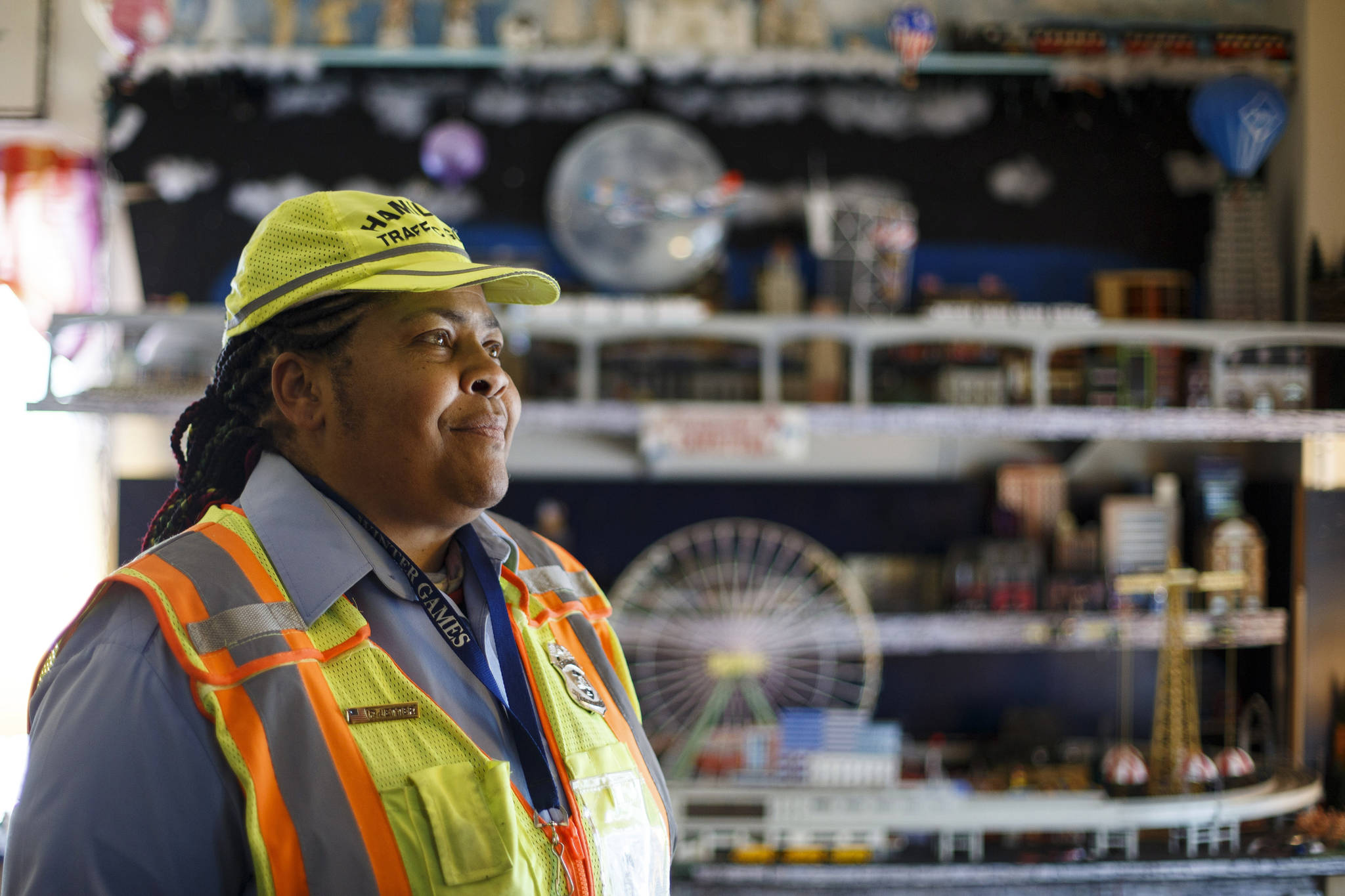
The ranks of the newly unemployed include Patrice Jetter of Hamilton, New Jersey. She applied to be a crossing guard every year for 12 years before she was first hired in 1993. Jetter, who has cerebral palsy and partial hearing loss, wanted to work with kids when graduating from high school, but had little preparation for taking her SATs in special education classes, so her scores weren’t high enough for college.
She finally got her job after writing to the newly elected mayor. She walked to work every day, even when snow kept her driving colleagues at home.
She loved joking with the elementary school kids who passed her with a vest and stop sign and wishing a good day to the drivers going past — including one woman who changed her route to work because Jetter’s smiles and waves brightened her morning.
“Once you’ve been a crossing guard, it’s in you. You’re never happy doing something else,” she said.
But in March, Jetter, 56, and the rest of the crossing guards in Hamilton were laid off since the pandemic had shut down schools and kids weren’t crossing the street.
“I remember there were nights I didn’t sleep I was so worried about falling behind on bills,” she said. She’s gotten by so far with help applying for benefits like unemployment and rent reductions and finding ways to pool her resources with other disabled friends. She’s also been able to wear a mask and return to practicing her Special Olympics sport of skating, where the leg problems caused by the disease fade away as she glides along the ice.
But it’s still unclear whether schools will be able to reopen and allow her job to restart in the fall. She’s worried about returning to the job market with a rush of other people also looking for work, many of whom won’t have to deal with discrimination she’s encountered over the years as a disabled Black woman.
Still, she’s got her optimism, ingenuity and determination on her side.
“The ADA has opened more doors for people with disabilities,” she said. “There’s still a lot more that has to be worked on, but if we keep plugging away things are going to get better and better.”
Advocates with groups such as The Arc are also pushing Congress to add more funding through Medicaid in the next coronavirus aid package for things like job coaches and transportation to help people such as Jetter get back to jobs that can help them live independently and be more connected to their community.
The pandemic has meant millions of people are working from home, with accommodations that some disabled people have long been denied. It’s shown that workers can be productive from home, though for those gains to translate effectively to the disabled community, access must be increased to the education and computers that make those careers possible, the professors said.
“There may be a silver living,” Kruse said. “Maybe this will shake up the view of how work can be done.”
