
Alaska’s annual budget gap will explode to almost $4 billion next fiscal year, according to new estimates from the Alaska Department of Revenue.
On Monday, the department released a preliminary version of its spring forecast that included sharp downward estimates on the price of oil in the coming year.
In December, the department predicted oil would average $56.24 per barrel between July 1, 2016 and June 30, 2017. It now expects oil to average $38.89 per barrel during that period.
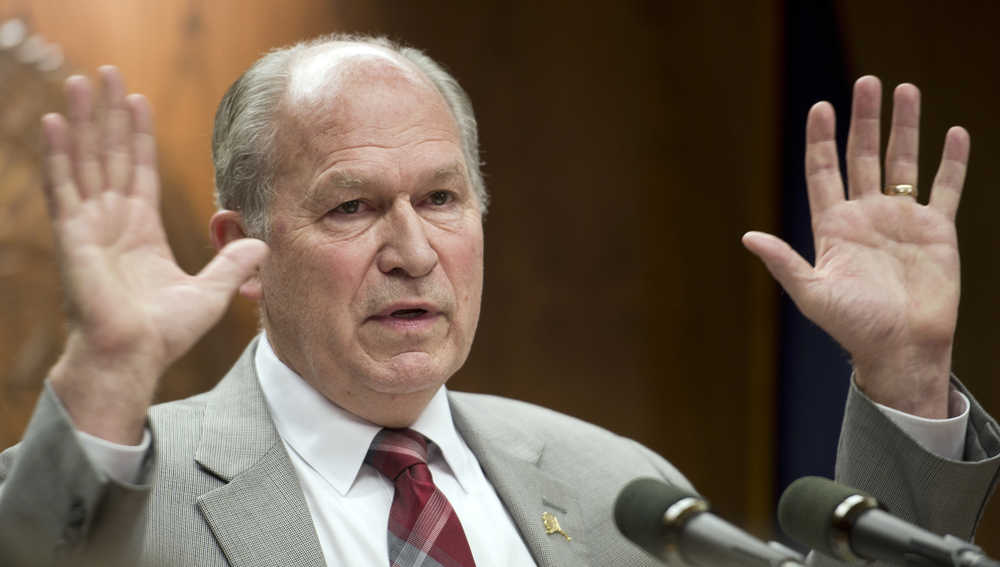
“We have reached a point in our state’s history that we need to be looking beyond oil,” said Gov. Bill Walker in a press conference Monday morning.
The new forecast means Alaska will earn less next year in unrestricted oil revenue than it will pay in tax credits to oil companies.
“2017 will be the first year that Alaska doesn’t earn positive income out of oil and gas development; that’s a significant step,” Walker said.
The estimate also contains bad news for the current fiscal year, which ends June 30.
In December, the department estimated oil would average $49.58. Now, it’s predicting a figure almost $10 lower.
As a result, the state will have almost $300 million less than its current budget calls for. That gap will have to be filled with money from the state’s $8.2 billion Constitutional Budget Reserve.
The biggest impact of the revised forecast, however, won’t come until the next fiscal year. The Alaska Legislature is considering next year’s budget — and how to pay for it — in the Capitol right now.
When Gov. Bill Walker announced his draft budget in December, he proposed $5.26 billion in “unrestricted general fund” spending for the fiscal year that starts July 1. That figure dropped to $5.21 billion in a revised budget released in February. Normally, that unrestricted spending is covered by oil and gas revenue and the state’s few non-petroleum taxes.
At the time, the state forecast $1.8 billion in unrestricted general fund revenue, meaning a deficit of $3.4 billion. Now, only $1.23 billion is expected.
Without accounting for further budget cuts from the Legislature, that would result in a deficit of nearly $4 billion.
Barring tax increases or spending some of the earnings of the Alaska Permanent Fund, filling the deficit would require a significant draw from the Constitutional Budget Reserve.
The new forecast also contains bad news in the long term for Alaska. Under the state’s existing tax system, it would need oil prices above $105 per barrel to balance its budget. The forecast doesn’t predict oil above $60 per barrel until 2021, and its 10-year prediction doesn’t include oil prices above $66 per barrel.
“It makes sense that the $60 would be sort of a ceiling we’d bump into,” said revenue commissioner Randall Hoffbeck.
Above that price, it becomes economical to produce oil from shale rock, as is done on a large scale in the Lower 48.
“We’ve been saved by oil several times,” Sen. John Coghill, R-North Pole, said Monday morning. “What we know from the spring forecast is that’s extremely unlikely right now.”
Monday’s estimate was a preliminary document released to help guide budget discussions, Walker and Hoffbeck said, and a final forecast is expected in the first week of April.
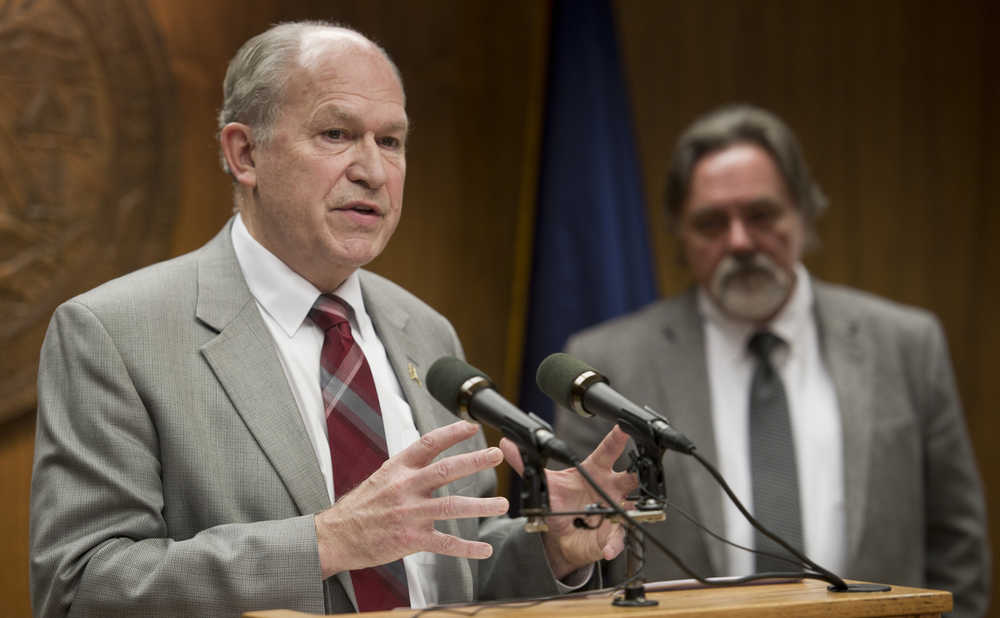
Gov. Bill Walker and Department of Revenue Commissioner Randall Hoffbeck, right, give their Spring Revenue Forecast during a press conference at the Capitol on Monday.
