Dead beluga calf poses questions for biologists
Published 12:02 pm Thursday, August 27, 2020
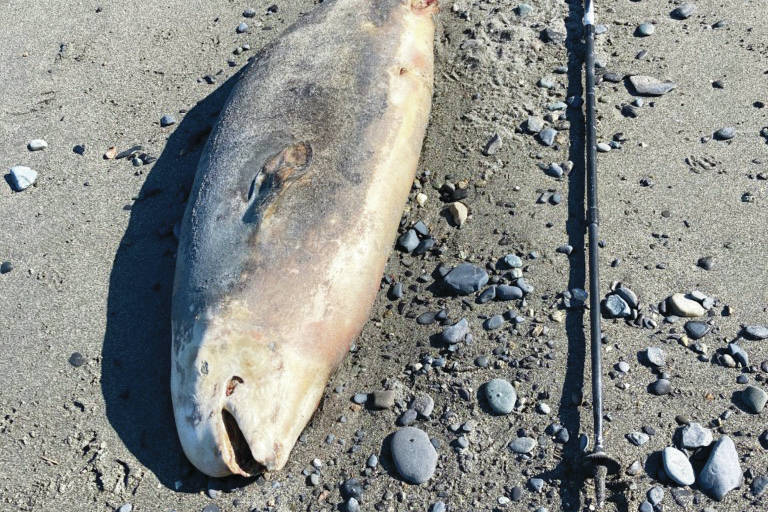
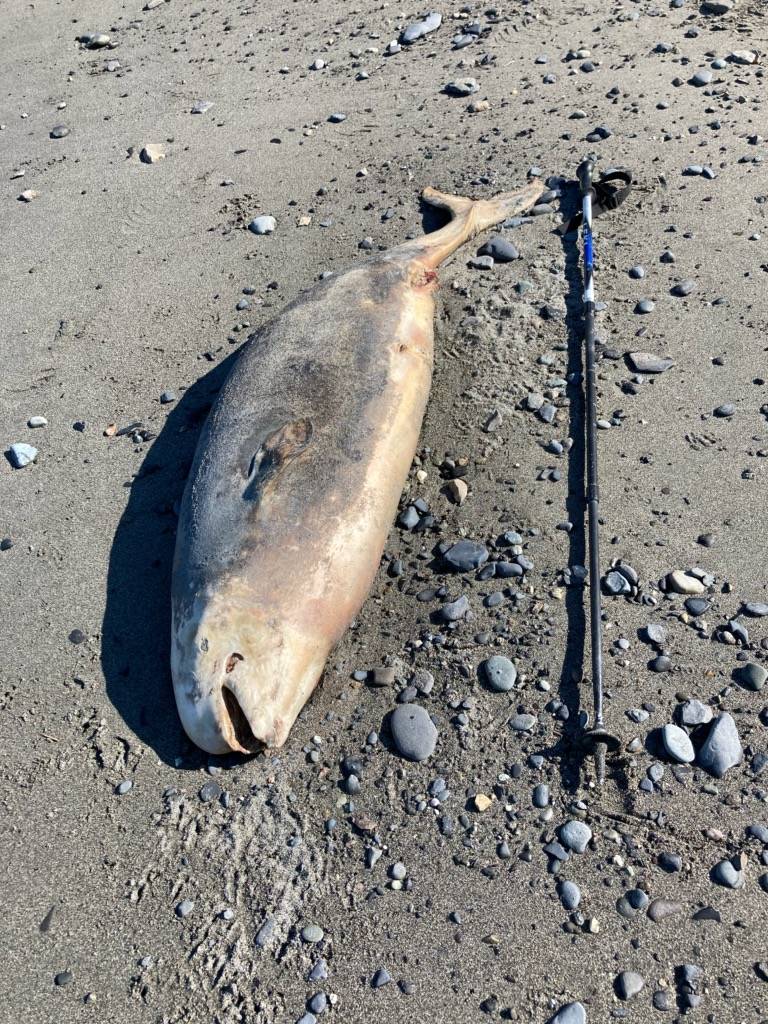


Michael Armstrong and his wife, Jenny Stroyek, were walking along the beach just north of the Captain Cook Discovery Campground on Aug. 16 when Stroyek noticed a dead beluga calf stranded on the shore. The couple quickly called the Alaska SeaLife Center’s stranding hotline, and a team of pathologists from Alaska Veterinary Pathology Services responded to collect samples from the carcass.
Natalie Rouse, who is the stranding coordinator with AVPS, said Wednesday that while they weren’t able to take the entire specimen due to decomposition, they did manage to collect tissue samples from the skin, blubber and vital organs. Rouse said that not much is known about this calf yet, but based on its length and a few other factors it is estimated to either be an aborted fetus or a very young calf that was born this year.
“Its skull was separating at the suture lines, and that’s a natural thing,” Rouse said. “Most people are familiar with human babies having soft spots on their heads, it’s the same with other animals. Their bones don’t solidify completely for a little while after their born. So the separation is not unexpected but definitely indicative of a very young whale.”
This beluga calf is one of six that have been found dead and reported to either the SeaLife Center or the National Oceanic and Atmospheric Administration this year. Five of the whales have come in the last month. Mandy Keogh, who is the Alaska regional stranding coordinator at NOAA, said on Monday that this number isn’t necessarily outside the normal range of strandings that are reported each year, although it is slightly higher.
“It’s hard to gauge,” Keogh said. “Over the last five years we’ve had anywhere from between one and four calves and fetuses reported for Cook Inlet Belugas (each year).”
Many factors contribute to how many strandings are reported in a given year, Keogh said. The size of Cook Inlet and the amount of shoreline that is remote or inaccessible means that there are likely strandings every year that don’t get reported. Tides and ocean currents can also play a role.
“You could have an animal wash ashore, and depending on the tide, it could wash out with the next tide and just wouldn’t get reported,” Keogh said.
It’s also not unusual for dead calves or late-term fetuses to show up around August, Keogh said, because this is the time of year that belugas are giving birth.
At other times of the year, the strandings that are reported tend to be adults, and the majority of stranded belugas are found when they are older. A 2013 study published by Jen Dushane with Alaska Ecological Research found that, of all the dead Cook Inlet beluga strandings reported between 1987 and 2012, 102 were adults, 15 were sub-adults, 28 were calves, and 62 were of unknown age.
Six dead beluga calves, while not out of the ordinary for a given year, is still a significant portion of an endangered beluga population that NOAA estimated was between 250 and 317 as of January of this year.
Due to the state of decomposition for all of the beluga calves, Keogh and Rouse didn’t think it was likely that a cause of death will be determined for any of them. The samples collected, however, will still provide insight on what’s going on with the population more generally.
“Depending on what samples are collected, we can determine whether or not the calf had been born and breathed air,” Keogh said. “And that’s somewhat based on the lungs and looking at those. The other thing the pathologists can do is look for congenital defects, to see whether there’s anything abnormal that may have contributed to why this calf or fetus didn’t survive.”
[Rare white killer whale spotted in Southeast]
Rouse said some of the samples collected from the five belugas were sent out Wednesday morning to be processed and put onto slides by a company called Pathology Consulting Services. After those samples come back, Dr. Kathy Burek Huntington with AVPS will analyze them for any abnormalities.
“Unfortunately, we’ll have to take all of our results with a grain of salt,” Rouse said. “But hopefully we’ll be able to get lucky and have some spaces that were unaffected (by decomposition).”
Keogh and Rouse encouraged people to call the stranding hotline for NOAA or the SeaLife Center as soon as they see a beluga or any other marine animal washed up on the beach, because the quicker biologists can get out there to collect the carcass or tissue samples, the more they can potentially learn about how the animal ended up stranded.
“The fresher they are, the more we can figure out what’s going on,” Rouse said. “So if you seem them, give us a call.”
“We can always, always learn something from the animals,” Keogh said. “Even if it’s just a skeletal remain, we can always find something or learn something from them.”
The NOAA stranding hotline number is 877-925-7773 and the SeaLife stranding hotline number 1-888-774-7325. Both are toll-free and operated 24 hours a day.
Reach reporter Brian Mazurek at bmazurek@peninsulaclarion.com.