Cook Inletkeeper, partners file lawsuit against Cook Inlet gold mine
Published 9:30 pm Monday, July 21, 2025

The Kenai Peninsula’s Cook Inletkeeper joined a lawsuit last month opposing the proposed Johnson Tract gold mine project on the west side of the Cook Inlet in Southcentral Alaska. Also listed as plaintiffs in the lawsuit are the Center for Biological Diversity, the Chickaloon Village Traditional Council and an unnamed local stakeholder who fishes in the adjacent Tuxedni Bay.
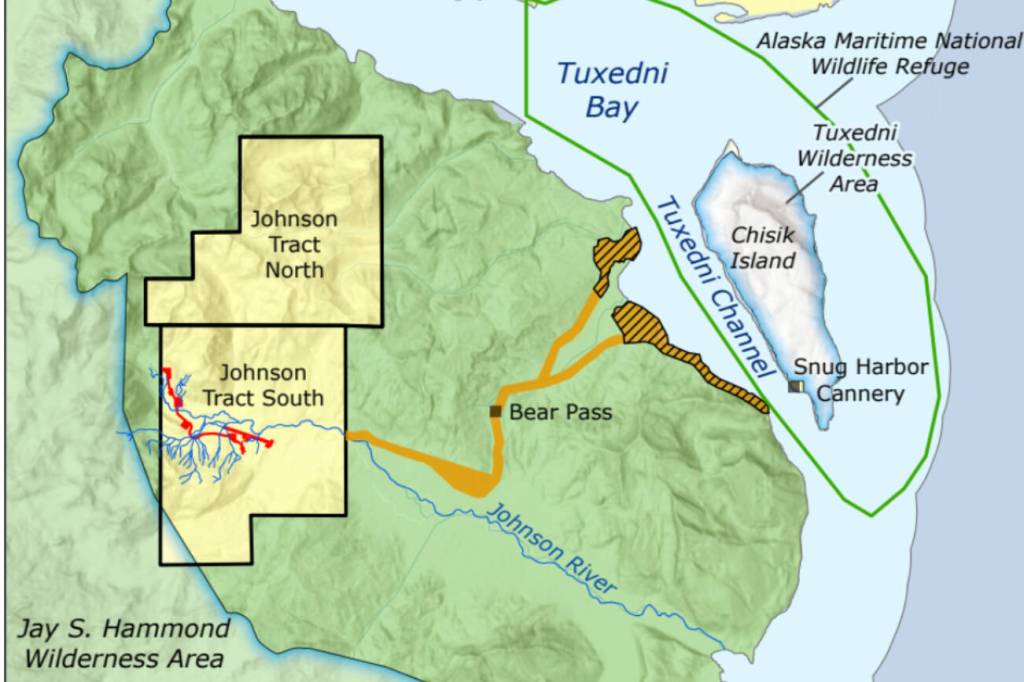
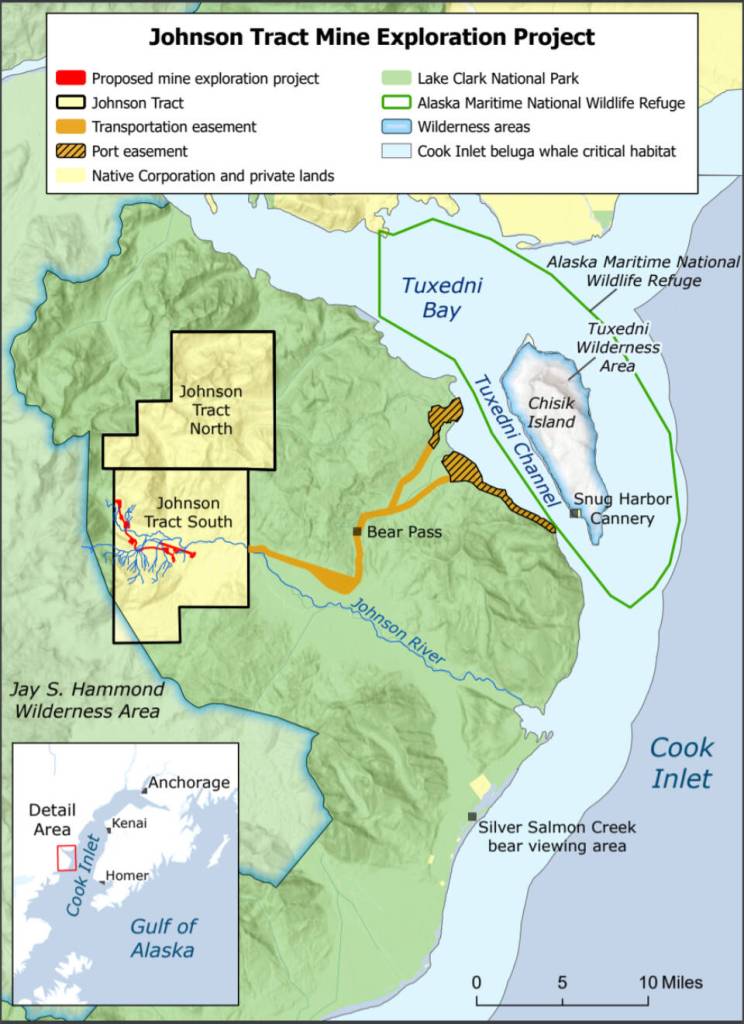
The project site is located at the headwaters of the Johnson River, on nearly 21,000 acres of land privately owned by Native corporation Cook Inlet Region, Inc. within Lake Clark National Park. According to Cook Inletkeeper, however, should the mine project move forward, it will adversely affect both surrounding wilderness areas and long-time businesses owned and operated by local stakeholders. At risk are the Johnson River itself, subsistence harvesting grounds in Lake Clark National Park, the largest seabird nesting colony in the Cook Inlet, and critical habitat areas for the endangered Cook Inlet beluga whale population.
Johnson Tract past and present
CIRI acquired the Johnson Tract inholdings in the 1976 Cook Inlet Land Exchange, prior to the establishment of Lake Clark National Park via the Alaska National Interest Lands Conservation Act in 1980. In addition to mineral and surface rights, in January CIRI was also granted port and transportation easements, in agreement with the National Park Service, across adjoining parkland for mineral extraction and development. Exploratory mining on the tracts was conducted from 1982-1995 by different companies, until the project reverted back to CIRI in the late 1990s.
Mineral exploration company HighGold acquired the project from CIRI in 2019. In 2024, HighGold was acquired by and became a subsidiary of Contango Ore, the current lessee. According to Contango’s website, the proposed Johnson Tract project has an expected seven-year operation life.
In September 2024, Contango Ore was granted a permit by the U.S. Army Corps of Engineers in line with Section 404 of the Clean Water Act, which is required for the discharge of dredged or fill material into all U.S. waters, including wetlands. The permit enables Contango Ore to construct a mining tunnel to conduct deeper exploratory work than what was previously done by other companies. The permit also enables them to build a 5,000-foot airstrip and a road to connect it to the mine site.
“At that point, we started working with Center for Biological Diversity attorneys to dig into it and identify any shortfalls in the permit process and the permit itself,” Cook Inletkeeper Clean Water Lead Satchel Pondolfino explained in a July 3 interview. “We found some pretty significant ones, which is what has led to the lawsuit.”
The lawsuit filed by Cook Inletkeeper and partners challenges the permit on the grounds that the Army Corps did not conduct adequate analysis on the mine’s potential to release acid mine drainage into the ecosystem and impact the Tuxedni Bay critical beluga whale habitat.
“There was no analysis of the increased air traffic noise and impacts to belugas embedded in the environmental analysis within the permit,” Pondolfino said. “There was also no analysis of any potential acid mine drainage, even though there’s publicly available information that shows there is acid-producing rock in this region. That is a toxin that can bio-accumulate up the food chain.”
Environmental and economic impacts
Across Tuxedni Channel from Lake Clark National Park lies Chisik Island, which is the site of the historic Snug Harbor Cannery — now an ecotourism destination — and is also home to the Tuxedni Wilderness Area, in which there exists the largest seabird nesting colony in Cook Inlet. The area is also classified as an Alaska Maritime National Wildlife Refuge.
“This whole region is (also) all critical beluga whale habitat — so for me, it’s kind of this trifecta. We’ve gone through this onerous process to say this land is valuable for its habitat and for its ecological value,” Pondolfino said. “The park designation, the maritime national wildlife refuge designation and the critical habitat designation are all designed to keep that habitat intact and keep the sustainable economies around fishing and ecotourism intact.
“Yet, because of this unique situation with this inholding, CIRI is able to consider mining the region, and that feels very converse to everything in that region.”
Tuxedni Bay, Pondolfino said, is where Contango intends to build an industrial port from which to barge the mined ore to another site for processing — a similar practice to what they’re already doing at their Manh Choh mine near Tok.
“Contango is known for forging this new mining practice where they don’t do all of the processing on-site, and then they instead either barge or truck the ore to another processing site,” she said. “There’s a lot of controversy around the Manh Choh project because it’s using public highways and sending (tens of) trucks of ore a day over 200 miles from Tok to Fort Knox.”
According to a NOAA study published in July 2024, Tuxedni Bay is also the only known winter foraging habitat for the Cook Inlet beluga whale population, which was listed as endangered in 2008 and numbered just over 300 in last year’s count.
“There used to be thousands, and there hasn’t been an uptick since their endangered listing,” Pondolfino said. “Industrializing this region could have really significant impacts on the population. It’s currently a very unindustrial place — there (are) a couple lodges, a few setnet sites, but in general it’s a quiet refuge for belugas.”
Pondolfino emphasized the damaging impacts that pervasive noise has on beluga whales, who primarily use sound over other senses to navigate and for communication.
“Industrializing this region, with barge noise and traffic as well as additional air traffic, can really block their ability to identify food. It can block their ability to communicate when there are predators and (their ability) to hide from predators,” she said.
Pondolfino clarified that the Tuxedni Bay Wilderness Area, which encompasses Chisik Island and Duck Island, was designated for seabird and shorebird habitat.
“It’s the largest nesting colony in Cook Inlet, and that’s kind of the impetus to create this maritime refuge,” she said. “Seabirds and shorebirds are the fastest declining species by population in the world. In an inlet that is very industrialized … we need to be really thoughtful about what is necessary and what’s not.”
She described both the beluga and bird populations as facing “a death by a thousand cuts scenario.”
“It’s not that one thing in Cook Inlet is causing them to go extinct, it’s the scale of industrialization across the inlet,” she said. “This project in particular, Inletkeeper really does not feel like it has good enough tradeoffs for Alaskans to sacrifice this critical habitat.”
As an Alaska Native corporation, CIRI is owned by more than 9,500 shareholders, who according to the corporation’s website “are representative of all Alaska Native cultures.”
In May, the Chickaloon Native Village, the Native Village of Port Graham, the Kenaitze Indian Tribe, the Salamatof Tribe, the Native Village of Igiugig, and Alexander Creek Inc. sent a letter to Colonel Jeffrey Palazzini, commander of the Alaska district of the U.S. Army Corps of Engineers, asking for the suspension of Contango Ore’s permit, citing deep concern about potential long-lasting environmental harms from the mine advanced exploration project and alarm that the Army Corps granted the permit without adequately analyzing the potential for acid rock drainage and contaminants leaching into the Johnson River and Cook Inlet.
“Cook Inlet already suffers from water pollution, contributing to the decline of its salmon clams and other marine resources including the critically endangered Cook Inlet beluga whales who are failing to recover,” the letter states.
The six Tribal governments formally requested that the Army Corps suspend the permit and “ensure all previously authorized activities or work under the Department of the Army’s jurisdiction cease immediately”; conduct additional analysis related to potential acid rock drainage and contaminants leaching and provide a full public comment period on a revised draft environmental analysis which includes the analysis; consult with NOAA Fisheries regarding the effect of the project on Cook Inlet belugas and their critical habitat; and engage in meaningful nation-to-nation consultation with potentially affected Tribes.
“A failure of the Army Corps to take these actions risks irreparable harm to the Johnson River watershed, Tuxedni Bay, Cook Inlet, and the fish and wildlife that our Peoples have stewarded and relied upon for our health and well-being for millenia,” the letter states.
Pondolfino explained that gold mining and acid rock drainage “go hand in hand.”
“When you find gold, you often find sulfuric acid-producing minerals, and when you unearth it and expose it to air and water, that’s when sulfuric acid is produced,” she said. “The fact that (the mine) is right on (the Johnson) River creates some pretty significant risk around that acid not only leaching into the groundwater around the mine site, but also travelling down into the inlet.”
She also pointed out that the area near the mouth of the Johnson River is known for “really robust” razor clam beds that, in addition to sport and personal use clam fisheries, are used by the Kenaitze Tribe as traditional subsistence clamming grounds, are a “really important” food source for bears, and are a widely used bear viewing area.
“That’s a really compelling part of this story, that there’s been such a long-term relationship between bears and humans in this region,” she said. “When you bring in an industry that has big machinery and is disrupting the landscape with sound and light and pollution and people who don’t have a priority of keeping a good relationship with the bears and wildlife out there, that really erodes the trust that’s been built.
“That could not only make it unsafe for the bear-viewing guides and tourists out there, but it could also drive the bears away and make these longtime Alaskan lodges close up shop.”
David Coray, one of the three principal directors of Silver Salmon Creek Lodge who support of the lawsuit, wrote in a July 10 email to Homer News that numerous small businesses and long-standing lodges could be negatively impacted by the mine development.
Coray’s business and the Alaska Homestead Lodge are both located near tidewater adjacent to the mouth of the Johnson River and engage in “extensive” bear-viewing and photography programs that attract visitors “both nationally and internationally.” The lodges coordinate with multiple air services on the Kenai Peninsula, from Homer to Anchorage, and boat services from Homer, Anchor Point and Ninilchik who bring both locals and tourists for bear viewing, clam digging and “appreciating the Lake Clark National Park coastline.”
“With the threats posed by the mine, including acid rock run-off, noise pollution, and toxic dust from heavy equipment along the haul road, these businesses could suffer irreparable damages, and their combined economic contribution to the state of Alaska as a whole would be greatly diminished or eliminated,” Coray wrote.
Coray also spoke to the “long-term, sustainable stewardship of the land” that his family began in the mid-1980s that has allowed for the coexistence of humans and bears in the area without adversarial interactions.
“Bear denning habitat has been identified in the Johnson River valley, totally incompatible with blasting, heavy machinery and a mind-set among profit-driven corporate executives that completely bypasses the history of what was gained in the 40 years of establishing a peaceful coexistence between man and coastal bears,” he wrote.
He also noted the Johnson River hosts “significant” runs of chum, pink and silver salmon and Dolly Varden char which are likely to be poisoned by toxic runoff from the mine.
“In recent years, the silver salmon (Coho) returns in Cook Inlet have shown slower numbers. This adds an extra measure of caution and the need for protection and preservation of the stocks,” he wrote. “An aggressive mine along the headwaters of their spawning areas can only serve to further negatively impact their sustainability.”
Though the lawsuit is moving forward, an injunction has not yet been issued on the permit, meaning that Contango Ore is still able to progress with exploration.
‘What is necessary and what’s not’
While the mine will benefit Contango Ore and CIRI stakeholders, Pondolfino didn’t think the benefits would be great for area stakeholders overall.
“This is not a multi-generational gold mine,” she said. “There will be a kickback to CIRI that will trickle down to shareholders, but it won’t be significant. It won’t change shareholders’ lives by any means — this is a pretty small thing in the portfolio of what CIRI does.
“Primarily, this project is going to line the pockets of investors in Contango Ore. Mining in Alaska provides very, very little royalties to our state, unlike oil and gas. It’s a pretty small project, but it could have devastating impacts on the critical habitat across Cook Inlet.”
Pondolfino said that, essentially, the project is trading critical habitat for a non-critical mineral.
“Because gold has such a high dollar price, it also has very robust infrastructure for a gold recycling economy,” she said. “The recycled gold production rates, as it stands now, like what’s already coming to market now from recycled gold, can meet the demand for 100% of what we use gold in practical purposes for.”
Said practical purposes, according to Pondolfino, include dental implants, semiconductors and small electronics. The majority of newly mined gold, she said, goes to creating jewelry and gold investments.
“We don’t need to make these trade-offs. We don’t need to pull new gold out of the ground to continue to have it, even for jewelry, too,” she said. “I think it sets a bad precedent for what we allow to occur in our national parks.”
Cook Inletkeeper has also petitioned the National Marine Fisheries Service to establish a Cook Inlet beluga whale protection zone in Tuxedni Bay and encourages the public to sign onto the petition to prohibit industrial activity in critical habitat. Find it at bit.ly/4l0FLPx.
Read more about Cook Inletkeeper’s opposition to the Johnson Tract Mine at inletkeeper.org/lawsuit-filed-to-shield-belugas-and-waters-from-johnson-tract-mine/.
This article has been updated to reflect that the tribal relations director of the Salamatof Tribe, not the Salamatof Native Association, signed the May 15 letter submitted to the U.S. Army Corps of Engineers.