
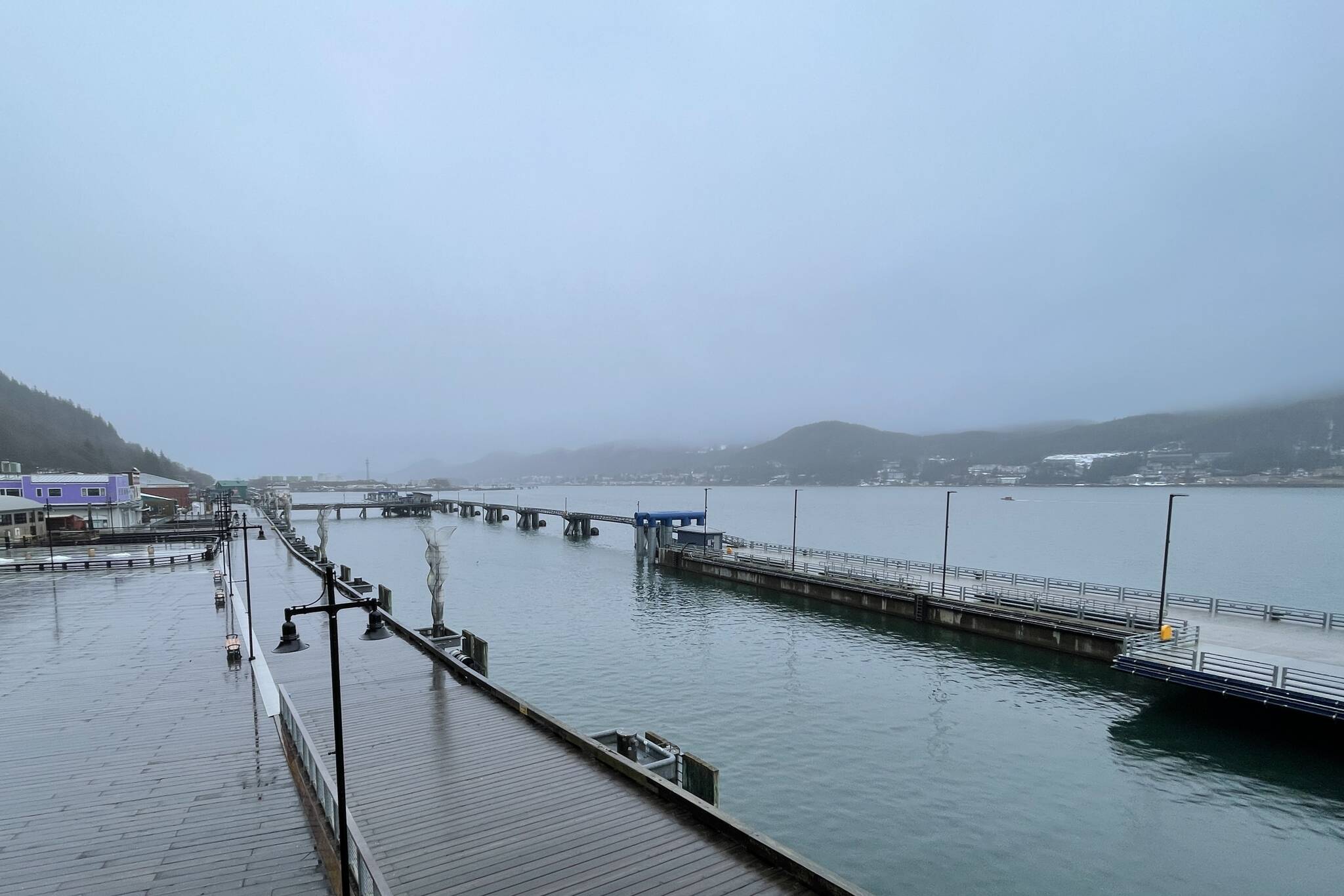
City and Borough of Juneau’s Committee of the Whole met on Monday night to discuss ongoing efforts to electrify two of the city’s cruise piers, as grant applications to the federal government to help fund the project were recently denied.
City Manager Rorie Watt recommended continuing to apply for grants while at the same time seeking other funding sources and pushing the project forward.
“My assumption is that dock electrification is a priority for the community and that we are not on a timeline where we’re waiting to be successful for a grant,” Watt said. “We are applying for grants. We are hoping for grants. But we also need to be simultaneously developing the project and developing financing for the project.”
The city recently applied for a grant from the federal government’s Rebuilding America Infrastructure with Sustainability & Equity Grant, which was denied, according to port engineer Erich Schaal’s written update on the project to the Assembly.
“Big picture, we applied for a RAISE grant, we were unsuccessful,” Watt said. “We did not get a lot of feedback from the public on the proposal.”
Now, the city will be working with lobbyists to fine-tune its request and reapply, not only for the RAISE grant but for a Port Infrastructure Development Program grant, which was facilitated in part by Sen. Dan Sullivan, R-Alaska, Watt said.
“Every time you fill out a grant document you get better,” Watt said. “Haines finally won it. After 20 years going at it; they got the RAISE grant.”
One of the alternate sources of funding might by for the Marine Passenger Fee collected by the city to help further the dock electrification study, proposed Juneau tourism manager Alexandra Pierce in a memo to the city’s Finance Committee. The proposal, currently up for public comment until March 4, suggests allocating slightly more than $2.6 million to the study.
“I agree with spending the passenger fees and remind the public they’re up for comment right now,” said Mayor Beth Weldon during the meeting.
The grants or passenger fees could help move the study forward, Watt said, bringing the project toward shovel-ready status and making it more likely to receive grant funding in the future.
“I think we can thread the needle on those grant complications,” Watt said. “It is not difficult for me to imagine a way where we can figure out a funding package.”
Avalanche hazard zones
The city also took a step forward Monday toward potential regulations on what types of development can happen based on avalanche and landslide risk.
The Committee of the Whole voted unanimously for Watt to work with the city’s Planning Commission to develop code recommendations that address events predicted to occur no more frequently than 100 years. The work will be based on city-commissioned maps showing avalanche and landslide risk.
[City-commissioned maps show avalanche and landslide risk]
The recommendation followed questions from almost every Assembly member about what sort of effect news hazard maps could have for property owners and what sort of liability the city faces if restrictions on development in known risky areas are not adopted and something disastrous happens.
Questions about liability were difficult to address, said municipal attorney Robert Palmer, but litigation is a distinct possibility in the event people are injured or killed in an avalanche or landslide.
“The law on landslides and avalanches is rapidly changing and is hyper fact-specific,” Palmer said. “Because we tend to be a stable financial partner in the community, there’s likely to be a target on us.”
He noted city action could change the fact pattern and potentially reduce risk of litigation.
Watt predicted that there will be some objections to mapping used by the city, and noted that any policy ultimately adopted will need to balance restrictions on development in especially high-risk areas with the reality people already live in those areas.
“From a policy standpoint, that’s the razor’s edge we’re walking,” he said.
Additionally, Watt said better data and relative ease in prediction make avalanche risk easier to address than landslides.
“In some ways from a policy standpoint avalanches are easier than landslides,” Watt said.
See the maps below:
• Contact reporter Michael S. Lockett at (757) 621-1197 or mlockett@juneauempire.com. Ben Hohenstatt contributed reporting to this article.
