
The City and Borough of Juneau Assembly on Monday committed to a series of goals addressing hot-button cruise ship tourism concerns originally recommended by a special task force in 2020.
The goals include placing a limit on cruise ships berthed in Juneau to five ships per day downtown, finishing construction of the Seawalk, allowing for more CBJ input and transparency on scheduling, electrifying cruise ship docks and creating a strategy to mitigate emissions and congestion along with more proactive industry management.
The adoption comes two years after the Visitor Industry Task Force was originally created in 2019 to evaluate and recommend policies for the city’s approach to managing the visitor industry, consider CBJ’s long-range waterfront plan and weigh pros and cons of possible management strategies.
Though the Assembly accepted the VITF final report of tourism management priorities back in 2020 — which included more than 50 recommendations — the Assembly never formally implemented its policy recommendations until Monday night, due in part to the COVID-19 pandemic halting efforts.
In 2019 when the task force met to develop the report, an estimated 1.3 million cruise ship passengers came to Juneau during the cruise ship season. However, the following 2020 and 2021 seasons saw a significant lack of cruise ships and tourism in the capital city due to the COVID-19 pandemic.
In 2022 the season’s average capacity level across cruise lines bounced back to around 74% over its multiple-month span, and with the upcoming 2023 cruise ship season slated to start April 17 with the arrival of the Norwegian Bliss, cruise lines are projecting their ships to run at 90% full in the first quarter of the year, and it’s estimated that the number of cruise tourism could be as high as 1.6 million in 2o23.
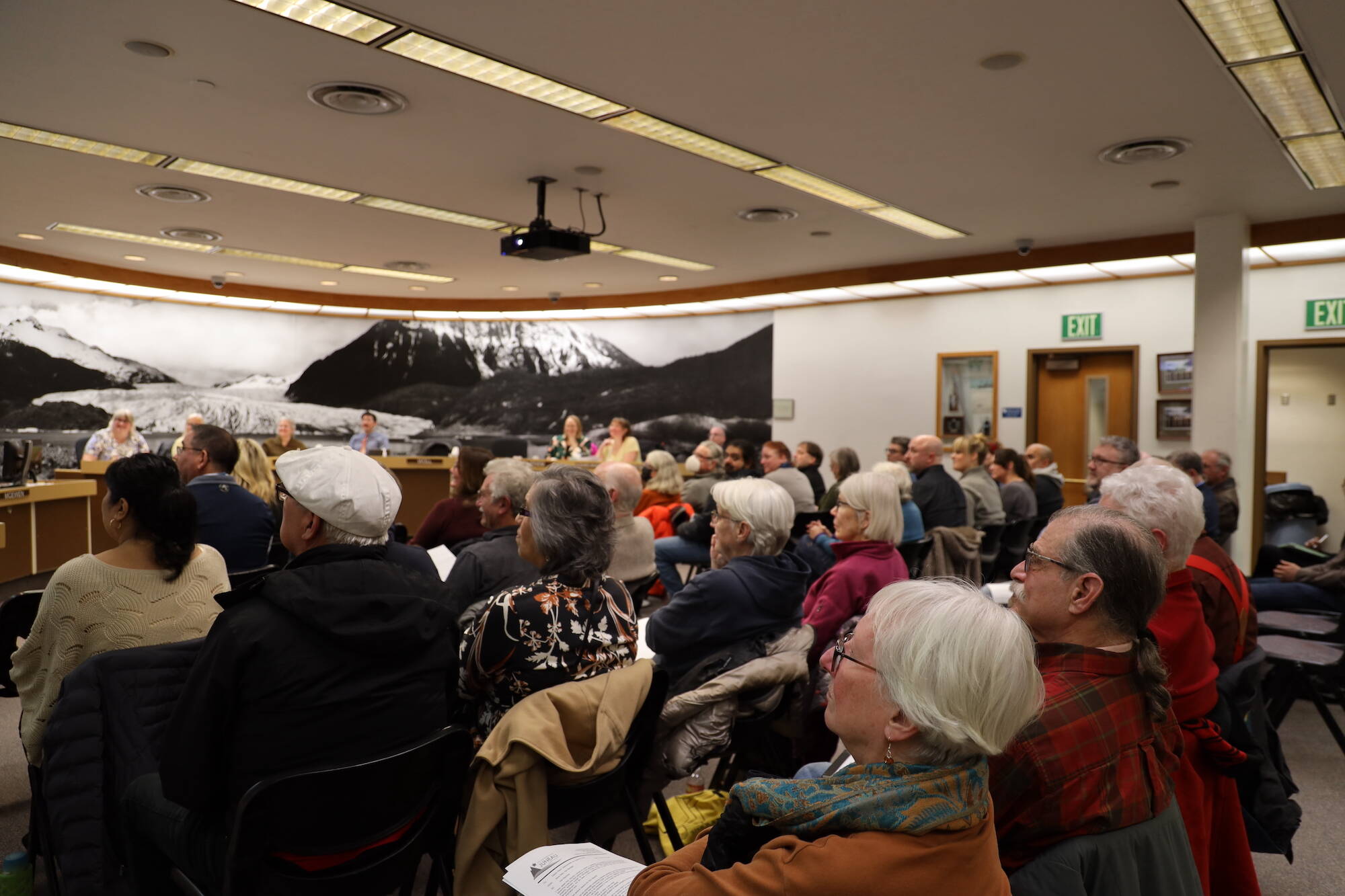
During Monday night’s meeting, eight people commented on the matter, mainly over concerns about the cruise industry as a whole in Juneau and its impact on residents’ lives and well-being.
Though many expressed gratitude toward the task force and city for tackling the topics, many of the speakers asked the city to better address issues included in the task force’s recommendations. They cited concerns about the five-ship limit being too large, along with concerns over pollution, overcrowding and possible health risks associated with the industry.
Karla Hart, a longtime Juneau resident and critic of mass cruise tourism, urged the Assembly to change the resolution to make the ship limit four instead of five and urged the Assembly to take further action via studies to understand the health impacts of cruise ships.
“I think it’s critical you know, and the public knows you know, of the serious cost of the cruise ship industry and that should compel you to impose a four-ship limit for 2023 or greater,” she said.
Juneau resident Elaine Schroeder agreed, and said the cruise ship limit should be “well below four” and said the growth of the tourism industry has negatively affected residents beyond what should be tolerated.
“The daily stress of over-capacity industrial level tourism in Juneau significantly decreases our quality of life,” she said. “Our lovely precious town is well over cruise ship capacity — greed and poor planning should not overcome the common good.”
Assembly member Wade Bryson said the recommendations from the task force — which he was a member of — were discussed extensively and are ultimately compromises between members on all spectrums for or against the cruise ship industry in Juneau. He said cruise tourism is important and necessary for local businesses and for the city.
“I’ve always viewed cruise ships as big giant dump trucks that drive up to the city and dump big piles of cash into our front yard,” he said. “To disregard the cruise industry as just a burden on Juneau is just a fallacy, it’s incorrect.”
Assembly member Michelle Bonnet Hale said she understands much of the concerns outlined by the testimonies but emphasized that the resolution should be seen as a step forward for the city’s involvement in cruise ship tourism management.
“We are doing something, we are actually saying yes to those five recommendations from the Visitor Industry Task Force and asking our administration to actually implement those,” she said. I believe the Assembly is taking a big step forward in actually taking formal action.”
• Contact reporter Clarise Larson at clarise.larson@juneauempire.com or (651)-528-1807. Follow her on Twitter at @clariselarson.
