
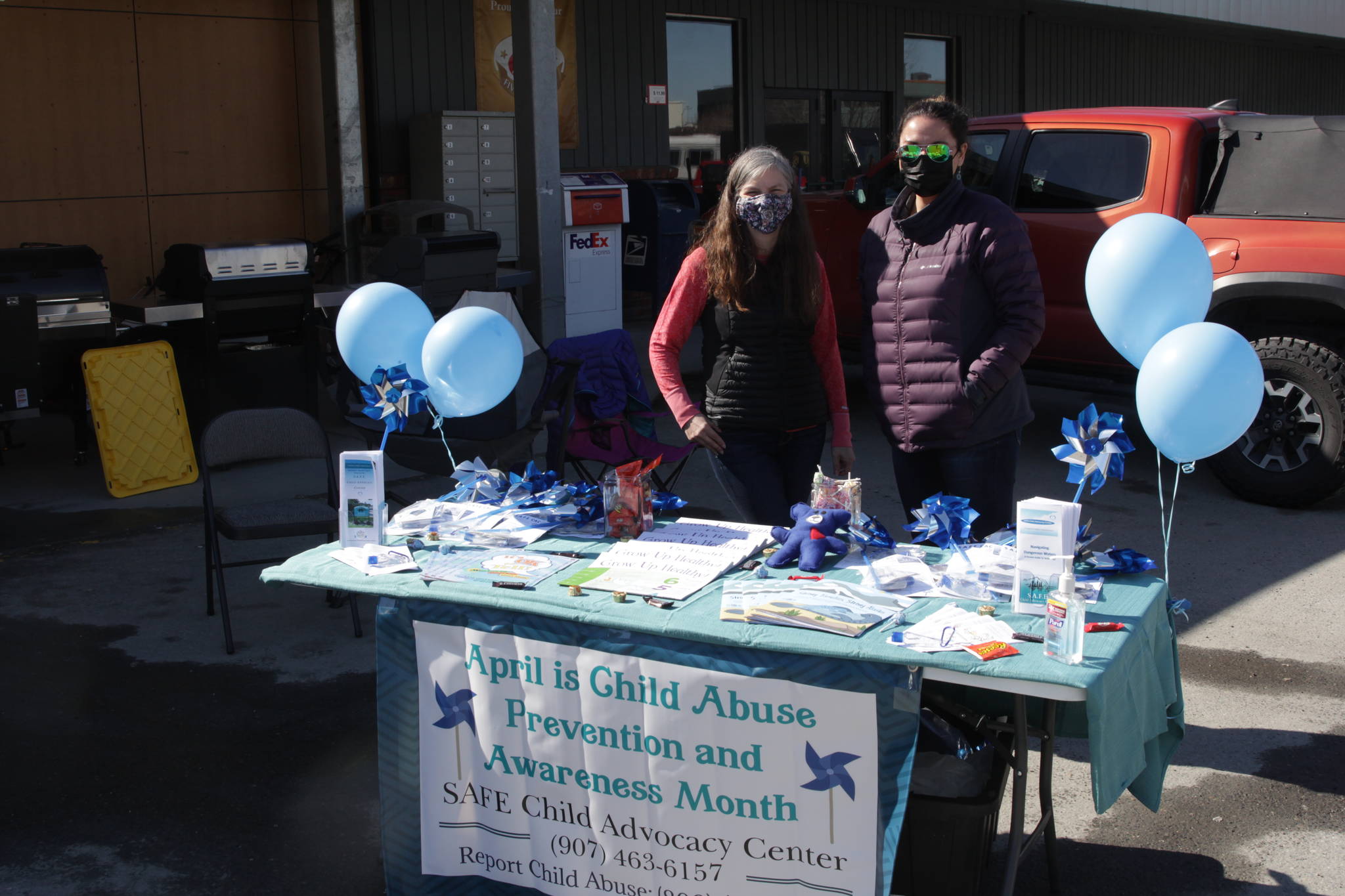
An earlier version of the story incorrectly identifed the program manager for Catholic Community Service’s SAFE Child Advocacy Center as Susan Moseby. Her name is Susan Loseby. The Empire regrets this error.
The pandemic has been marked by isolation, with shuttered schools and hunkering down in the home, which can be a fraught environment.
That’s why organizations dedicated to the welfare of children are concerned, as the community marks Child Abuse Prevention Awareness Month.
“With COVID and the isolation and the shutdowns within our community, our referrals actually dropped,” said Susan Loseby, program manager for Catholic Community Service’s SAFE Child Advocacy Center, in a phone interview. “I think it has to do with kids being at home, isolated, and not necessarily having safe adults to go and talk to.”
[City plans ahead for future avalanche seasons]
Lack of contact with adults, such as teachers, who are mandatory reporters could account for the drop in referrals, Loseby said. As kids reenter schools, referrals are steadily coming back. More than 20% of Alaskan children report feeling depressed, down or hopeless during the current pandemic, according to the the Kids Count program. Concerns about the wellbeing of children going into the pandemic have now had time to manifest.
“Do I think because we haven’t received the referrals, abuse has declined? No. I think it’s still happening,” Loseby said. “I think abuse is still happening. I don’t know if it’s increased, but there’s been extra stressors in people’s lives due to COVID.”
Those forces can act not only on kids, but on family members as well, which can trickle down in unforeseen and unfortunate ways, Loseby said.
“The stress and the fear has been pushed through the media of the possibility of contracting this and dying from it, it’s put a lot of stress on folks. That impacts how families are not only with their children but with each other,” Loseby said. “It doesn’t always have to be physical abuse or sexual abuse. It could be emotional abuse or neglect.”
Isolated from peer groups
Beyond direct abuse, the lack of interaction could weigh heavily on children, Loseby said.
“I think kids are highly missing the interaction that they have with their peers and with other adults on an in-person basis,” Loseby said. “I’m speaking through my kids’ eyes. Being involved in sports and other activities and losing that has been extremely difficult for them.”
Other factors present in life in America could also contribute to stress and anxiety, said Alyssa Coogan, children’s counselor at AWARE.
“The isolation was just, really really tough and there were a lot of things that happened over the last year that have been tough for kids and families; political things and social things,” Coogan said in a phone interview. “It’s been tough to go through for kids when you have a different opinion than your family.”
Screens alone can’t replace interaction, Coogan said. Kids learn from watching other kids interact with each other and adults, and it’s tricky to replace that with virtual interaction. It could also go the other way, Coogan said, with larger families struggling to maintain their own space.
“One of the biggest things I saw as a trend was a lot of kids lost their peer group. If you don’t have siblings that can be hard,” Coogan said. “There are so many things that can contribute to that. Some families have five or six kids. Can you imagine being a high schooler trying to do zoom classes with four siblings?”
Separation from institutions
Another factor could be the mental switch-up of doing schoolwork at home. Many humans use mental frameworks called schemas to organize their behaviors and information in certain environments: one for school, another for home, for example, Coogan said. Crossing those streams could add to stress and anxiety.
“Those schemas and expectations help people follow suit and perform in their environment,” Coogan said. “It’s not easy for every child because every child doesn’t have a hunky-dory home life.”
While people have been isolated, there has been a (slight) silver lining as telehealth options were no longer shunned but pushed to center stage, Coogan said.
“The COVID situation and quarantine and all that allows for telehealth to come to the forefront. A lot of people are doing that. I think that’s what filled my schedule so fast. It was one option that was not previously recommended but now i think it’s here to stay,” Coogan said. “There’s more flexibility because of Zoom and because of homeschooling.”
Helping to prevent child abuse can act like a firebreak, stopping an event that keeps growing and bleeding. The effects of child abuse percolate through every aspect of victim’s lives, according to the Alaska Children’s Trust. Direct economic effects can be felt in criminal justice costs, productivity losses and the requirements for special education and healthcare for victims. Child abuse in Alaska has cost the state $2.3 billion in spending and losses, according to the 2019 study.
The plight of children can be a grim one, Loseby said, but everyone has the power to help.
“Our motto is look, listen and report. Community members can be on the lookout for neighbors kids, when they’re at church, even in the grocery store,” Loseby said. “People can look out for signs that something is happening in the kids lives. We can listen. They can believe if a kid is telling something, and report it.”
Those with concerns that a child is the victim of abuse or neglect can call the state, or SAFE at 907-463-6157, Loseby said. For more information about the signs or costs of child abuse, Loseby said, the Alaska Children’s Trust, https://www.alaskachildrenstrust.org/ is a good resource.
“I think kids are very resilient,” Loseby said. “Do I think kids will bounce back? I do.”
• Contact reporter Michael S. Lockett at 757.621.1197 or mlockett@juneauempire.com.
If you suspect child abuse
Call: 1-800-478-4444 or email ReportChildAbuse@alaska.gov.
