
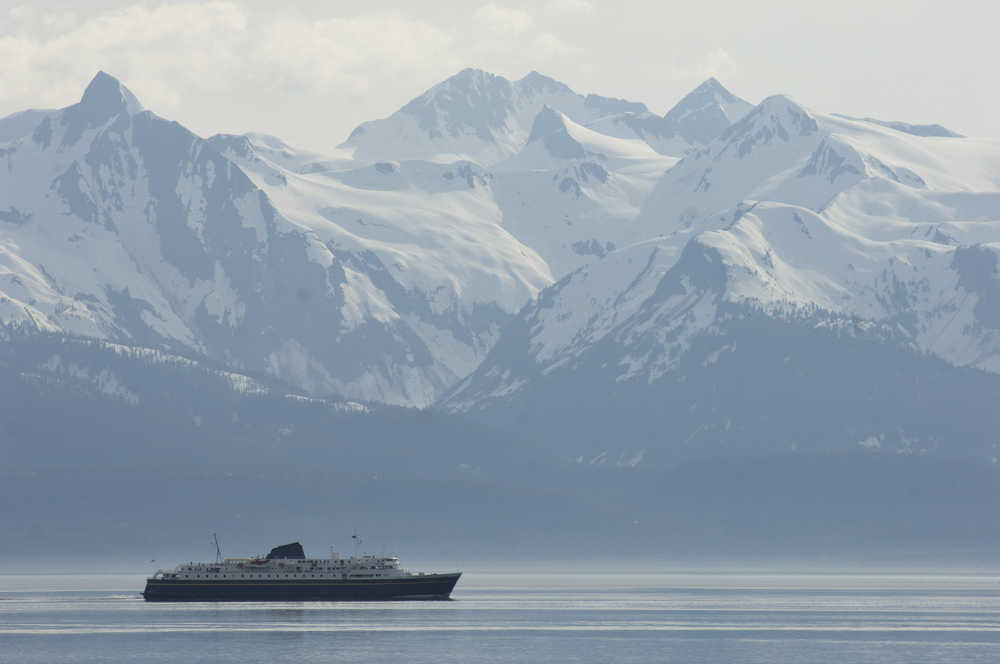
The head of the Alaska Marine Highway System gave the clearest statement yet that the ferry system will soon sell two of its 11 ships.
Speaking to the Alaska House Transportation Committee, Captain Michael Neussl, head of Marine Highway, said it makes little sense for the ferry system to own 11 ships when it only has the funding for nine.
“The fleet size, in my estimation and opinion, needs to shrink back,” he told the committee Thursday. “We will need to divest of some vessels, and we need to start looking at that sooner, rather than later.”
Neussl’s contention is based on what the ferry system calls “operating weeks.” One ferry running for one week is one operating week. If all 11 ferries are running in a given week, the system is providing 11 operating weeks.
In the current fiscal year, which began July 1 and runs through June 30, the ferry system has scheduled 357.5 operating weeks. According to AMHS figures, that’s the fewest number of operating weeks since 2005, when the ferry system provided 349 operating weeks with 11 ships.
The governor’s current budget proposal includes a $5 million cut to ferry system operations in the next fiscal year.
With that cut, the Marine Highway expects to reduce its service to 320 operating weeks, a level not seen since 2004.
If the Alaska Legislature elects to cut the Marine Highway budget beyond what the governor has suggested – something that appears possible, if not likely, considering lawmakers’ comments – that service would be reduced further.
Between 2000 and 2003, the Marine Highway offered between 291.7 and 326.6 weeks of service with just nine ships.
Lawmakers didn’t dismiss Neussl’s proposal out of hand, and some appeared positive about the idea, speculating on which ships should be sold.
Rep. Matt Claman, D-Anchorage, suggested the Fairweather and Chenega might be at the top of the list.
“Maybe we should be selling the fast ferries first,” he said. Judging by their maintenance and operation cost, “it certainly seems like those should be at the top of the list.”
Neussl replied that getting rid of the fast ferries is “certainly an option,” but the first pick would likely be the ferry Taku, which has been laid up for lack of funds since last year, and is 53 years old. The fast ferries are less than 20 years old.
In response to a question from Rep. Louise Stutes, R-Kodiak, Neussl said the Marine Highway will not get rid of the ferry Tustumena – one of the few able to serve Kodiak, the Alaska Peninsula and the Aleutians – until a replacement is built.
“We like to say the Tustumena is approaching its twilight years,” Neussl said. “It is not there yet.”
Before a new Tustumena is built, however, the ferry system will take into service two new Alaska-class ferries for Lynn Canal service.
Those boats, expected to enter service in 2018, would bring the Alaska fleet to 13 ships if none were sold off beforehand – a fleet definitely beyond the means of the state’s current budget.
Speaking in committee, Rep. Shelley Hughes, R-Palmer and co-chairwoman of the transportation committee, speculated that a nine-ship fleet might resemble the ferry system of a decade ago.
“Ten years ago, it wasn’t quite so bad; we had a pretty good state 10 years ago,” she said. “We can do this; it’s going to be OK. You’ll still be able to get from Point A to Point B.”
