
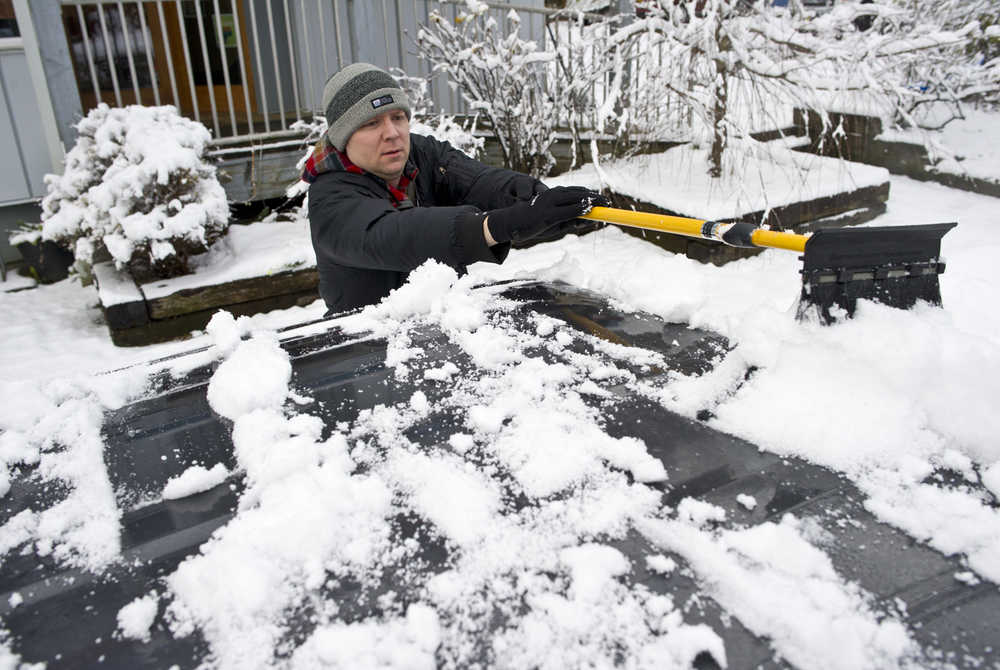
Batman has the bat signal. Spider-man has his spider sense. And snow-fighters — the name adopted by Juneau’s snow removal operators — have weather alerts from the National Weather Service. All three work to keep the community safe, but it’s the snow-fighters who are already at work when danger calls. Such was the case Tuesday, but budget cuts at both the state and city level may delay the time it takes to clear some of Juneau’s smaller roads.
“We’re ready this time of year every year,” said Ed Foster, superintendent of the city’s streets division and overseer of the so-called snow-fighters. “The snow is going to come; it’s inevitable.”
Hours before the weather service issued a winter storm warning calling for 12 to 18 inches of snow in a less than 48 hours (the warning was later revised, calling instead for 8 to 14 inches), city employees were out in trucks and on all-terrain vehicles clearing the streets. The state Department of Transportation also had plows out clearing state-owned roadways, such as Egan Drive.
The city and DOT snow-removal teams try to clear main thoroughfares in time for morning commuters to make it to work safely. Both groups prioritize roads based on traffic volume. They clear main arteries first, then connecting roads and finally smaller residential streets, according to Foster and DOT spokesman Jeremy Woodrow. DOT even has a map (dot.alaska.gov/wintermap) that shows how different streets stack up in its list of snow-plowing priorities.
“In Juneau, our main priority is Egan and the little bit of Glacier Highway that goes out to Auke Bay,” Woodrow said. “When we have snow events, we put as much man power on Egan as we can, and then we move on to priority two roads.”
Mendenhall Loop Road is an example of a priority two road, which the DOT aims to clear within 36 hours of a winter storm. The department looks to clear priority three roads, such as Fritz Cove and Thane roads, within 48 hours. These estimated times are always subject to change depending on the severity of storms. This year, however, they may be affected by budget cuts as well, Woodrow said.
The state cut the DOT’s operating budget by 12.5 percent from the last fiscal year, a decrease Woodrow said roughly equates to $34 million. The department’s operating budget is used only for street, ferry and airport maintenance and associated costs. The budget cut effectively killed overtime pay.
“Overtime was drastically reduced to almost nothing. We have to be very selective about how we use the little bit of overtime we have,” Woodrow said, explaining that it will likely be reserved for the worst winter storms.
This means that priority two and priority three streets may take longer to be cleared, Woodrow said. Though he isn’t sure how much longer crews may take to plow these roads. It will likely depend on “how hard the snow falls and when it falls,” but he encouraged anybody who lives on a priority three road to call the department if their street hasn’t been cleared within 48 hours.
“If we had a major winter storm in the past, our operators stayed out for an extra three or four hours, so we could start moving onto side roads,” Woodrow said. “Without overtime, those operators will be leaving when their shifts end. We’ll have less manpower and equipment on the streets.”
The city snow removal crews, too, may find themselves in a slippery situation if Juneau is hit with a big snowstorm, Foster said. Three years ago, budget restrictions resulted in losing two full-time operators.
“We’ve been operating short for a couple of years,” Foster said.
Though Foster didn’t have to cut any positions between last year and this year, he did lose funding for temporary winter operators, who could be called in to help in the event of a major snowstorm. Though the past few years have been relatively “light” in terms of snowfall, Foster, a street maintenance veteran with more than 20 years of experience in Alaska, said that a big storm could slow his crew down.
“We’ve been fortunate not to have any heavy winter weather since we cut back on operators,” he said. “But even if we had two more operators and we got dumped on like in ’07 and ’08, we would still be overwhelmed.”
The winter storm warning currently in effect is calling for more snow than Juneau has received in a single event since Foster slimmed down his team of snow-fighters.
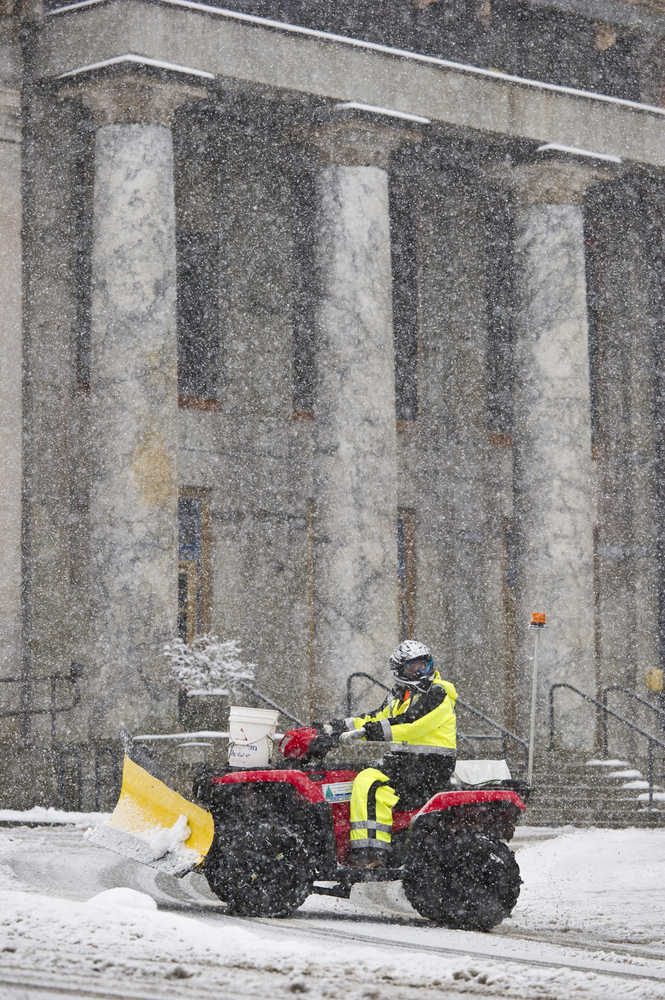
A city employee using a all-terrain vehicle passes by the Capitol building during Tuesday’s snow showers.
