
Vast indirect power. An apolitical position. Immense public support. A venerable institution designed to last.
The director of the Alaska Permanent Fund Corporation might as well be Alaska’s pope.
In a Juneau conclave on Wednesday, the corporation’s board of trustees considered four candidates to succeed Mike Burns, who died in July, one month after retiring.
After a day of interviews and weeks of vetting by corporation trustees, the board sent up black smoke: Following an hour and a half of closed-door deliberation, it could not reach a decision and will continue its discussions at 10 a.m. Friday.
“Having time to reflect on the answers that our candidates gave and weigh them against the needs of the Permanent Fund will produce the best result,” said board chairman Bill Moran in a statement. “Because of the importance of this position, we have decided to take that time.”
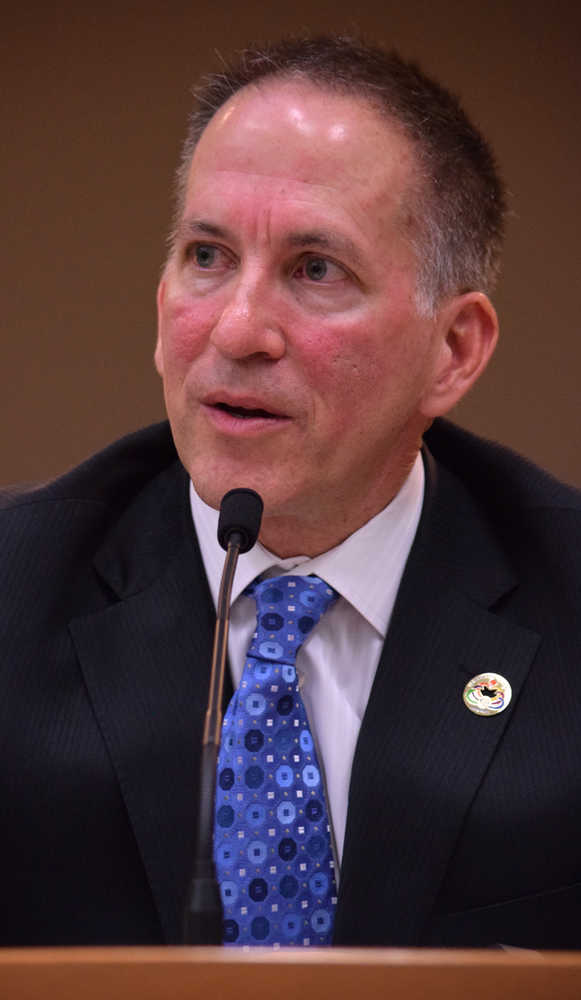
Its options are three men and one woman, two each from the public sector and the private sector:
• Angela Rodell, Alaska’s revenue commissioner under Gov. Sean Parnell;
• Brian Rogers, chancellor of the University of Alaska Fairbanks until August;
• Alexander Slivka, director of institutional marketing for McKinley Capital Management in Anchorage;
• Glenn Cipriano, CEO of Alaska USA Trust Co. in Anchorage.
The APFC oversees accounts worth $51.7 billion (as of close of business Tuesday) but is about to enter a new stage of its history.
“We’re approaching a period of uncertainty,” Slivka said.
Burns, who became director in 2004, oversaw the fund’s growth from $26 billion to $40 billion before the Great Recession knocked it back to $26 billion. As the markets recovered, so did the fund, which is at its highest levels since its creation in 1976.
Although Alaskans best know it for the dividends it provides them, those dividends weren’t intended to be its sole purpose. As the state faces a multibillion-dollar gap between revenue and expenses, the Alaska Legislature is considering proposals to use a portion of the Permanent Fund’s earnings to make ends meet.
In coming years, the state may also look to the Permanent Fund to solve the state’s pension debt obligations or assist in construction of the trans-Alaska natural gas pipeline known as AKLNG.
More immediately, the APFC is without a chief investment officer, the corporation’s de facto No. 2 and a person who normally coordinates the details of the corporation’s investment strategy. Jay Willoughby announced his resignation at the end of September.
Cipriano added that international instability may also affect the fund, referring to the evolving situation with Russia’s involvement in Syria and Israel’s possible reaction to the Iranian nuclear deal.
Each candidate was asked his or her opinions on using the Permanent Fund for those projects, about the fund’s investment strategy and the candidate’s background. Questions were provided in advance, but board members were permitted to ask additional ones.
“We didn’t want this to be a quiz,” said Randall Hoffbeck, Alaska’s revenue commissioner and a Permanent Fund trustee. “We wanted this to be a thoughtful process.”
Each candidate appeared to play to his or her strengths: Cipriano and Slivka spent most of their time discussing the intricacies of investments, while Rogers said he views those details as being the primary responsibility of the corporation’s chief investment officer. The executive director, he said, is the one who should be dealing with the public.
“If the trustees want to be a part of that public discussion, the executive director needs to be out there,” he said, but added that he would be unable to begin the job — if offered — until the start of 2016.
Rodell was between those extremes, saying she has ample experience dealing with both the public and financial affairs.
All four were asked about the problems the APFC has had recruiting and retaining employees whose skills are prized with multimillion-dollar bonuses and salaries in the private sector.
Rodell said the APFC needs to structure itself to plan for that turnover. “If we can attract bright, talented people … and then they want to leave and make millions of dollars, then we need to be OK with that,” she said.
Rogers said the state should be looking for people who “recognize the difference between an hour and a half commute versus an hour and a half kayak or boat trip.”
Slivka and Cipriano each said the APFC needs to increase its compensation to stay competitive, and Slivka emphasized that if the Alaska Legislature seeks money from the Permanent Fund’s earnings reserve, the APFC should seek greater independence from the Legislature as part of that price.
“It would be my objective to achieve a higher level of independence … from the Legislature,” he said.
All four candidates said they think any investments in the pipeline or pension bonds must be as profitable as other investment opportunities. The Permanent Fund’s written goals are to ensure long-term savings for future Alaskans, not serve as an investment bank.
“Because you’re governed by that mandate, you can’t give favorable treatment to the state,” Cipriano said.
“You’re not in the business — it sounds harsh, but this is not a charity — you’re in the business to make money,” Slivka said.
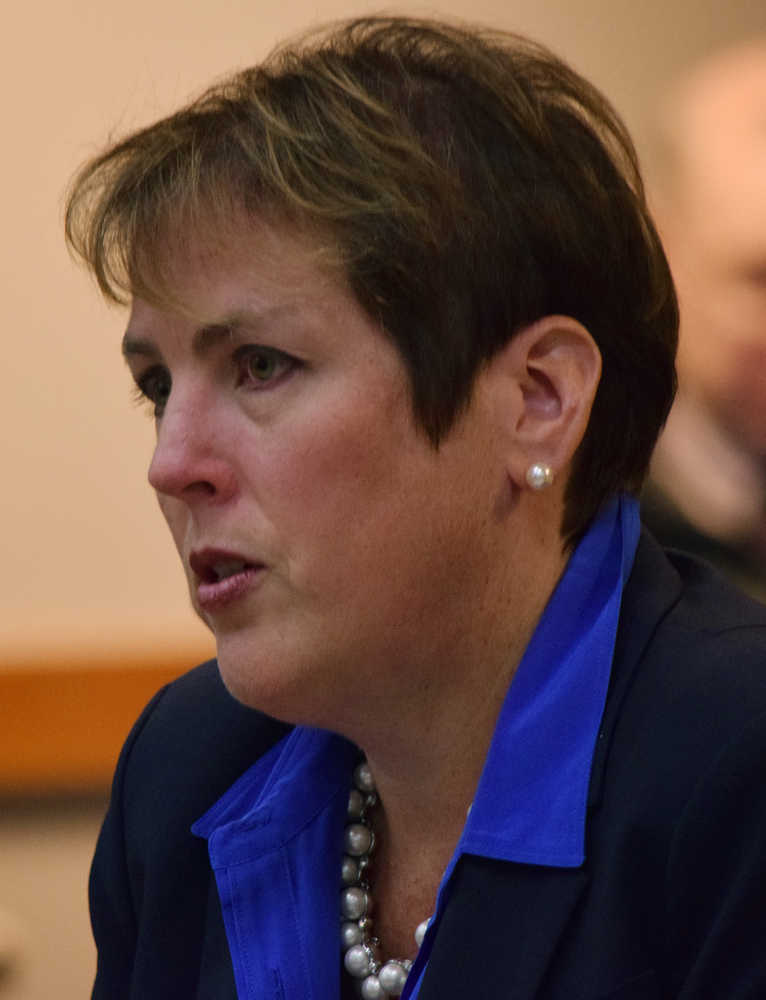
Angela Rodell, a candidate to become director of the Alaska Permanent Fund Corporation, answers questions from the corporation’s board of trustees on Wednesday, Oct. 7, 2015 in Juneau.
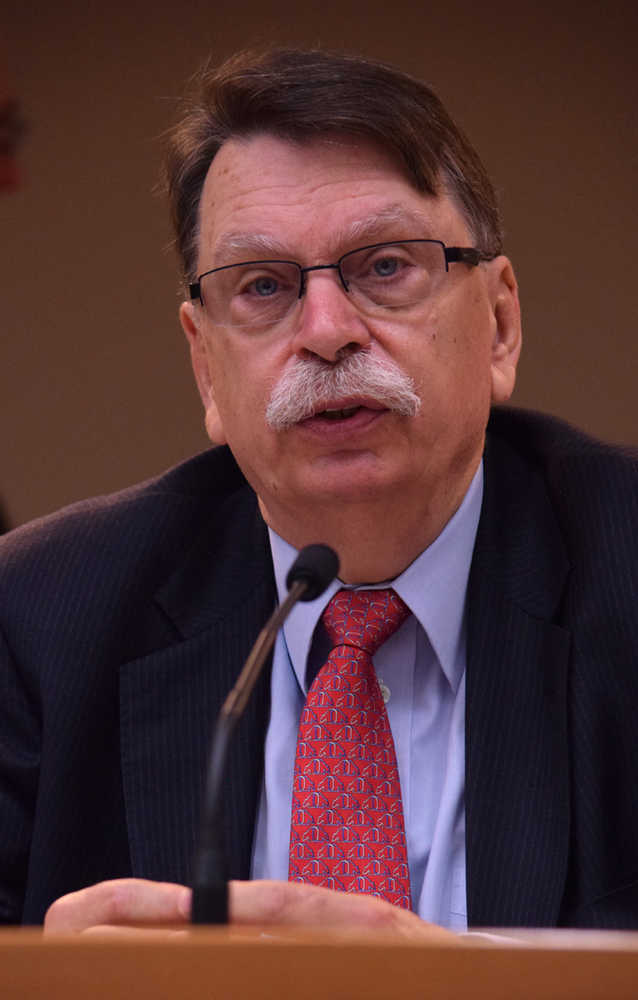
Brian Rogers, a candidate to become director of the Alaska Permanent Fund Corporation, answers questions from the corporation’s board of trustees on Wednesday, Oct. 7, 2015 in Juneau.
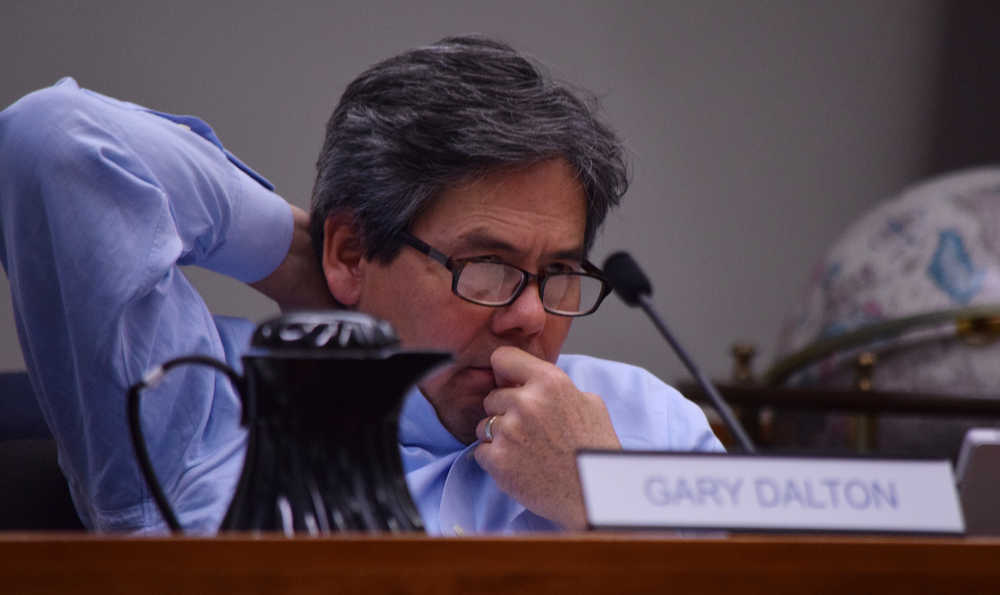
Gary Dalton, a member of the Alaska Permanent Fund Corporation board of trustees, ponders the answer given by a candidate for director on Wednesday, Oct. 7, 2015 in Juneau. Four candidates were interviewed by the trustees.
