
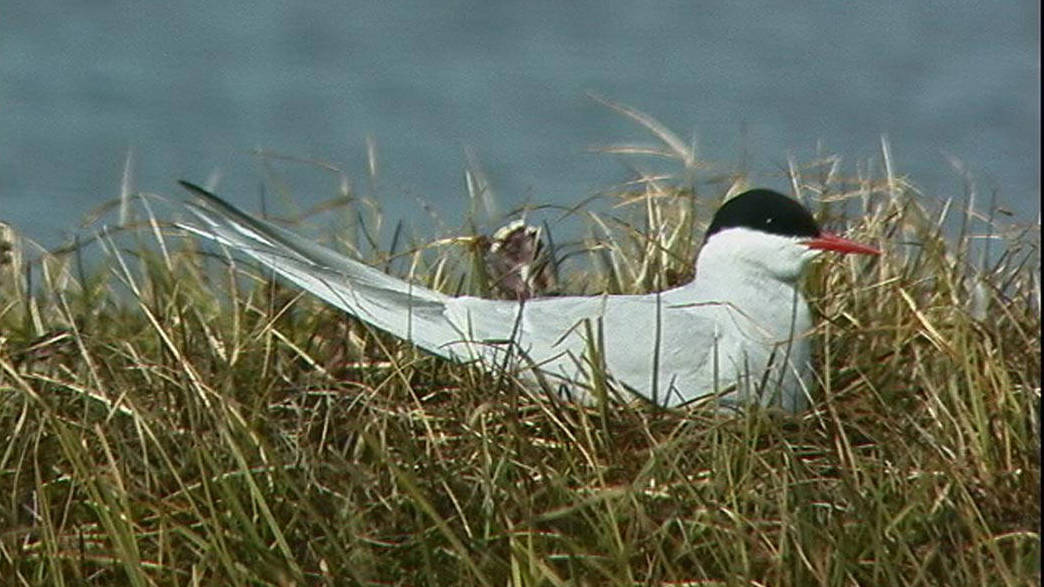
About 35 sleek, black-crowned Arctic terns nest at the Mendenhall Glacier Recreation Area in the spring and early summer, according to U.S. Forest Service biologist Gwen Baluss. They’ve been there since the 1920s, when the glacier covered most of Mendenhall Lake.
Populations of the birds are thought to be declining, the Audubon Society believes, and their nesting colony, in front of the popular viewing area Photo Point, is roped off. Signs around the area warn visitors to venture no further: tern eggs lie hidden in gravel-bound nests underfoot, making them vulnerable to the footfalls of hikers and the MGRA’s 500,000 annual visitors.
But despite those protections, a suspected canine attack on nests in the Photo Point area this week cost that population at least 18 eggs. U.S. Forest Service managers have reason to believe an off-leash dog and a pet owner, caught on camera, are responsible. But they’re not jumping to conclusions, Mendenhall Glacier Visitor Center Director John Neary said. They’re conducting an investigation to see if the dog walker trespassing in the nesting area is connected to the suspected canine attack. It could lead to fines.
At Photo Point on Friday, Neary explained that a biologist discovered 18 crushed eggs Tuesday while conducting research in the roped-off nesting area. As Neary spoke, protective tern at another colony dive bombed visitors in canoes.
“The camera caught images of people and a dog in the closed area. We know that. We also know that the biologist, Gwen’s (Baluss’) assistant, went out Tuesday morning and that 18 eggs had been predated on and there were canid tracks between each nest and that the eggs were crushed,” Neary said. “It looks more like a large carnivore instead of just a bird pecking at it.”
Footage being analyzed by the USFS’ law enforcement arm shows a dog walker and dog in the area at some point Monday or Tuesday morning, Neary said. In that same time frame, the eggs were destroyed by a predator that doesn’t appear to be a bird. Dog tracks were found between nests.
“We don’t know if the people with the dog had anything to do with the nest predation, and we suspect it’s possible that it didn’t, that it was a different event. But we do know that there was a person in the closed area when they shouldn’t have been,” Neary said.
The USFS hopes to know more next week after analyzing images from a camera in the nesting colony.
Baluss has studied Arctic tern in the area for about 10 years. She spoke to the Empire over the phone from the Yakutat Tern Festival.
Arctic tern have one of the longest migration patterns of any bird, Baluss said. The long-lived birds nest in far northern climates around the world in the summer, then fly a convoluted route to Antarctica for the winter — summer in the southern hemisphere.
“They’ve made this journey many, many times. … They’re just amazing flyers. They’re very aerodynamic,” Baluss said. “We’re very lucky to have them nesting in our area, they like the recently-glaciated habitat because it’s fairly open.”
There are two colonies in the glacier area: one in front of photo point and another across the lake on a rock spur. Arctic tern numbers fluctuate from year to year, Baluss said, with a high point exceeding 100. Lately, numbers have been low, dipping to about 35 at last count. The birds nest in Juneau from late April or May sometimes to the end of July. Chicks should hatch soon, Baluss said.
The attack might have decimated the Photo Point colony as tern don’t normally nest again in an area of an attack, Baluss explained. She’s hopeful that the colony across the lake will produce young this year.
“All hope is not lost,” Baluss said.
People have been caught entering the roped-off nesting area before, Neary said, including a recent group of runners who ducked the rope. That group was caught on camera and fined, he said.
Usually, the rope and sign system works well, Neary said. But even if a dog walker entered the colony unaware of their surroundings, it would be hard to remain ignorant, he said: tern are protective and would likely start dive bombing any human near their nests.
The broader issue, Neary said, is off-leash dogs. Compliance with leash laws at Photo Point has actually gotten better in recent years as people have become aware of the tern habitat, Neary said, but it’s spotty in other places. Trails that have been closed from run-ins between bears and off leash dogs tend to see higher leash compliance, Neary said.
“I’m seeing our residents gain an appreciation for what we’re trying to do right around here,” at Photo Point, Neary said. “But, I don’t think that carries into Dredge Lakes, where we also have different kinds of sensitive wildlife and we also have bears roaming all around here. I know it applies to Steep Creek Trail, for example, where we have a lot less people with their dogs running crazy on a trail that has been closed because of bear use. We’re seeing more compliance with that. But less so in other places.”
• Contact reporter Kevin Gullufsen at 523-2228 and kgullufsen@juneauempire.com. Follow him on Twitter at @KevinGullufsen.
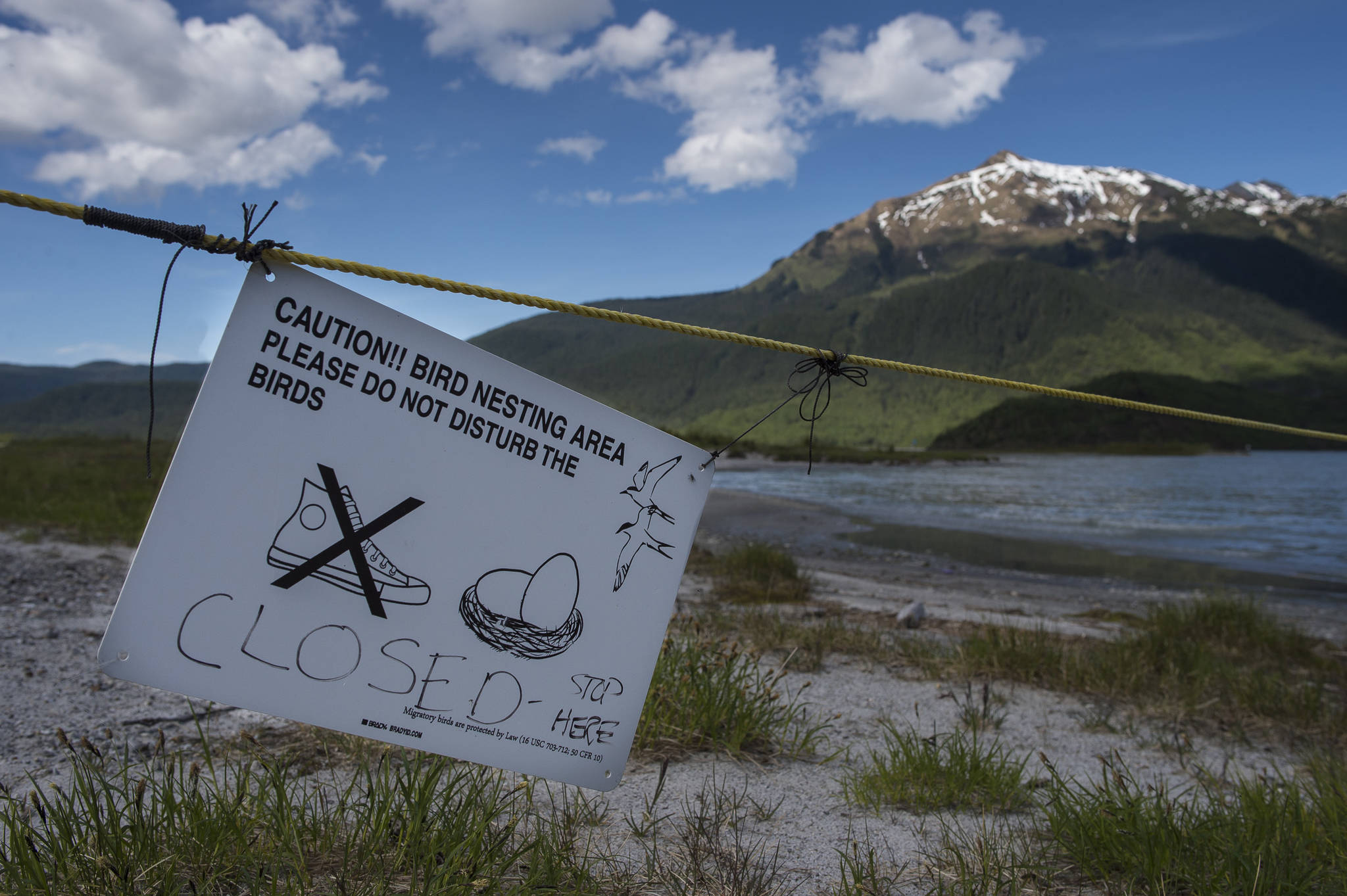
A sign shows the protected area for nesting Arctic terns at Mendenhall Lake on June 1, 2018. U.S. Forest Service discovered 18 broken tern eggs in a protected area at the Mendenhall Glacier Visitor Center on Tuesday. (Michael Penn | Juneau Empire)
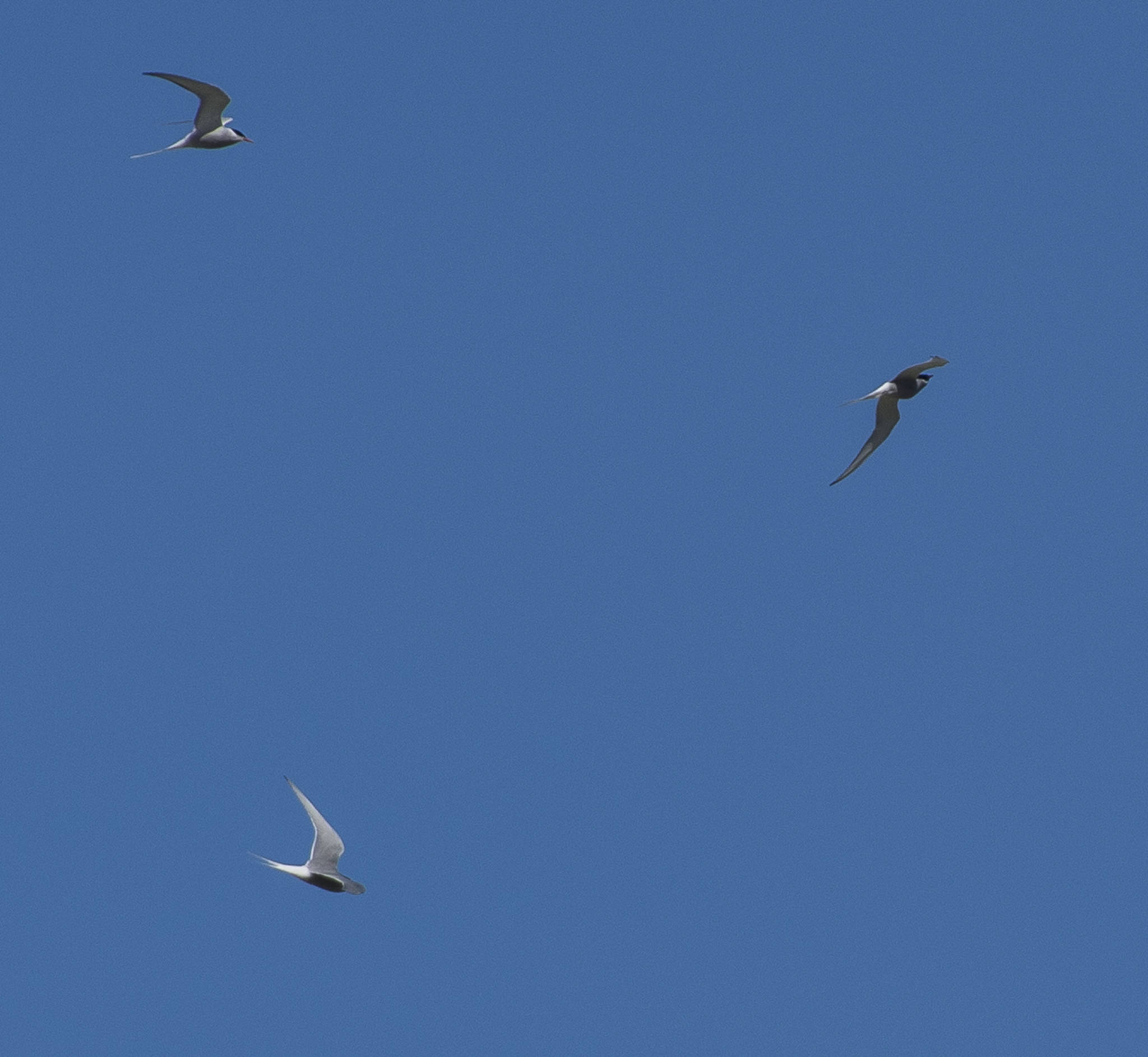
Arctic terns fly above Mendenhall Lake on June 1, 2018. U.S. Forest Service discovered 18 broken tern eggs in a protected area at the Mendenhall Glacier Visitor Center on Tuesday. (Michael Penn | Juneau Empire)
