
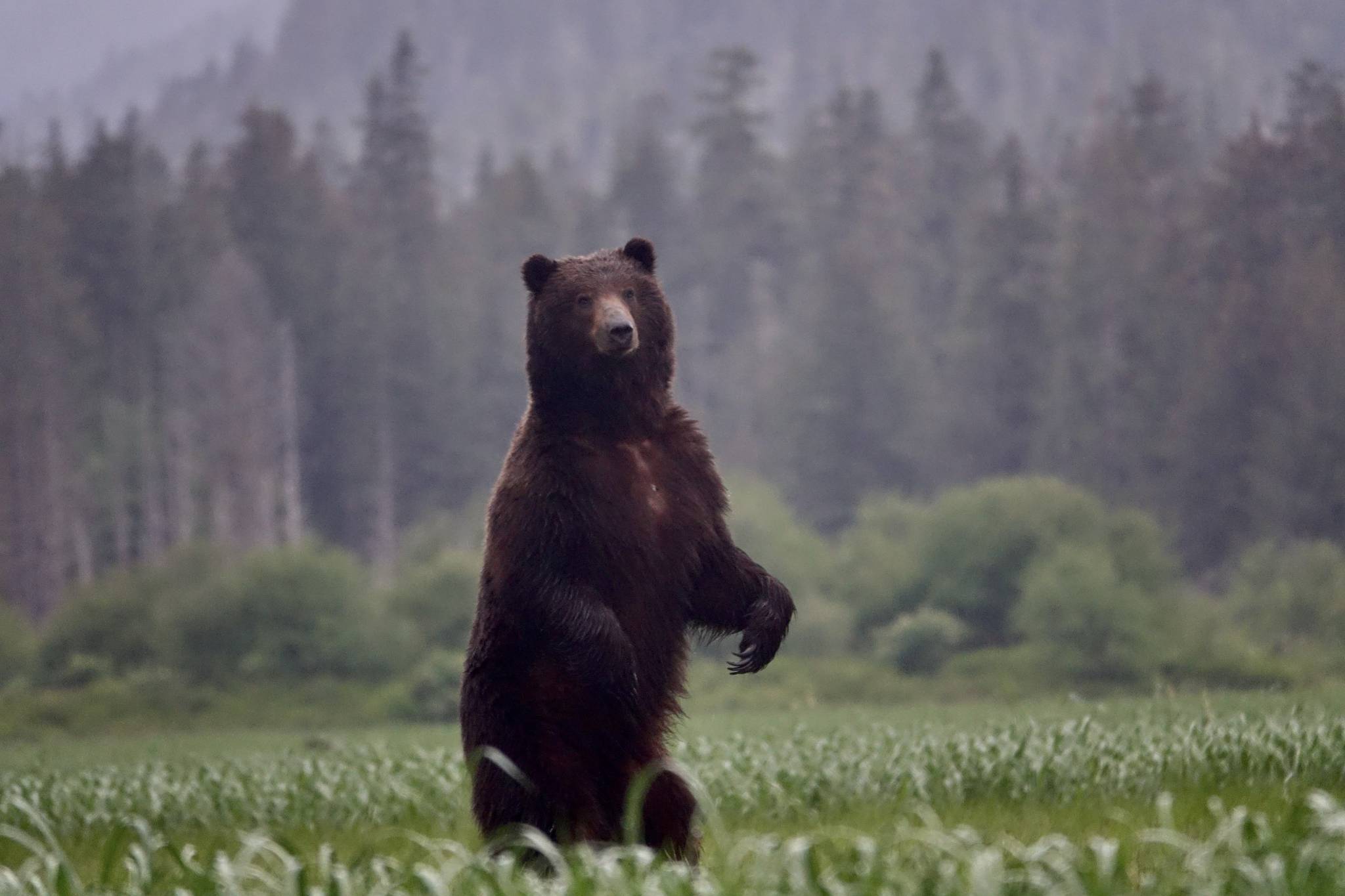
Bjorn Dihle wanted to write a book about brown bears, man and how the two species get along that wasn’t scary.
“I didn’t want to sensationalize the whole brown bear demon-monster mythology,” Dihle said in a phone interview. “It’s so prevalent in so much of the world because of misrepresentation for the media.”
But when the lifelong Alaskan, wildlife guide, writer and editor sat down to review an early draft of his forthcoming book, “A Shape in the Dark: Living and Dying with Brown Bears,” Dihle said he realized missed the mark — at least at first.
“I sent it to the editors, and they were like, ‘Man, this is terrifying,” said Dihle, whose work has appeared in the Empire. “I had to rework a lot to try to offer explanations for what happened. Why something happened. If you get attacked by a bear, it’s not like it was random. There were a lot of steps that led up to it —mistakes that you made, generally speaking —that led up to a person getting attacked.”
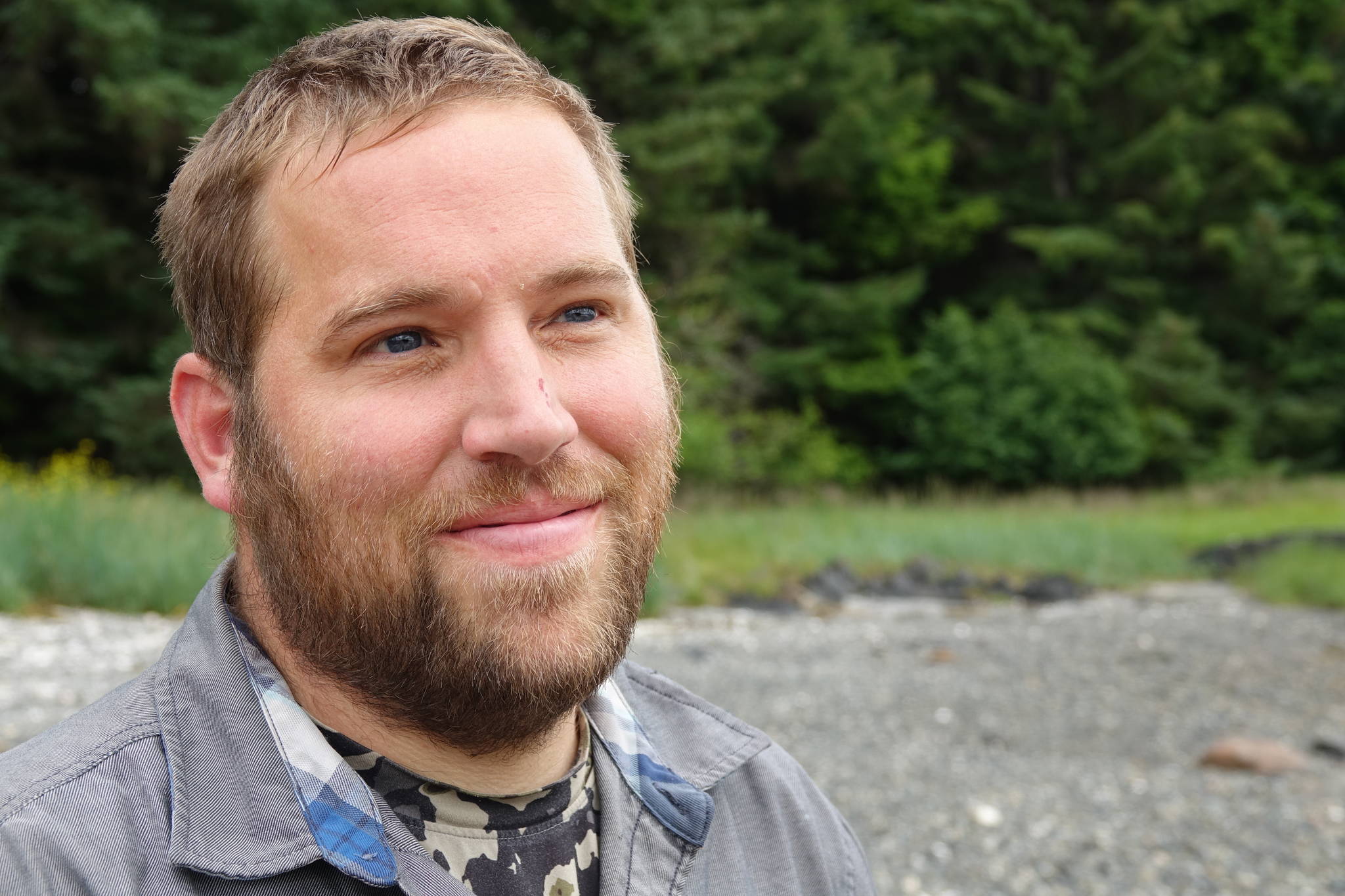
Courtesy Photo / Mary Catharine Martin Bjorn Dihle, whose work has appeared in the Juneau Empire, set out to write a bear book that isn’t scary. The result is “A Shape in the Dark: Living and Dying with Brown Bears.”
The version of “A Shape in the Dark” that will be available on bookstore shelves and online in mid-February offers thoughtful, nuanced depictions of human-bear interactions from both centuries ago and the modern day. The book tells a series of bear stories —each chapter is generally self-contained, but past stories are occasionally referenced —that show an evolving understanding.
[Pride of Bristol Bay: Bears of McNeil and the Pebble Mine]
The bulk of Dihle’s first-person stories from the present day or recent past end with a large animal loping away from humans. While some of the past accounts end with loss of life, a modern lens is applied to the events. That context often changes the understanding of attacks that were foundational in shaping the perception of brown bears. The power of the animals and potential for deadly encounters is never discounted, but each encounter is carefully considered.
Dihle said some early accounts of human interactions with brown bears, create the impression that bear-related fatalities were not only commonplace but practically inevitable due to the nature of bears, but, upon closer appraisal even famous tragedies — could have had unremarkable endings based on modern best practices.
“You actually examine the documents, and it’s like that wasn’t the case at all, man,” Dihle said.”That was a totally avoidable fatality.”
That would seem to be the case of a Forest Service employee named Jack Thayer, whose story is the subject of the book’s eighth chapter.
Thayer was killed by a bear in 1929 on Admiralty Island, the only documented case of a bear killing a person on the Southeast Alaska island until 2018.
With a modern conditions and with a better understanding of bear behavior, Dihle makes a case, based on primary documents written by one of Thayer’s co-workers, the attack may have not have even happened.
Dihle said detective-like work and a reason to research are among his favorite aspects of writing the book he’d been thinking about for roughly a decade.
“One of the coolest things about a project like this is it’s an excuse to dive deep into research and go places you’d never normally go in your normal life,” Dihle said.
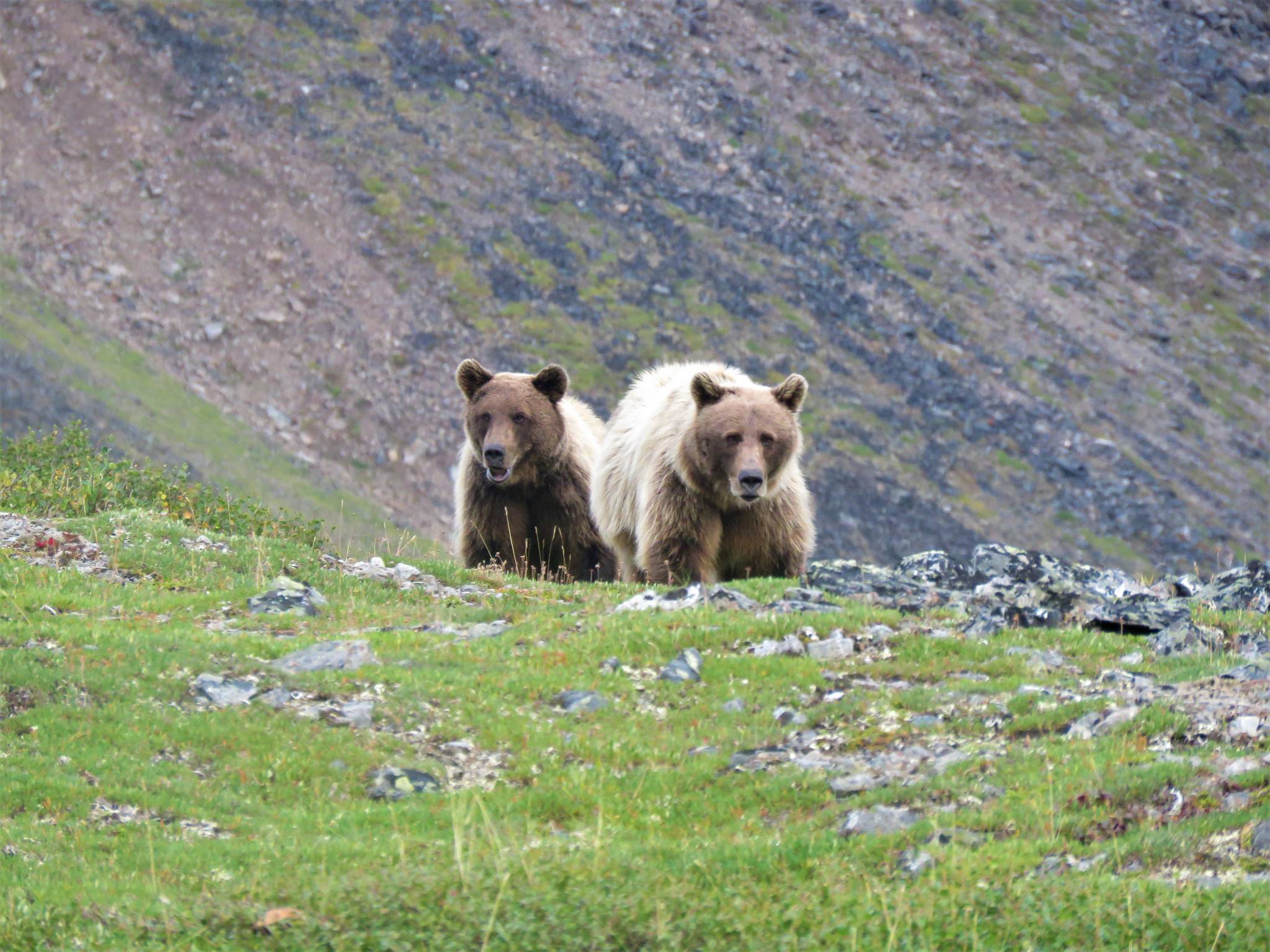
Courtesy Photo / Bjorn Dihle A mom brown bear accompanies a big cub in the Brooks Range.
While the conditions, outcomes and primary players in the stories change, respectful depictions of a powerful animal that’s come to be closely identified with the Last Frontier are a constant.
The humans described in the book are treated with a similar evenhanded reverence. Dihle said that was a conscious effort to provide contrast to pop culture depictions of Alaskans, and he hopes the book offers a more complete depiction of Alaska and its ursine and human residents.
“I wanted to show the bigger picture,” Dihle said. “There’s so many hunters I know, and I’m a hunter, too, who have such a deep respect for wildlife. So that was one thing I hope city folks in the Lower 48 get from this. Even the people who are making their living hunting brown bears, the majority of them —that I’ve come into contact with —are really good people who care about conservation.”
• Contact Ben Hohenstatt at (907)308-4895 or bhohenstatt@juneauempire.com. Follow him on Twitter at @BenHohenstatt.
