
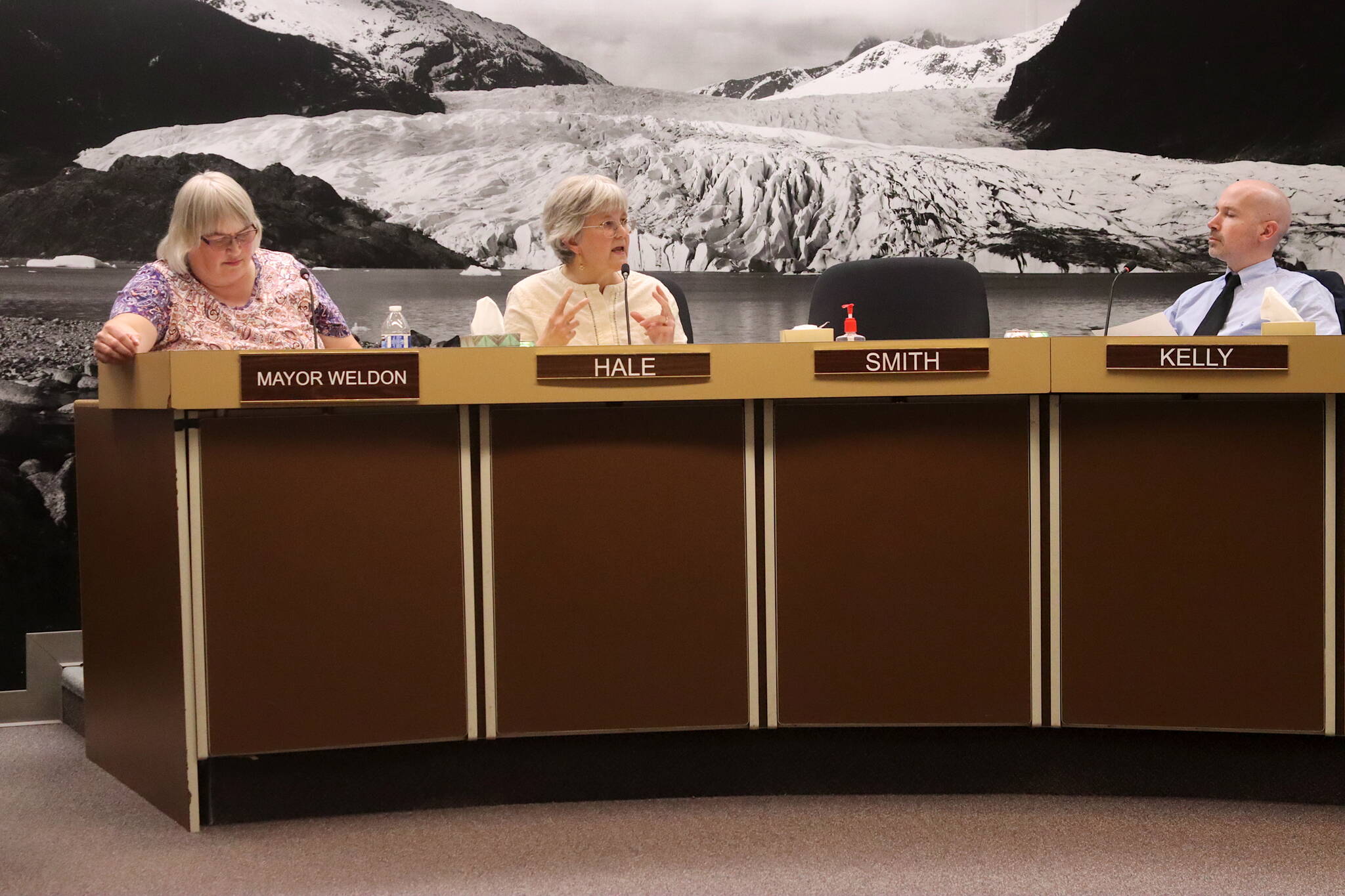
Lowering the property tax rate to 10.04 mills for the fiscal year starting July 1, compared to the current rate of 10.16, got initial approval by Juneau Assembly members as they put the final touches on next year’s proposed municipal budget during a meeting of their finance committee Wednesday night.
The full Assembly is scheduled to take up final consideration of the budget, including an opportunity for public testimony, at a special meeting at 6 p.m. June 3. Adoption of the budget is required by ordinance by June 15.
The initial draft budget introduced April 1 proposed increasing the mill rate to 10.32 mills to cover the cost of the City and Borough of Juneau taking over three buildings from the Juneau School District as part of a consolidation plan scheduled to take effect July 1. The proposal by City Manager Katie Koester was part of a largely status-quo budget of about $140 million for municipal services, and $460 million in total expenditures when all CBJ entities such as the Juneau School District and Bartlett Regional Hospital are factored in.
However, Mayor Beth Weldon proposed the lower mill rate that was approved Wednesday night after multiple other proposals by members were also considered and rejected. She proposed funding the estimated $1.1 million cost of taking over the school buildings from money previously allocated toward a new City Hall (plans for which are still pending) and lowering somewhat the payments on debt made during the coming year.
Alicia Hughes-Skandijs proposed keeping the 10.32 mill rate in the original draft, arguing it would allow more services sought by residents in what’s currently a status-quo budget.
“I just want to give voice to the fact that I hear from the citizens of the community ‘Fund our schools. Fund them as high as we can fund them, go above and beyond, find new ways to fund them and make up the difference of what the state is not doing. Please do more swimming lessons. There’s not enough swimming lessons for the kids to get into. We need a park in this part of town,’” she said.
Hughes-Skandijs said the increase to 10.32 mills means a person with a $500,000 home would pay about $80 more in property taxes, and “when you actually do the math and you are talking about sort of this outcry for property tax relief I do not hear that.”
That argument fell flat with Deputy Mayor Michelle Bonnet Hale, who said the perception of residents about how city leaders are collecting and spending money is crucial when there is a need to request bonds or other funds for large projects.
“I would say that not reducing the mill rate at this time when we can — and when other Assemblies have done that previously where we started with a stable mill rate — that makes it harder to move forward on projects because people see that we are just inflexible and we will not reduce the mill rate,” she said.
The amendment failed by a 2-7 vote, with Finance Committee Chair Christine Woll the only member joining Hughes-Skandijs in favor of the motion.
A proposal in the other direction was made by Assembly member Greg Smith who argued for lowering the current rate by 0.25 mills to 9.91 mills for next year, based on the minimum necessary to fund existing services and meet bond debts.
“By reducing this mill rate showing the community that we’re responsive to their needs and and in trying to build trust so that they will hopefully go and approve projects in the future,” he said. “We are paying our debt that is required and then some by doing this. We don’t need to cut services, but we can reduce the mill rate and still pay all our debts.”
That proposal failed by a 4-5 vote, with Hale, Ella Adkison and Wade Bryson joining Smith in favor. Weldon and other members opposing the motion said the low rate is too low for comfort given that the city may have to incur additional bond debt to fund large-scale projects identified as priorities.
Weldon’s proposal subsequently passed by a 7-2 vote, with Woll and Hughes-Skandijs opposing.
“I feel it’s imperfect, but I’m OK where it’s gotten to,” Smith said.
The lower mill rate will mean a projected loss of revenue of slightly more than $1 million, said CBJ Finance Director Angie Flick. She noted the city after the budget is passed will have about $6.3 million remaining in its unrestricted general fund balance.
However, that total assumes the school district will use all of a $4 million loan approved by the Assembly for the current budget year. School board members during a recent meeting, citing an improvement in the district’s financial outlook, reduced the loan request to $1 million.
Wednesday’s meeting was the first Weldon attended since her husband Greg was killed in a motorcycle accident on April 21. Near the end of the meeting, after the budget was approved for consideration by the full Assembly, she offered thanks to her colleagues for the work done in her absence.
“Unfortunately I missed quite a bit of the finance and budget stuff, and I just want to thank those members that channeled me during that process. I really appreciate that,” she said.
• Contact Mark Sabbatini at mark.sabbatini@juneauempire.com or (907) 957-2306.
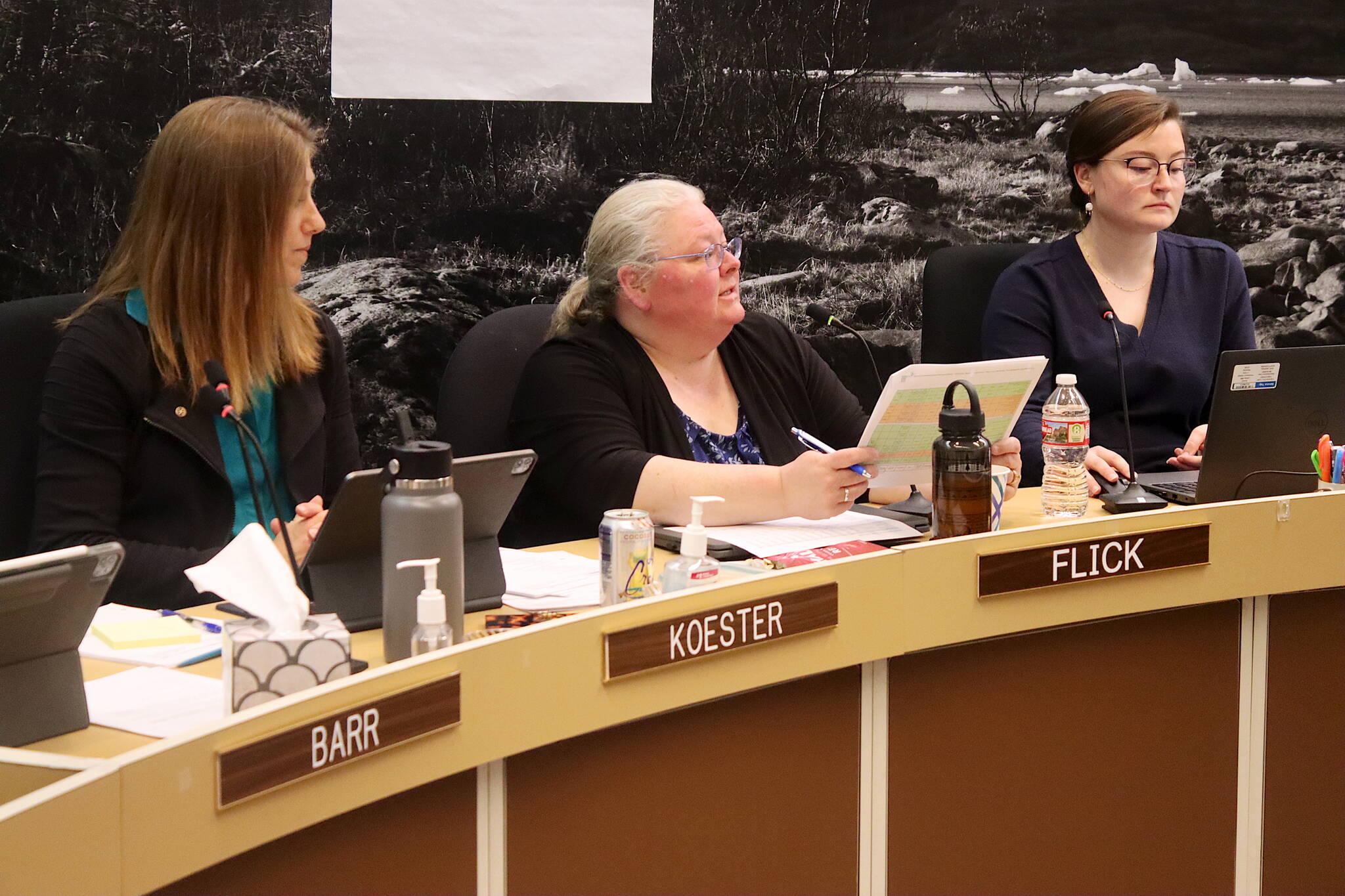
Angie Flick (center), finance director for the City and Borough of Juneau, explains to Assembly members the financial impacts of various adjustments to the mill rate during a Finance Committee meeting on Wednesday night. (Mark Sabbatini / Juneau Empire)
