
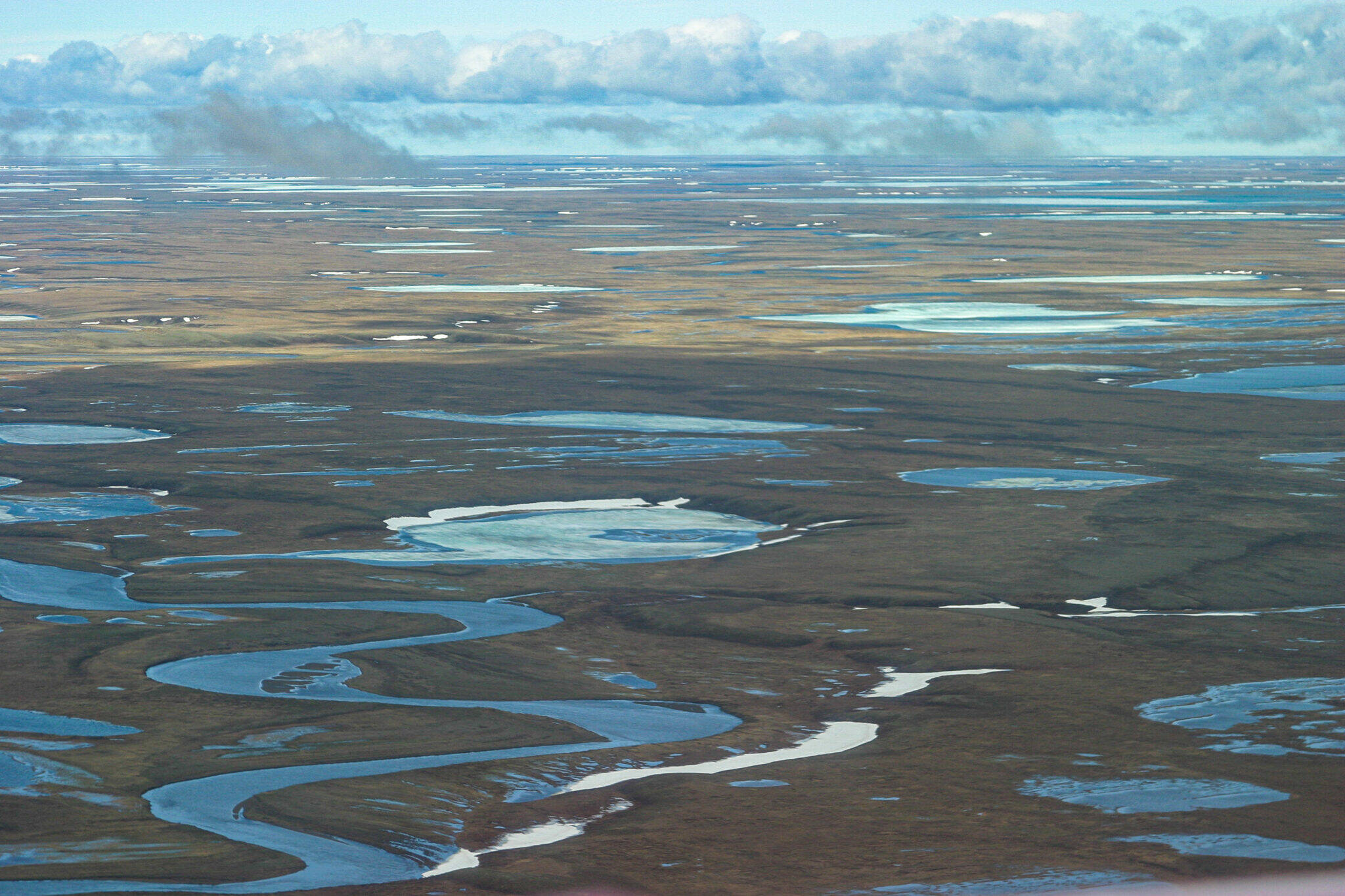
The Trump administration plans to lift environmental protections on roughly half of the National Petroleum Reserve on Alaska’s North Slope, reopening the area to possible oil and gas drilling.
The new move would reverse actions taken during the Biden administration to restrict development in the 23 million-acre reserve.
The plans, announced Sunday in Utqiagvik and formally on Monday by the U.S. Department of the Interior, open a public comment period, with final action to come later. The plans were announced as three of the Trump administration’s top officials visit Alaska.
U.S. Interior Secretary Doug Burgum, U.S. Energy Secretary Chris Wright, and Lee Zeldin, administrator of the U.S. Environmental Protection Agency, are in Alaska this week for a series of events, including a speaking engagement at Gov. Mike Dunleavy’s annual sustainable energy conference, which begins Tuesday in Anchorage.
During a brief question-and-answer session with reporters on Sunday, U.S. Sen. Dan Sullivan, R-Alaska, sat alongside the three cabinet members and called the effort to restrict development in NPR-A the “most egregious effort of the Biden administration,” adding that “one of the top priorities is to get the NPRA back to where it was supposed to be by the intention of Congress, to develop oil and to remove all the regulations that the Biden guys put on NPR-A, and that is a huge priority.”
While large oil companies have expressed little interest to date in drilling within the Arctic National Wildlife Refuge, which lies to the east of the Prudhoe Bay oil fields, there has been interest in drilling within the reserve, which lies to the west.
Since the first days of the second Trump administration, federal officials have said that they are prioritizing an effort to eliminate obstacles for companies interested in digging or drilling for natural resources in Alaska.
Burgum, Wright and Zeldin traveled to the North Slope after meeting with state officials in Anchorage on Sunday and were scheduled to tour Pump Station No. 1 of the trans-Alaska Pipeline System before returning to Anchorage on Tuesday to participate in the governor’s energy conference.
The two-hour Anchorage event was largely closed to the public, but reporters were able to listen to closing remarks and ask limited questions at the end.
There were no new details about the potential construction of a trans-Alaska natural gas pipeline, and officials did not address the Trump administration’s decision to freeze or rescind grants awarded to renewable energy projects in Alaska.
Burgum, speaking in Anchorage, noted that Ted Stevens Anchorage International Airport offers direct flights to 16 countries and talked about the “rise of the Pacific” in terms of global commerce.
“Alaska can play such a huge role in this, but we’ve got to get the federal government out of your way. That’s what the three of us are here to do,” he said.
In response to a question, Burgum said the administration plans to prioritize development of the planned Ambler Road, a 211-mile mining access road through the Brooks Range, and the proposed King Cove Road, an 11-mile road connecting King Cove to the Cold Bay airport, among other projects.
On Monday, environmental groups responded to the NPR-A decision with scorn and concern.
Grandmothers Growing Goodness, an environmental group that supports Indigenous communities in the Arctic, said that the repeal of the Biden administration protections would significantly impact Teshekpuk Lake and its surroundings, which are important for the Teshekpuk caribou herd. “The area is also integral to Indigenous subsistence practices, supporting hunting, fishing, and gathering,” they said, in an email statement with the announcement
Protest demonstrations are planned in Anchorage for Monday and Tuesday to oppose the proposed Alaska LNG pipeline project and “other fossil fuel projects promoted by Gov. Dunleavy’s ‘sustainable energy conference,’” according to organizers.
“It’s hard to overstate the havoc this could wreak on the Western Arctic’s undisturbed habitat for caribou, polars bears and belugas,” said Marlee Goska, Alaska attorney at the Center for Biological Diversity. “Trump’s fixation on plundering Alaska’s ecosystems for short-term gain is matched only by the stupidity of turning this precious place into a fossil fuel extraction site. Alaska’s vast expanses of wild lands are a big part of what makes our state so special, and we’ll do everything possible to protect these places.”
• James Brooks is a longtime Alaska reporter, having previously worked at the Anchorage Daily News, Juneau Empire, Kodiak Mirror and Fairbanks Daily News-Miner. This article originally appeared online at alaskabeacon.com. Alaska Beacon, an affiliate of States Newsroom, is an independent, nonpartisan news organization focused on connecting Alaskans to their state government.
