
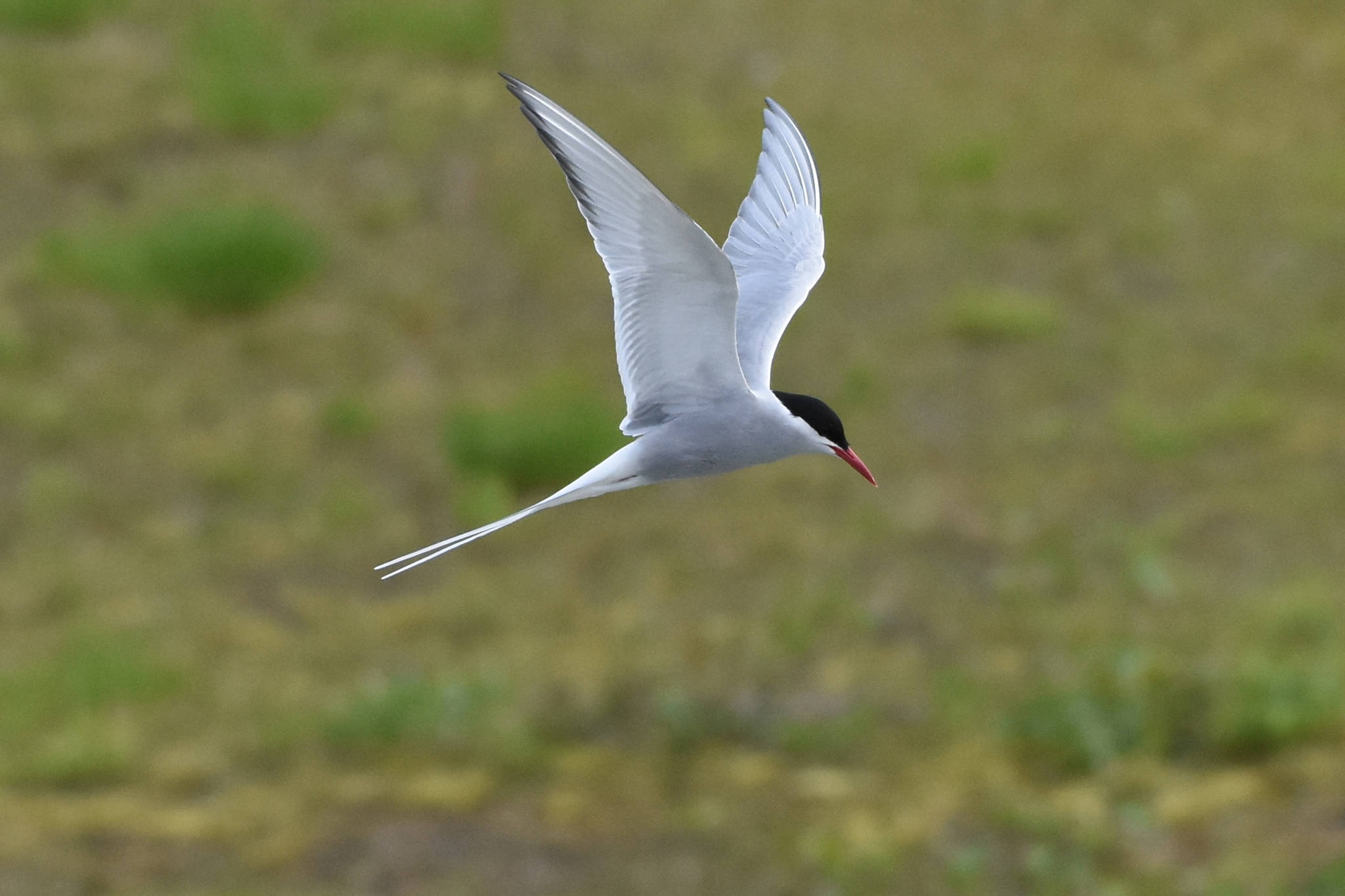
The number of Arctic terns spending summers by the Mendenhall Glacier Visitor Center seems to be dwindling.
Gwen Baluss, U.S. Forest Service wildlife technician and Audubon Society member, said while the small, fast-flying birds are difficult to tally because of their similar appearance and dizzying movement, year-over-year counts suggest there are fewer of the birds nesting near the glacier over time.
“It seems we probably have a few less than we used to,” Baluss said after delivering a lecture about the birds at the visitor center Friday night. “I don’t think we really know what’s going to happen next.”
The talk was part of the free and public Fireside Lecture series.
Last year, Baluss’ count indicated there were no new Juneau-born fledglings to add to the total because of predation.
“I’m definitely concerned there aren’t that many young,” Baluss said.
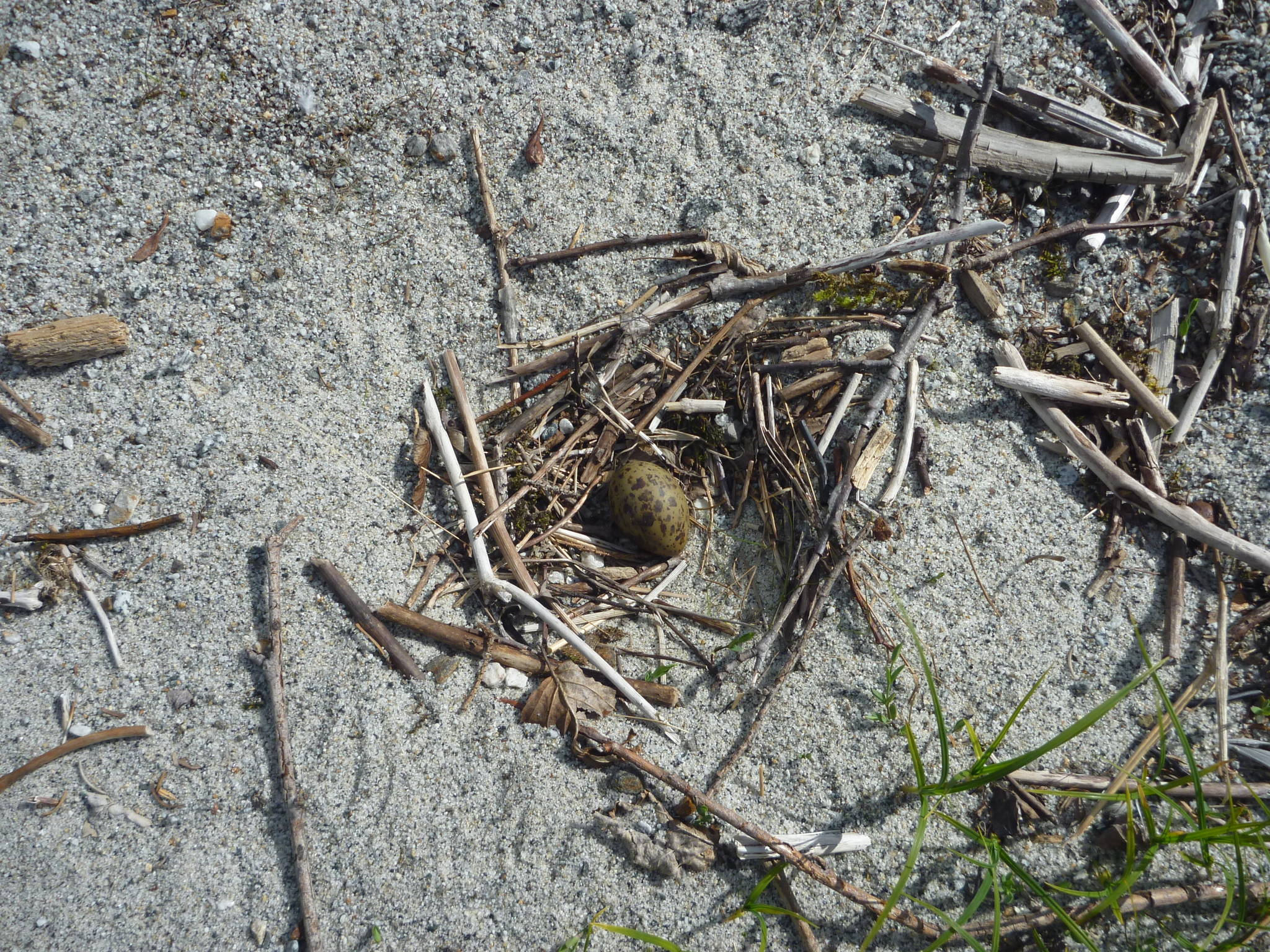
An Arctic tern nest is untended near the Nugget Falls Trail near Mendenhall Glacier. (Courtesy Photo | U.S. Forest Service)
Baluss said a wolf wiped out seven nests, a rare-for-Juneau peregrine falcon preyed upon terns and a dog may have also caused that count.
[Bird colony may have been attacked by dog]
The wolf event was especially surprising, Baluss said, because of its timing, location and the species involved.
While wolves are known to eat both birds and eggs, Baluss said it was unusual for a wolf to be present near the visitor center at 2 a.m., when the nests were preyed upon, and to bother eating the terns’ relatively small eggs of birds. Arctic terns only grow to be about 5 ounces in weight.
“It’s certainly something new for here,” Baluss said.
She said loose dogs near where Arctic terns nest are also a concern. Whether the dogs cause harm to the birds or their eggs, the presence of potentially predatory animals disturbs Arctic terns, Baluss said.
During her talk, Baluss said Juneau’s colony is just a small piece of a global picture, but the worldwide status of the birds isn’t necessarily encouraging.
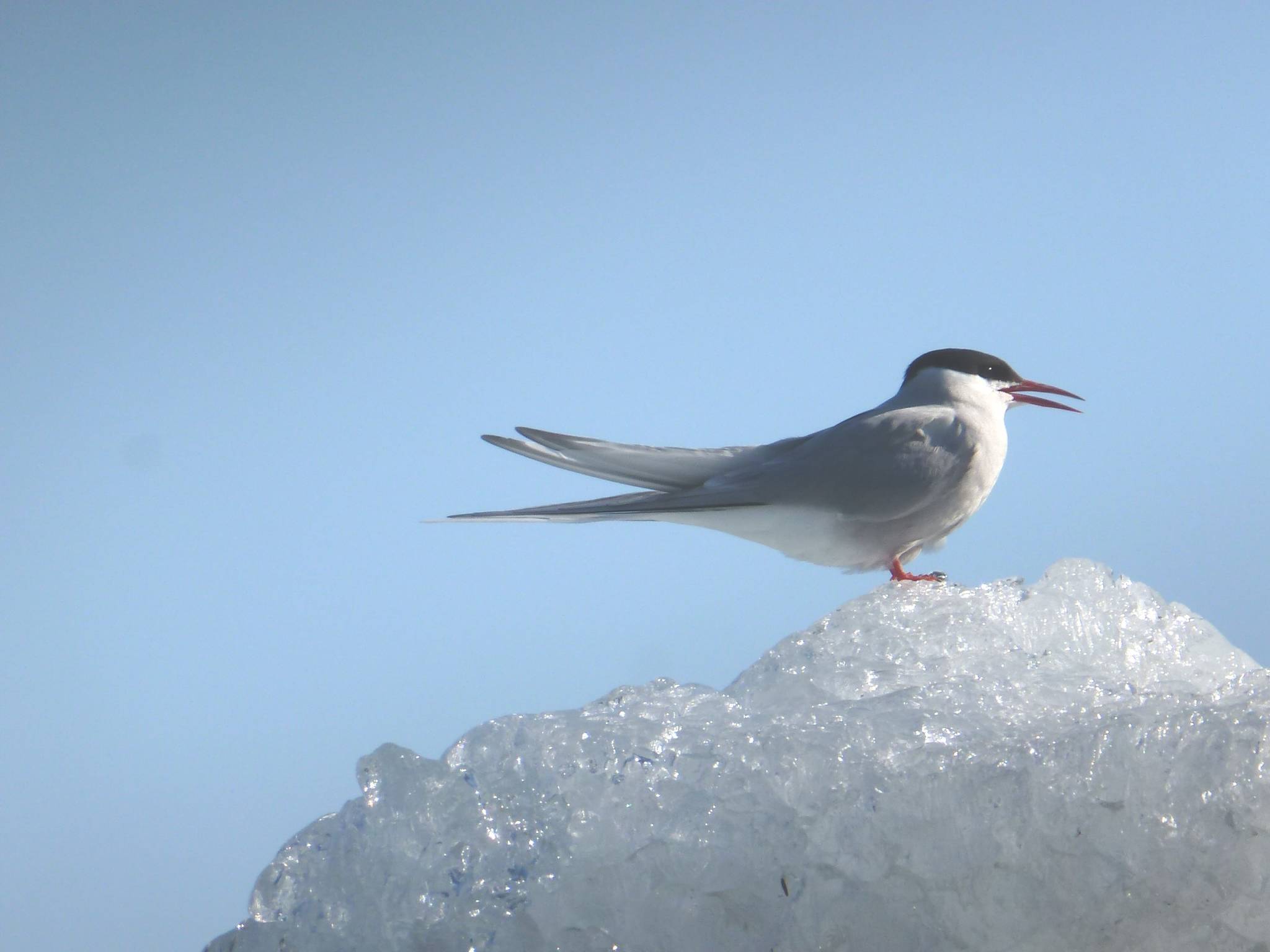
An adult Arctic tern stands near Photo Point near Mendenhall Glacier Visitor Center. Male and female Arctic terns appear similar from a distance and the birds only weigh at most about 5 ounces. (Courtesy Photo | Gwen Baluss)
“They are considered a conservation priority in the North American Waterbird Conservation Plan,” Baluss said. “They are likely to be affected by climate change.”
Terns are fairly long-lived birds, Baluss said, and one geolocator-sporting bird was recorded as living to the age of 34. That longevity could potentially be masking population decline, Baluss said.
While watchers may not yet see significantly decreasing numbers of Arctic terns, Baluss said, it’s possible there are fewer new birds being hatched or surviving past being fledglings and an aging population could be prone to a sudden dropoff.
“I consider them to be ambassador birds,” Baluss said. “Hopefully, they make us care about climate change.”
More about the birds
Baluss’ Arctic tern talk, which was the latest installation in a series of free ecological series, also included a number of facts about the birds who have one of the longest migrations in the world.
The birds may fly as far as 6,000 miles without stopping and spend summers in the north and winters in the Arctic.
“The birds are always flying around in circles, so the actual distance is much further,” Baluss said.
They do that flying in a hurry, and an Arctic tern can fly up to 35 mph.
[Researcher talks about world’s most endangered bears]
“Probably faster if they have a tailwind,” Baluss said.
Baluss said since the birds switch hemispheres when migrating those winter months actually function as a second summer, but the birds only lay eggs in their northern homes.
Once Arctic terns do set up their northern colonies, Baluss said they court for the duration of their stay.
She said it’s common to see the birds carrying small fish in their bills in the hopes of impressing a mate.
“I assume those are the males,” Baluss said.
• Contact reporter Ben Hohenstatt at (907)523-2243 or bhohenstatt@juneauempire.com. Follow him on Twitter at @BenHohenstatt.
