Amount of infrastructure bill money coming to the state still a mystery
Published 2:30 am Friday, February 4, 2022
The state of Alaska is expecting a lot of money from the bipartisan infrastructure bill passed late last year, but much of that funding will go to already existing federal programs and won’t be subject to appropriation by the Legislature.
Speaking to the House Finance Committee Thursday, infrastructure investment coordinator from Gov. Mike Dunleavy’s office Miles Baker, told lawmakers about half of the money in the bpartisan infrastructure law was going straight to the U.S. Department of Transportation.
“There’s a lot more that we don’t know than we do know with this bill,” Baker said. “In essence, this bill is a reauthorization of established federal programs, a majority of these funds will come through existing programs.”
Much of that spending will not necessarily require authorization from the Legislature, Baker said, but it’s reasonable to expect that most of the programs will require “non-federal” matching dollars. Baker said he used the term non-federal because some of the programs may require matching funds from local or tribal governments or even regional utilities. The Legislature could decide to have the state pay for those matching funds, Baker said, which would require legislative action.
“It seems like we’re going to be observing a lot,” said Rep. Andy Josephson, D-Anchorage, during the meeting.
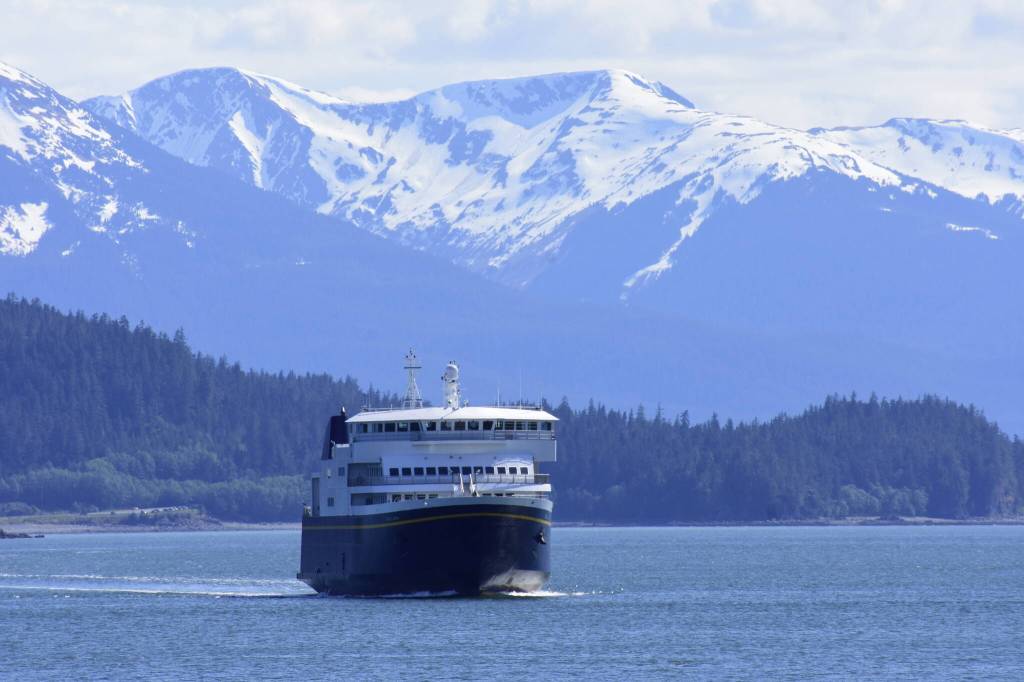
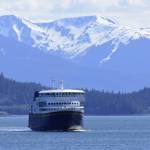
Baker couldn’t say how much money Alaska could expect to get because there were so many different programs with different funding schemes. But some programs, in particular the ferry service for rural communities program, have a limited number of states that meet the eligibility requirements, Baker said. Similarly, Baker said, language in the bill states an emphasis on underserved and underdeveloped communities which Alaska has a lot of.
[Positive COVID test leads to canceled House floor session]
Even though much of the bill’s funding will go through existing federal programs, there are several new programs being established the state is interested in, Baker said. In addition to the rural ferry service program, new programs for carbon sequestration, cybersecurity, and environmental remediation were of interest to the state.
The bill will provide money that will radically transform parts of Alaska, Baker said, but there isn’t necessarily funding for large capital projects communities may be seeking.
Rep. Bryce Edgmon, I-Dillingham, said that despite the large, $1.2 trillion price tag on the bill, considering roughly half is reauthorization of federal program and the remaining will be split nationwide, “the numbers may not be that overwhelming.”
The state is seeking additional information from federal agencies at every opportunity to try to better understand potential guidelines for the various programs, Baker said.
Speaking to the committee earlier in the meeting, Office of Management and Budget Director Neil Steininger told lawmakers the state had so far only submitted three project funding requests to the Department of the Treasury in an effort to discern more about federal agency’s expectations.
“We have these three projects we think meet needs for the community and the state,” Steininger said. “We’re trying to get a much better handle on exactly what the Treasury is looking for.”
According to OMB’s presentation to the committee, those three projects are $30 million for health record infrastructure improvements; $13.8 million for an Alaska Division of Forestry fire crew facility in Eagle River and $20 million for student information technology systems for the University of Alaska. The deadline for project submissions to the Department of the Treasury is in September, Steininger said.
How much the state can expect and what the guidelines for the federal programs might be are both still unknown, Baker said, complicated by the fact that Congress has not yet actually passed a budget for the new federal fiscal year which began in October. In December, Congress passed what’s known as a continuing resolution that keeps the government funded but at the previous year’s levels.
Baker told the committee that under the continuing resolution some federal agencies don’t have the authority to distribute funds.
There is a lot in the bill coming to Alaska thanks to the work of the congressional delegation, Baker said, but it still may be several months before full guidelines come out.
“We are certainly trying to take that big federal number and whittle it down, it’s a huge task, we’re still working on that,” Baker said.
• Contact reporter Peter Segall at psegall@juneauempire.com. Follow him on Twitter at @SegallJnuEmpire.