
By Ned Rozell
Not long ago, John Wright of Fairbanks heard a thump against a window above his deck. He pulled on his coat and walked out to investigate.
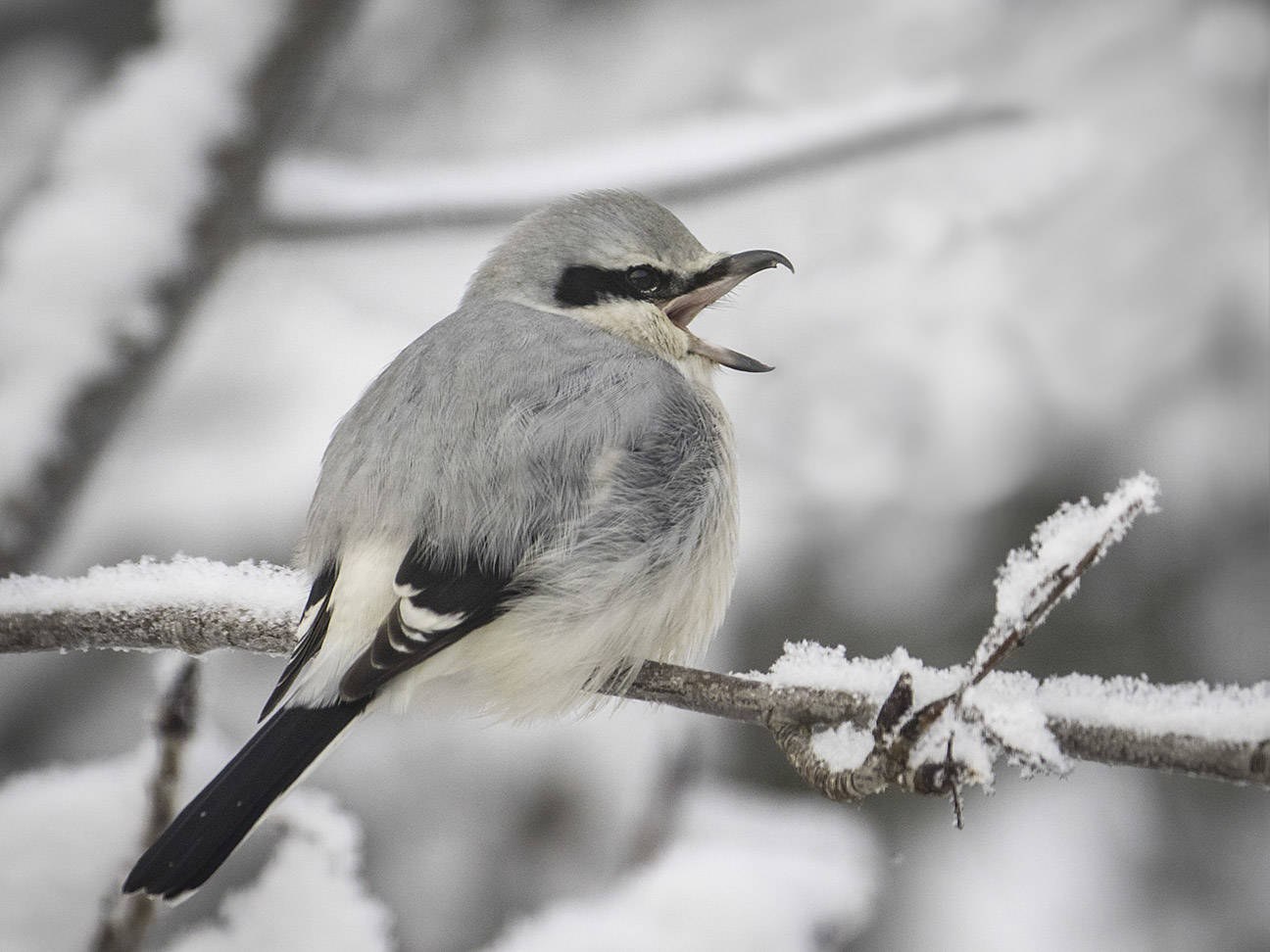
He was surprised to see a lovely pine grosbeak down on the deck. Standing above it was a northern shrike — a predatory songbird with a black eye-mask that sometimes hangs around Interior Alaska in the winter.
Wright ran inside for his camera. He was back on the deck 20 seconds later.
“Both the shrike and grosbeak were gone,” Wright said. “We searched in vain to spot the shrike in our yard but never saw it, or the limp grosbeak.
“A grosbeak would seem to be a large prey for the shrike but it had apparently carried it away,” he said.
Wright had witnessed the butcher bird in action.
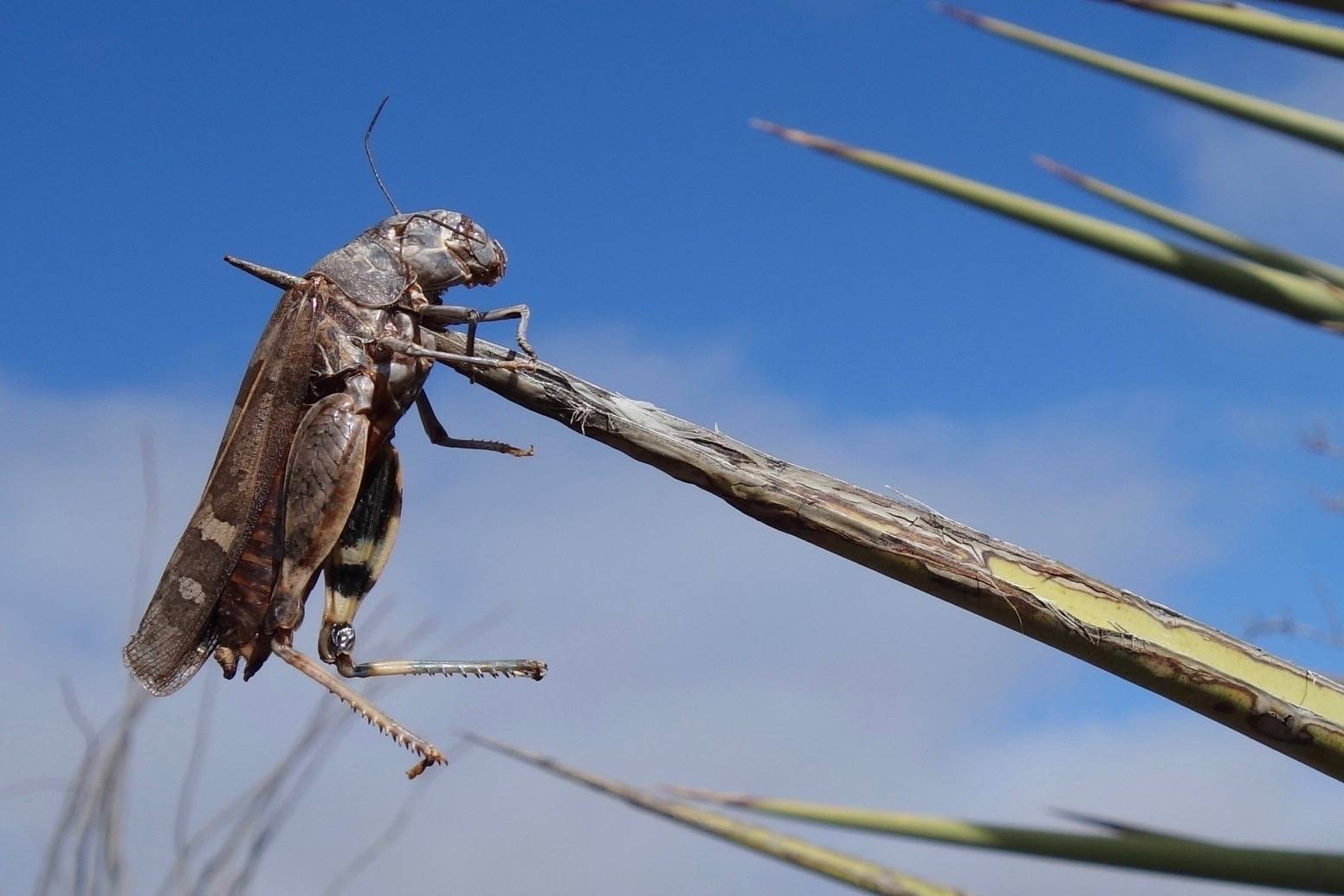
Courtesy Photo / Ned Rozell An impaled grasshopper, probably the work of a shrike, is seen in West Texas.
Though northern shrikes are songbirds, and sing all year long, shrikes don’t eat fruits or seeds. They are carnivores, eating what they kill. That includes other songbirds, including redpolls, chickadees, and, as Wright saw, tangerine and red pine grosbeaks, which are about the same size as a shrike. In summer, shrikes capture insects. They strike and gobble up voles and other small mammals all year.
[Fall Equinox and the signs of the big turn]
Northern shrikes are about the size and color of gray jays, but one look at their beaks tells you what you need to know. While gray jays have straight cone-like beaks, northern shrikes sport an upper beak with a fierce curve.
That hooked upper beak, visible from a distance, features a fang-like growth
known as a “tomial tooth.” This feature, also present in falcons like the peregrine, seems to allow beaks to penetrate the space between tiny vertebrae and shove bones apart. This allows shrikes to quickly disable the nervous system of voles and birds, the lives of which it ends by violent shaking.
Northern shrikes often jam their prey in forks of trees, or impale voles and birds on a sharp branch, or maybe a strand of barbed wire. Shrikes may store food like this because their feet are more like a chickadee’s than a hawk’s; sticking their food to something helps them tear into it.
Northern shrikes are not an everyday sight, but the sleek birds hunt just about everywhere up to treeline in Alaska during the summer. The birds often migrate south to the Lower 48 states for winter. Their range map on Cornell University’s All About Birds shows that it’s not unusual to see a shrike year-round on the Alaska Peninsula, Kodiak Island, the Kenai Peninsula and Southcentral Alaska.
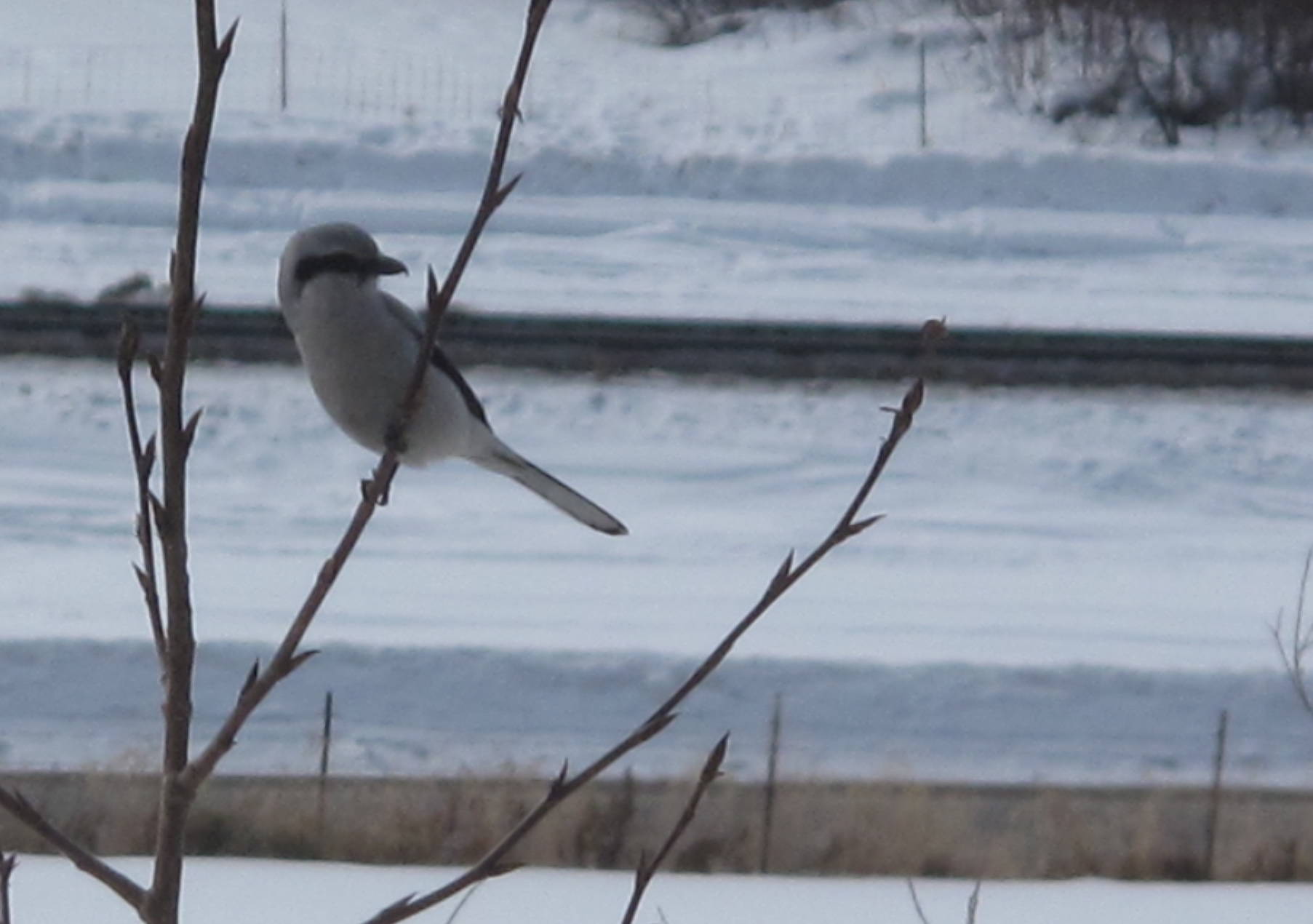
A northern shrike is seen on the University of Anchorage Fairbanks campus. The songbirds impale their prey. (Courtesy Photo / Ned Rozell)
During winter in middle Alaska, Lanius borealis (Lanius is Latin for “butcher”) sometimes appears near where we spill out sunflower seeds. There, as biologist Susan Sharbaugh once said, “the bird feeder has turned into an actual bird feeder.”
• Since the late 1970s, the University of Alaska Fairbanks’ Geophysical Institute has provided this column free in cooperation with the UAF research community. Ned Rozell is a science writer for the Geophysical Institute.
