
By Yereth Rosen, Alaska Beacon
Federal and state leaders have appointed 19 experts to a special task force responsible for creating a science plan to better understand Alaska’s salmon, the National Oceanic and Atmospheric Administration’s Fisheries Service announced on Friday. Task force members must address sustainable management and a response to the recent crashes in the Yukon and Kuskokwim rivers.
The group was chosen in accordance with the Alaska Salmon Research Task Force Act that passed and was signed into law late last year. The law calls for most members to be appointed by the U.S. Secretary of Commerce, in consultation with Alaska’s governor, and one to be appointed directly by the governor.
Task force members represent subsistence users, the fishing industry, supporting supply-chain businesses and the academic community, NOAA Fisheries said in its statement. According to the law, NOAA, the North Pacific Fishery Management Council and U.S. representatives of the Pacific Salmon Commission are represented. The law also requires Indigenous representation on the task force.
“The work of the Alaska Salmon Research Task [Force] is critically important,” Robert Foy, director of NOAA Fisheries’ Alaska Fisheries Science Center, said in the agency’s statement. “We are grateful to the individuals who have agreed to serve as task force members and share their knowledge and expertise to develop a roadmap of where to go next with research to best understand and respond to the unprecedented changes in Alaska salmon runs.”
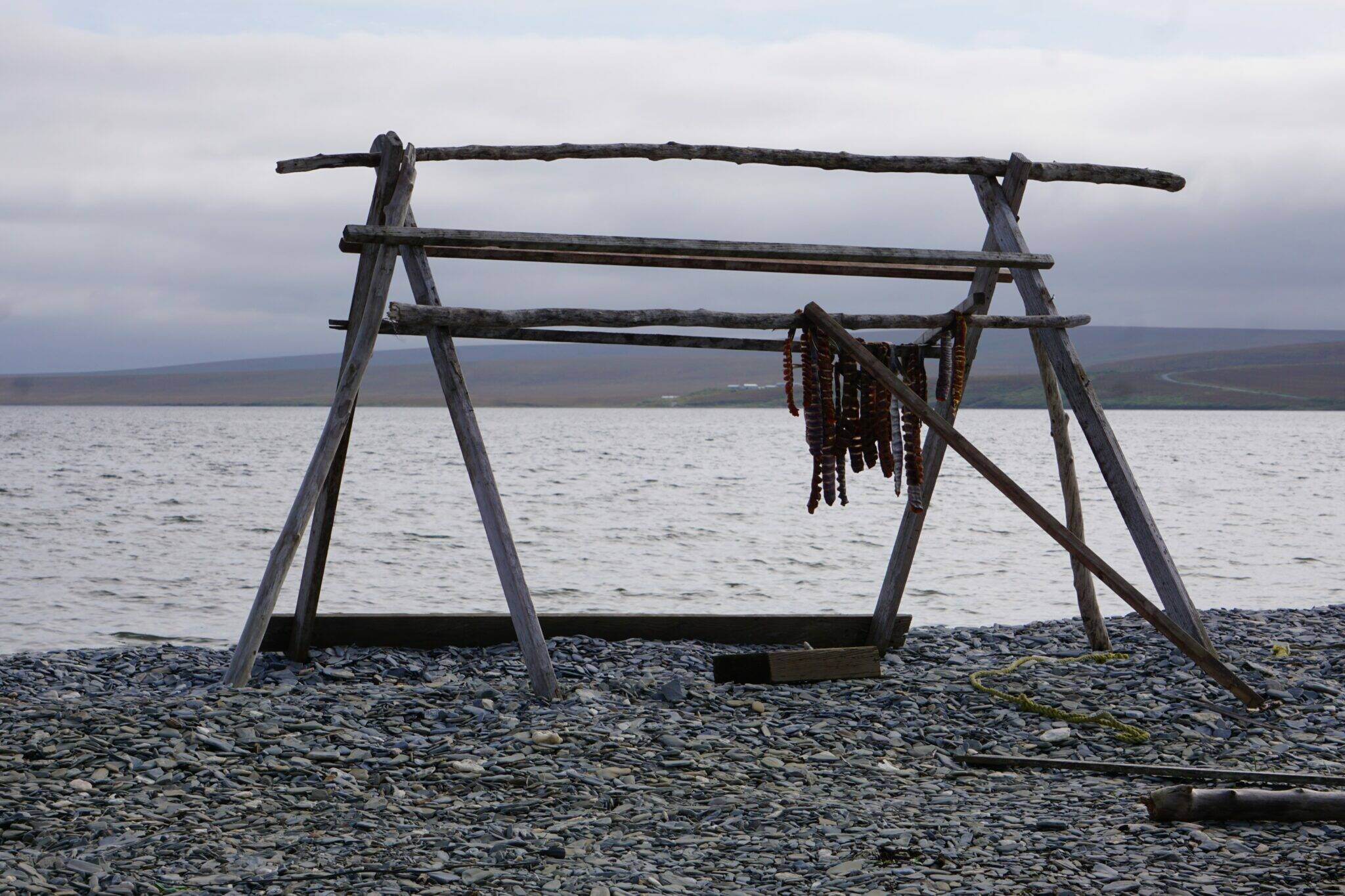
Western Alaska communities have endured recent years of record-low or near-record low runs of Chinook and chum salmon, two of Alaska’s five salmon species that are dietary and cultural staples for Indigenous communities.
Bleak conditions continue this year. The Alaska Department of Fish and Game last month announced a full closure of Chinook salmon fishing in the Yukon River, even for subsistence purposes, and the department’s present forecast predicts that runs of all salmon species in the Yukon and Kuskokwim rivers will be too low this year to support any commercial harvests.
The task force is responsible for producing a coordinated science plan within a year. It is also responsible for identifying knowledge gaps andin? research needs, setting up a work group to focus specifically on the Yukon and Kuskokwim rivers and finding ways to support sustainable salmon management, NOAA Fisheries said.
Federal appointees are Andrew Munro of the North Pacific Fishery Management Council, Ed Farley of NOAA Fisheries, Bill Templin of the Alaska Department of Fish and Game and Andy Piston of the Pacific States Salmon Commission.
Subsistence users are represented by members Oscar Evon of the Native Village of Kwigillingok, Jacob Ivanoff of the Native Village of Unalakleet, Karla Jensen of the Native Village of Pedro Bay, Alaska Department of Fish and Game Subsistence Director Caroline Brown and Justin Leon of the Alaska Native American Fish and Wildlife Society.
The fishing industry is represented by Michelle Stratton of the Alaska Marine Conservation Council/Commercial Salmon Fisherman, charter-boat fisherman Mike Flores, Austin Eastbrooks of the At-Sea Processors Association, commercial fisherman Tom Carpenter and Steve Reifenstuhl with the aquaculture industry.
The academic community is represented by Megan McPhee of the University of Alaska Fairbanks, Megan Williams of the Ocean Conservancy and UAF, Noelle Yochum of Alaska Pacific University and Katie Howard of Alaska Pacific University and the Alaska Department of Fish and Game.
• Yereth Rosen came to Alaska in 1987 to work for the Anchorage Times. She has reported for Reuters, for the Alaska Dispatch News, for Arctic Today and for other organizations. She covers environmental issues, energy, climate change, natural resources, economic and business news, health, science and Arctic concerns. This story originally appeared at alaskabeacon.com. Alaska Beacon, an affiliate of States Newsroom, is an independent, nonpartisan news organization focused on connecting Alaskans to their state government.
