
The state of Alaska is planning to send members of its National Guard south to the Mexican border, responding to an order from the federal government for assistance securing the international boundary.
According to the Alaska National Guard, 20 Guardsmen and two helicopters could be deployed as soon as late September. Exact mobilization dates will be determined by the secretary of defense and the Department of the Army.
The deployment could put Alaska soldiers in the middle of an increasingly tense dispute between Texas and the federal government and would have those soldiers support a federal effort that Gov. Mike Dunleavy and his administration have repeatedly criticized.
It isn’t yet clear whether the Alaska soldiers would be deployed to Texas or one of the other states that are part of the federal government’s Southwest border mission.
Part of that mission involves National Guardsmen called up from various states to support Customs and Border Protection officials. Between April 2018 and August 2020, as many as 2,579 National Guard members from 34 states and U.S. territories were sent by the DOD to the four border states, according to a Government Accountability Office report.
Since 2021, Texas’ government has been undertaking what it calls “Operation Lone Star,” a multibillion-dollar state military and police action along the Texas-Mexico border.
Gov. Greg Abbott, who launched the operation, has repeatedly said he believes that the federal government has deliberately degraded border security and that the state has no option but to reinforce the border itself.
Federal efforts have clashed with the state’s efforts, and in January, the federal government obtained an order from the U.S. Supreme Court, which declared that Texas cannot interfere with federal agents at the border. Some of those agents’ efforts have involved removing razor wire that Texas has installed and continues to install, despite the order.
Last month, Dunleavy joined other Republican governors in a letter supporting Texas’ policy, and Attorney General Treg Taylor signed a similar letter alongside other Republican attorneys general on Wednesday.
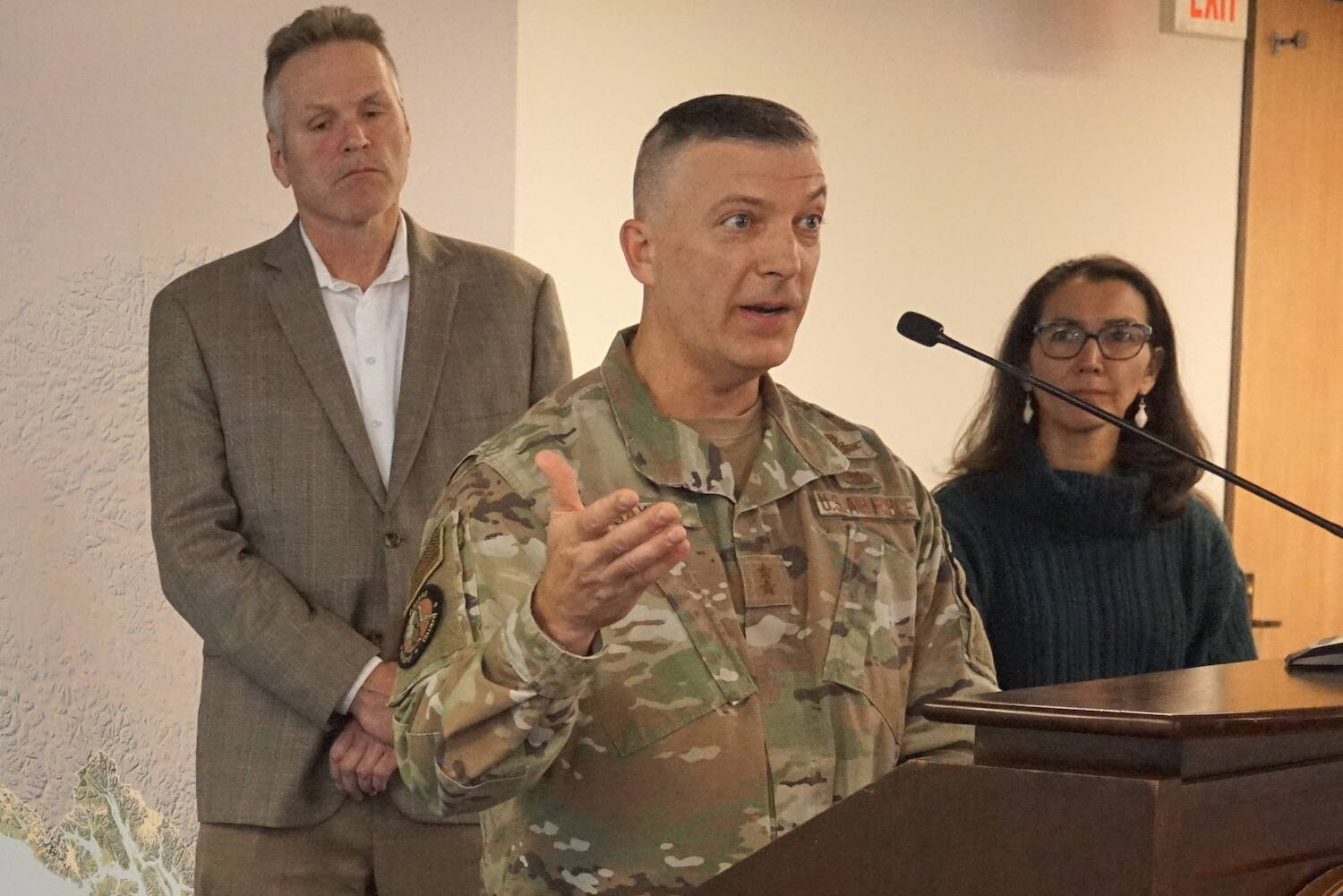
Taylor and Maj. Gen. Torrence Saxe, the state’s adjutant general, briefed members of the predominantly Republican Alaska House Majority caucus about the issues on Thursday afternoon.
Many legislators in that meeting came away from the meeting with the belief that the state would be going at the request of Texas, not the federal government. Not so, state officials said.
“At this time, there are no plans to send members of the Alaska National Guard in support of Operation Lone Star,” said Alan Brown, director of communications and public affairs for the Alaska National Guard and Alaska Department of Military and Veterans Affairs.
When the Guard goes south, it will be the second time in recent history that it has done so at the federal government’s request.
In 2019, at the urging of then-President Donald Trump, Alaska sent 10 soldiers on a six-month deployment to the international border. In that case, the federal government paid the costs of the deployment.
Trump, now the presumptive Republican candidate for president in this fall’s elections, said in late January that “willing states” should “deploy their guards to Texas” without federal approval.
State governors may order deployments under what’s known as Title 32 authority, typically used in natural disasters. In those cases, the state pays the immediate costs, then requests reimbursement from the federal government.
More than a dozen states led by Republican governors, including Florida, Arkansas, Oklahoma, Virginia, and South Carolina, have already sent soldiers to help Texas under that authority.
After Trump’s request, Florida announced it would increase its presence, sending as many as 1,000 National Guard soldiers.
• James Brooks is a longtime Alaska reporter, having previously worked at the Anchorage Daily News, Juneau Empire, Kodiak Mirror and Fairbanks Daily News-Miner. This article originally appeared online at alaskabeacon.com. Alaska Beacon, an affiliate of States Newsroom, is an independent, nonpartisan news organization focused on connecting Alaskans to their state government.
