
Alaska’s Republican U.S. senators and several Alaska Native leaders on Tuesday urged the federal government to approve a major oil project on the petroleum-rich North Slope, casting the project as economically critical for Indigenous communities in the region and important for the nation’s energy security.
The Biden administration “damn well better not kill the project, period,” Sen. Lisa Murkowski told reporters on a video conference.
The U.S. Bureau of Land Management earlier this month released an environmental review for ConocoPhillips Alaska’s Willow project that listed as a preferred alternative an option calling for up to three drill sites initially, compared to the five that had been favored by the company. It is an option project proponents, including Alaska’s bipartisan congressional delegation, have expressed support for. But Murkowski and Sen. Dan Sullivan said any further limiting of the project could kill it.
The Bureau of Land Management noted its listing of a preferred alternative “does not constitute a commitment or decision.” The U.S. Interior Department said separately that it had “substantial concerns” about the project and the report’s preferred alternative, “including direct and indirect greenhouse gas emissions and impacts to wildlife and Alaska Native subsistence.” The Bureau of Land Management falls under Interior.
There is disagreement about the project. Leaders in Nuiqsut, about 36 miles from the Willow project, have expressed concerns. So have environmentalists, who say approval would lead to further development and be inconsistent with President Joe Biden’s climate goals.
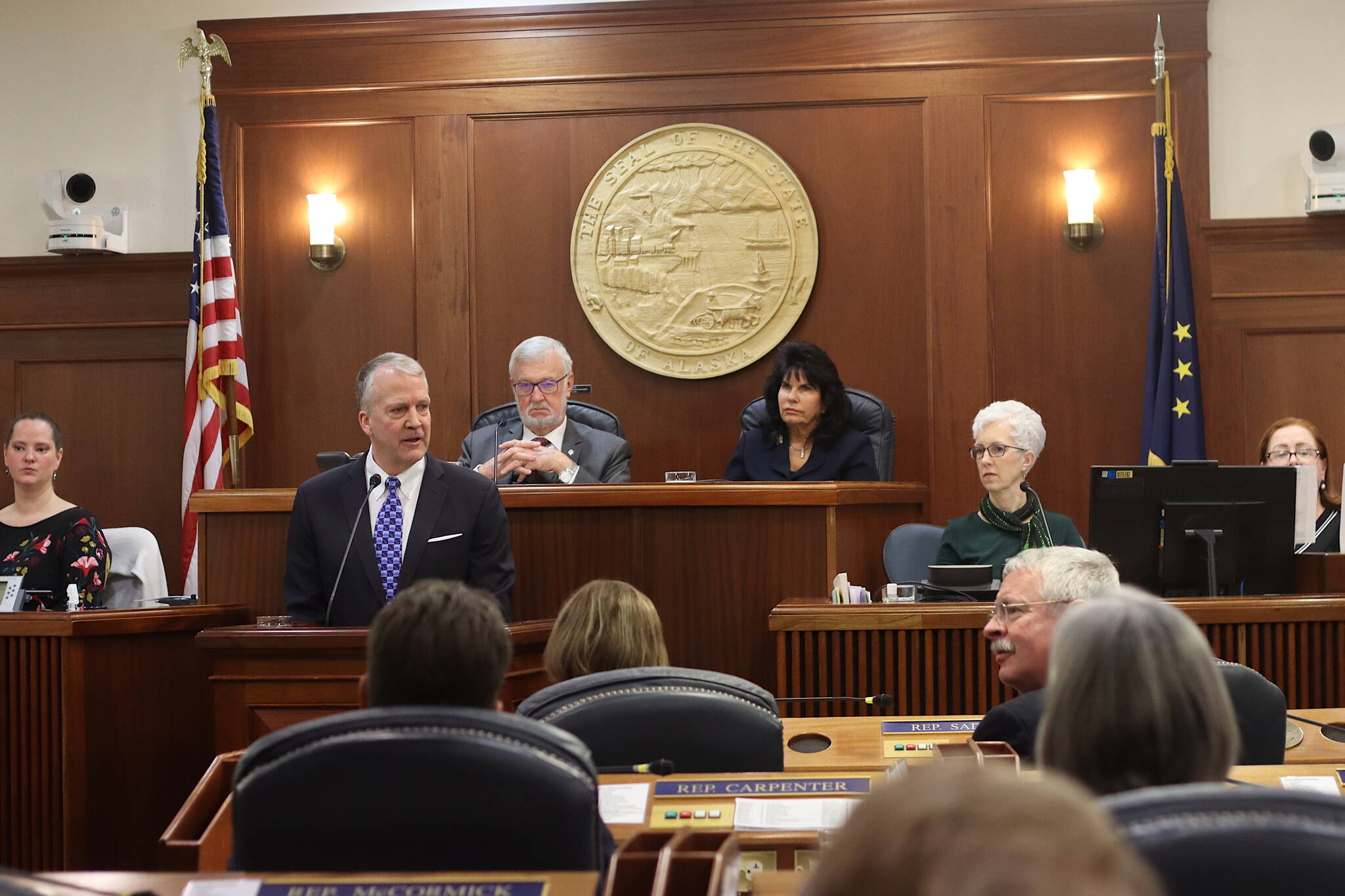
Sullivan has said Willow could be “one of the biggest, most important resource development projects in our state’s history.” He last week urged state lawmakers in Alaska’s capital to pass a resolution expressing support for the project and to get involved in litigation that is likely to arise from whatever decision is rendered by the federal government. A decision could come in early March.
Taqulik Hepa, director of the Department of Wildlife Management for the North Slope Borough, said taxes levied on oil and gas infrastructure have enabled the borough to invest in public infrastructure, support local schools and provide police, fire and other services.
Hepa said the borough and its residents are “keenly aware of the need to balance responsible oil development and the subsistence lifestyle that has sustained us.” She said the borough has demanded this balance be achieved in its dealings with government agencies and oil companies for decades.
Nagruk Harcharek, president of the group Voice of the Arctic Iñupiat, whose members include leaders from across much of the North Slope, said there is “majority consensus” in the region in favor of the project, calling Willow a “lifeline” for residents. He said there are limited economic development opportunities in the region, which makes approval of the Willow project important.
Sullivan, in a speech on the U.S. Senate floor last week, said the voices of those who support the project aren’t being given enough attention. He complained that national media outlets find “the one who’s against it and quote her.”
City of Nuiqsut Mayor Rosemary Ahtuangaruak said there are “many who would like to say everybody in Alaska supports oil and gas development. Well, for our village, this development is in the wrong area.”
“Our concerns are real. It’s about our way of life, the life, health and safety of our village,” she said.
Biden earlier this month said the U.S. would need oil “for at least another decade.” Murkowski said there is a move to transition toward a “different energy future” but said Biden needs to “recheck his facts, respectfully.”
“We are decades, decades away from a time that we would be beyond oil resources,” she said. “The need is very, very much still there.”
She and Sullivan have said resource development should be done in places with environmental standards like Alaska.
The proposed Willow project is in the National Petroleum Reserve-Alaska. ConocoPhillips Alaska has said it could produce up to 180,000 barrels of oil a day at its peak. It is expected to create up to 2,500 jobs during construction and an estimated 300 permanent jobs, along with generating billions of dollars in revenues for federal, state and local governments, the company has said.
