
On a drizzly, breezy, cool April day, a visiting friend and I took a stroll on the Crow Point/Boy Scout Trail. We often play a little game on our walks, saying that we must find at least three things of particular interest before we can go home.
Without much work, we filled that requirement on this day.
Along the lower riverbank, wide stretches of sand have washed up fairly recently, covering the grasses and sedges. These sandy swathes looked quite barren, until we spotted small red shoots emerging. The shoots were beach peas, their leaves still folded and barely raised above ground. No beach peas were evident in the nearby grassy areas.
So one question was, why were they only showing on the bare sands and how did they get there? Another question was, why are they red?
I was reminded of a tropical ecology course many years ago, in which the instructors speculated about the reddish young leaves of some trees. One idea was that the red pigments might somehow protect the tender young leaves from sunburn.
Here in Southeast, we’ve noticed that bunchberry leaves often turn red in areas exposed to sun and frost, but remain green where shaded. My companion has seen single leaves that were green where covered by a fallen cottonwood leaf but red where not so covered.
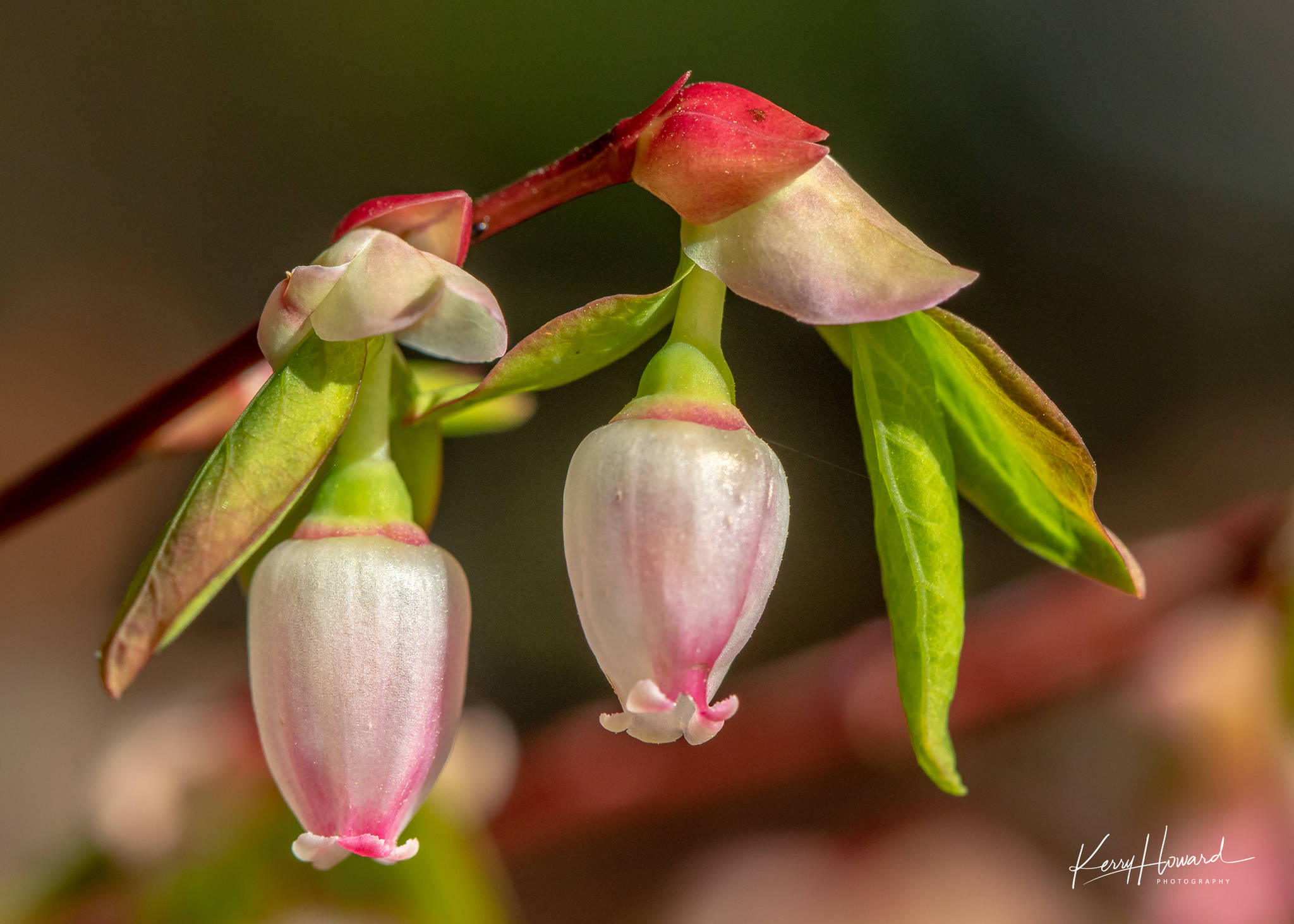
A further observation came from the flowering blueberry bushes, on which the amount of pink color on the flowers varies a lot. Some of the variation seems to be related to age of the flower; very young flowers are often bright pink, but older ones are pale.
[Arctic tern nesting areas closed at glacier]
But in addition to that, some quick and casual observations suggested that maybe the flowers in the shade are paler and those exposed to more light are pinker. But is the red or pink color protective or just a result of environmental conditions with no functional consequences for the plant? Do the bumblebees that pollinate these flowers favor flowers of particular hues?
Under some spruces, we found the skull, jaw and scattered bones of a very small bear. The molar teeth were fully erupted, so we judged that the bear was not a cub of the year. The cause of death was unknown — perhaps wounded by a gun-carrying human and left to die?
If it was a yearling, maybe killed by an adult male bear so that the mother bear would be ready to mate again? Maybe killed by one of the uncommon brown bears or a roving pack of wolves and the body hauled to this place? Could it have (perhaps improbably) fallen out of a tree somewhere and later died of concussive injury? We can only speculate.
[Birds large and small sniff their way through life]
On the edge of one of the spruce groves on the berm, we found a large egg shell, contents cleanly removed. Then on the opposite edge of the grove, there was another one, similar in size and condition. The shells were whitish, with (to my companion’s eye) a very slight greenish cast.
Few local birds lay eggs as big as these (about three inches long). Our guess was that they were the eggs of an early-nesting Canada goose whose nest had been robbed by ravens.
Those were the three main things that fit our criterion, giving us lots to think about. There were other things to note, as well:
• The first shoots of milkwort, only a few millimeters in size.
• A single snow goose in the midst of a group of Canadas. A male harrier coursing over the wide meadow.
• Several green-winged teal and widgeon foraging on the intertidal flats, along with geese and mallards.
• Shallow digs in the meadows, leaving crumbs of chocolate lily (aka rice root) and bits of angelica plants with roots removed.
We usually attribute such digs to bears (and there was recent bear sign on the trail), but we wondered if geese might grub up rice root, as they do the roots of silverweed.
As so often happens, we had more questions than answers. But that is part of the fun.
• Mary F. Willson is a retired professor of ecology. “On The Trails” is a weekly column that appears every Friday. Her essays can be found online at onthetrailsjuneau.wordpress.com.
