
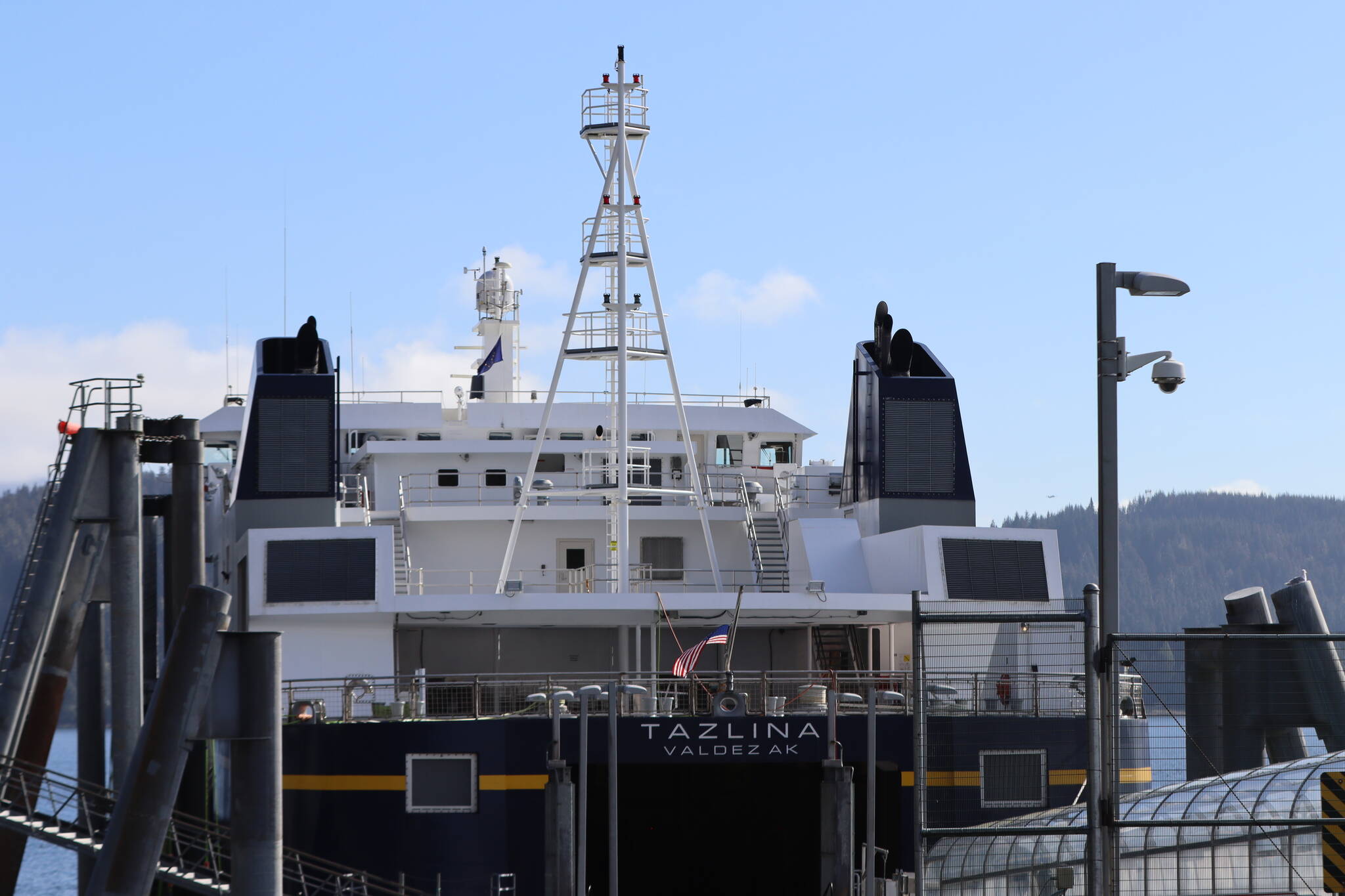
A program purportedly making numerous changes to the Alaska Marine Highway System by implementing flat fees rather than dynamic pricing during the upcoming winter season, subsidizing alternative travel options during disruptions, and monitoring crew/vessel/budget elements was announced Friday by state officials.
The announcement, coming less than two months before the general election for Gov. Mike Dunleavy and the three candidates seeking to replace him, comes in the wake of significant cutbacks and setbacks during his first four-year term. The ferry system tied for the lowest grade, along with wastewater and drinking water, in the state’s most recent infrastructure report card. The services each received a D.
However, a huge infusion of federal infrastructure bill funds, including $3.5 billion in federal highways funds and $1 billion for “essential ferry service” in rural areas, is helping enable improvements to the system, according to Alaska Department of Transportation and Public Facilities Commissioner Ryan Anderson. He has also stated the COVID-19 pandemic, labor shortages plaguing employers nationwide and other issues were responsible for some of the setbacks.
“I want Alaskans to know that we are listening and making adjustments based on what we hear,” Anderson said in a prepared statement accompanying Friday’s announcement. “We are working to restore AMHS service to pre-pandemic levels, but it will take time and require us to work closely with our coastal communities to ensure the long-term health of the ferry system.”
Anderson and other state transportation officials, as well as people in affected communities, are scheduled to discuss the ferry system and planned improvements in a series of meeting during the three-day Southeast Conference in Ketchikan starting Tuesday.
The Reimagining AMHS Program seeks to implement changes in three stages labeled “stabilization, recovery and full steam ahead.” Immediate measures in the first phase include flat fares for the winter season that lasts until next April, subsidized alternative travel “for those communities where ferry service is below what could be considered essential” and upgrading text/WiFi capabilities on ships for crew and then passengers.
“The return to flat-rate pricing for the winter is a good step until we can refill our crews and make sure we have relief workers, reducing staff burnout,” Dunleavy said in a prepared statement.
The winter ferry schedule for Oct. 1 to April 30, which currently is largely vacant, is expected to be announced this week. The new program notes that as part of the initial stage “external factors may reduce available mission-critical resources, such as staff, and result in schedule disruptions.”
“Moving forward, a minimum service schedule will be published for customers to book sailings on in advance,” an overview about the program at DOT’s website states. “Throughout all phases, as crewing and vessel availability shift, the public will be updated on service impacts. Presently, service levels are a product of matching up the available crew, available vessels, and the docks that the vessel can sail to. As the system stabilizes and transitions to recovery, the outcome will be improved reliability and an expanded level of service.”
Long-term goals include tracking employee morale and well-being, budgets to provide services that “align with projections of state appropriation levels,” and the status of the fleet in terms of providing maintenance and capital projects.
“Currently, though the budget is available, our system is behind in vessel maintenance, with an aging fleet,” the DOT’s website notes. “Most critically, the system is suffering severe staffing shortages, and those crew that is available are overworked, often needing to forgo vacation days in order to keep ships sailing.”
Dunleavy said during his first gubernatorial campaign “there is no plan to hack, cut or destroy the marine highway system,” but then proposed a roughly 70% funding cut with a proposed annual $24 million a year subsidy that a task group appointed by the governor declared was unworkable. He has faced ongoing criticism for reducing or eliminating services and routes, attempting to further privatize the system, and selling the Malaspina this year at what critics called a suspiciously low price to political supporters.
Dunleavy’s office, in response to questions from the Juneau Empire on Monday, stated in an email the cuts were necessitated by a significant drop in oil prices.
“In the fall of 2018 oil was selling at a price high enough that state spending levels could be maintained,” the statement notes. “That changed when the price of oil dropped significantly later that year. The result was a $1.6 billion dollar budget deficit at the beginning of the 2019 session that Governor Dunleavy and the legislature had to contend with. Higher oil prices have stabilized the budget allowing investments in public safety, education public infrastructure, and the AMHS system.”
The statement also asserts Dunleavy “has been making long-term commitments and improvements to the ferry system for more than two years” and linked to a fact sheet listing such efforts.
“Last year, the governor and Commissioner Anderson announced that the Tustamena will be replaced and new crew quarters will be installed on the Hubbard,” the governor’s statement notes. “Older vessels in the fleet are undergoing repairs to make them more efficient, reliable and to extend their service life. An 18-month schedule was created so passengers could make travel plans many months in advance and bring certainty to the system.”
• Contact reporter Mark Sabbatini at mark.sabbatini@juneauempire.com
Southeast Conference features candidate forums, in-depth discussions of regional issues
Pretty much every issue of interest to Southeast Alaska residents, as well as faceoffs for all candidates for state and federal offices representing the region, are scheduled beginning Tuesday and viewable online during the annual Southeast Conference meeting.
The three-day conference in Ketchikan officially begins with a welcoming ceremony at 8 a.m. Tuesday, although a meet and greet where the Transportation Committee discussed Alaska Marine Highway System and related issues took place Monday. A $100 fee is required to register for the full conference events remotely, although candidate forums are individually available for $10-$30 and sustainability workshops on Thursday afternoon are free.
Candidate forums include U.S. Senate candidates at 11:45 a.m. Tuesday ($10 remote listening fee), Alaska Legislature candidates for Southeast Alaska districts at 3:30 p.m. Tuesday (no separate listening fee offered), gubernatorial candidates at noon Wednesday ($30 fee) and U.S. House candidates at 9:30 a.m. Thursday ($10 fee).
The three major contenders in the congressional and governor’s races are listed as invited, but not guaranteed to participate (Democratic U.S. Rep. Mary Peltola will be in Washington, D.C., on Thursday after her Tuesday swearing in, for instance, but a spokesperson said Monday there is a 90% probability she will participate remotely).
A wide range of regional issues are included in presentations and panel discussions each day of the conference, which is scheduled from 8 a.m. to 5 p.m. Tuesday and Wednesday, and 8 a.m. to 2 p.m. Thursday. The following are topics scheduled for each day (for full list of speakers/panelists and topic details see the official schedule at the conference’s website):
– Tuesday: Natural resources, transportation, federal infrastructure bill, tourism, constitutional convention.
– Wednesday: Regional update by U.S. Sen. Dan Sullivan, economic and broadband initiatives, mariculture and fisheries, energy, healthcare, housing, University of Alaska, workforce development.
– Thursday: Southeast Conference membership meeting, sustainable food and agriculture programs, financing priorities for regional industrial projects.
The final two events available free on Thursday focus on the Southeast Alaska Sustainable Strategy program, including a just-announced $49 million federal grant to a mariculture program led by Southeast Conference. A U.S. Department of Agriculture official has been invited to give a 12:30 p.m. keynote address, with a stakeholder’s workshop at 1 p.m. featuring representatives of the Central Council of the Tlingit and Haida Indian Tribes of Alaska, Spruce Root, and Southeast Conference.
