50 years ‘temporary’ and counting?
Published 10:30 pm Tuesday, September 20, 2022
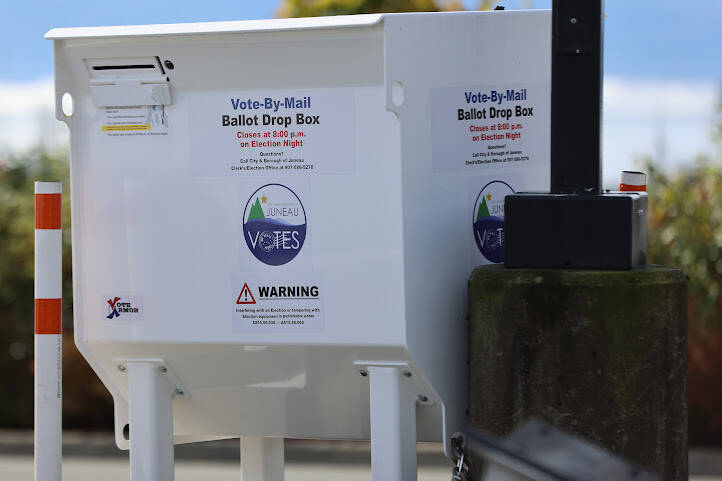
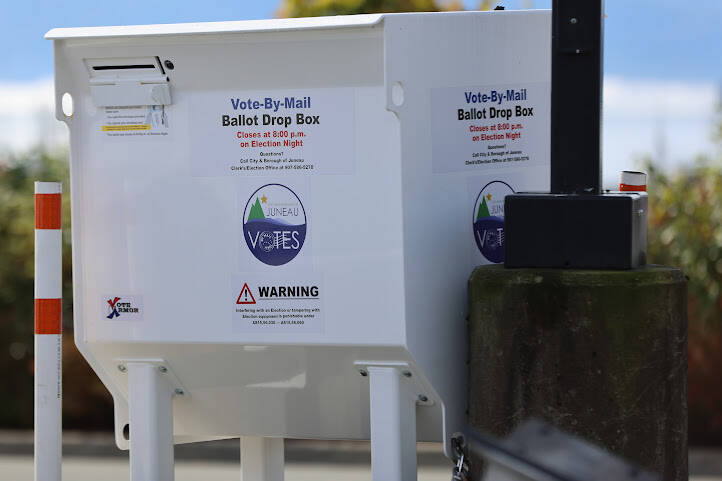
For Juneau’s youngest voters, the city’s “temporary” 1% sales tax has been around longer than they’ve been alive — by three decades.
Since 1972 Juneau voters have OK’d a temporary 1% sales tax, and on the ballot of this year’s municipal election, voters will decide if its streak will continue or come to an end as the extension celebrates its 50th consecutive year implemented in the City and Borough of Juneau. Last time it passed, close to 78% of residents voted yes, according to CBJ, and if passed again, it will go into effect Oct. 1, 2023, and run until Sept. 30, 2028.
[The $35M question: Advocates and critics weigh in on City Hall proposition]
Historically the tax money collected has paid for city improvements ranging from wastewater treatment to child care to performing arts. The extension up for question this year, according to the CBJ voter information packet, outlines improvements ranging from $6 million toward affordable housing initiatives to $2.5M toward childcare support to $23.5 million toward deferred maintenance of CBJ and Juneau School District facilities, along with multiple other multi-million capital improvements and initiatives.
If voters choose to pass the proposed extension, it would continue as an additional 1% to the already existing 4% sales tax — 1% which is permanent and the other 3% is a temporary 5-year amount passed by voters last election to go toward CBJ infrastructure and borough services.
In total, 5% would be the amount of sales tax people could expect to pay if this 1% extension is passed.
CBJ Finance Director Jeff Rogers said that he estimates over the five-year period the 1% sales tax extension will rake in between $60-65 million or around $12 million per year.
Rogers said he originally forecasted revenue amount back in March, which he then sent to the city manager to begin the budgeting process. He said there is a chance that his forecasted amount of around $60-65 million could be lesser than the amount needed to fund the projects due to the recent spike in inflation.
“The thing that’s going to be super hard to anticipate right now is we’ve seen a lot of inflation in the last six, eight, nine months and that inflation will cause those numbers to likely be higher even than what I forecast — I mean nobody has a crystal ball,” he said.
He said “the good thing” about inflation is that it has a silver lining in this case because more expensive projects would likely be funded by inflated sales tax receipts.
He said in the case that there is just simply not enough money to go around and fund all the projects as originally intended in the 1% sales tax budget, the Assembly has the authority to shift the funding in certain areas and allocate it elsewhere within the 1% sales tax budget. Or, he said in some cases, the Assembly has the authority to cut low-priority projects in order to have enough funding for projects with high-priority but said nothing is for certain yet.
“I think it’s worth the public remembering too that this is an intention,” he said. “We the public — I vote too — say yes or no on the assumption the Assembly intends to do these things, but if it needs to shift a little bit it has the legal authority to make those decisions.”
City Manager Rorie Watt said the discussion for what projects were going to be included in the 1% sales tax proposition started this past winter. He said the city opened a public comment period for residents to pitch projects, along with considering things Assembly members thought should be included as well. From there, he said Assembly members came up with the list which is presented in the proposition — though he said nothing is “absolute.”
“Nothing is absolute if voters vote on something that gets spent on those projects, but the Assembly has always honored what has been on the ballot,” he said.
He added: “Every project that gets on the list we may or may not know what the project is going to cost so it’s a lot of estimating to try and figure out what things will cost and how much money they need.”
[Campaign trails: Proposition puts recreation improvement question to voters]
Win Gruening, a Juneau resident wrote in an opinion piece sent to the Empire that he will be voting no to the proposition and said some of the expenditures stray from the traditional use for the tax which he said were infrastructure improvements, deferred maintenance and new capital projects.
“The inclusion of operating-type expenditures such as $5 million for childcare is problematic,” he wrote. “There are worthwhile projects supported by this tax, but the Assembly’s use of this revenue stream to prop up operating costs while borrowing money for projects that should be included is a troubling trend.”
Watt said though some residents may feel that certain projects do not fit the criteria needed to be included in the 1% sales tax, he reiterated that “there are no hard and fast rules” on what the sales tax could or should include.
“Historically the sales tax has funded bricks and mortar types of public infrastructure, but on this list, we have new infrastructure like Information Technology which 20 years ago wasn’t something people would consider public infrastructure — but it’s considered a new kind of infrastructure,” he said, and added that the childcare support project could be considered a part of that “new kind of municipal infrastructure”.
Watt said he encourages residents to read the voter information guide that was sent to residences throughout Juneau and vote for what they believe is the correct choice.
Intended projects, according to CBJ’s voter information packet
— Deferred maintenance of CBJ and JSD facilities ($23.5 million)
— Redevelopment of Gastineau Avenue, Telephone Hill and North State Office Building Parking Garage ($11 million)
— Affordable Housing Initiative ($6 million)
— Harbor Expansion and Maintenance ($6.5 million)
— Replacement of public safety equipment at JPD and CCFR ($3.2 million)
— Information Technology upgrades ($3 million)
— Childcare support ($2.5 million )
— Relocation of Juneau-Douglas City Museum ($2 million)
— Lemon Creek multimodal path ($1.5 million)
— Contribution to the Restricted Budget Reserve ($1 million)
• Contact reporter Clarise Larson at clarise.larson@juneauempire.com or (651)-528-1807. Follow her on Twitter at @clariselarson.