
In this April 1989 photo, an oil covered bird is examined on an island in Prince William Sound, Alaska. The Exxon Valdez oil spill 30 years ago produced striking images of sea otters and birds soaked in oil and workers painstakingly washing crude off beaches. (Jack Smith | Associated Press File)

In this April 1989 photo, an oil covered bird is examined on an island in Prince William Sound, Alaska. The Exxon Valdez oil spill 30 years ago produced striking images of sea otters and birds soaked in oil and workers painstakingly washing crude off beaches. (Jack Smith | Associated Press File)

30th anniversary: Exxon Valdez oil spill inflicted lasting wounds

At the time, it was the largest oil spill in U.S. history.

ANCHORAGE — It was just after midnight on March 24, 1989, when an Exxon Shipping Co. tanker ran aground outside the town of Valdez, Alaska, spewing millions of gallons of thick, toxic crude oil into the pristine Prince William Sound.

The world watched the aftermath unfold: scores of herring, sea otters and birds soaked in oil, and hundreds of miles of shoreline polluted. Commercial fishermen in the area saw their careers hit bottom.

This month marks 30 years since the disaster, at the time the largest oil spill in U.S. history. Only the 2010 Deep Water Horizon disaster in the Gulf of Mexico has eclipsed it.

The 986-foot Exxon Valdez tanker was bound for California when it struck Alaska’s Bligh Reef at 12:04 a.m. It spilled 11 million gallons of crude oil, which storms and currents smeared across 1,300 miles of shoreline.

The oil also extensively fouled spawning habitat in Prince William Sound for herring and pink salmon, two of its most important commercial fish species.

Fishermen and others affected by the spill dealt with ruined livelihoods, broken marriages and suicides. Exxon compensation checks, minus what fishermen earned on spill work, arrived too late for many.

Most of the affected species have recovered, but the spill led to wide-scale changes in the oil industry. Today, North Slope oil must be transported in double-hull tankers, which must be escorted by two tugs. Radar monitors the vessel’s position as well as that of icebergs.


• This is an Associated Press report by Rachel D’Oro.
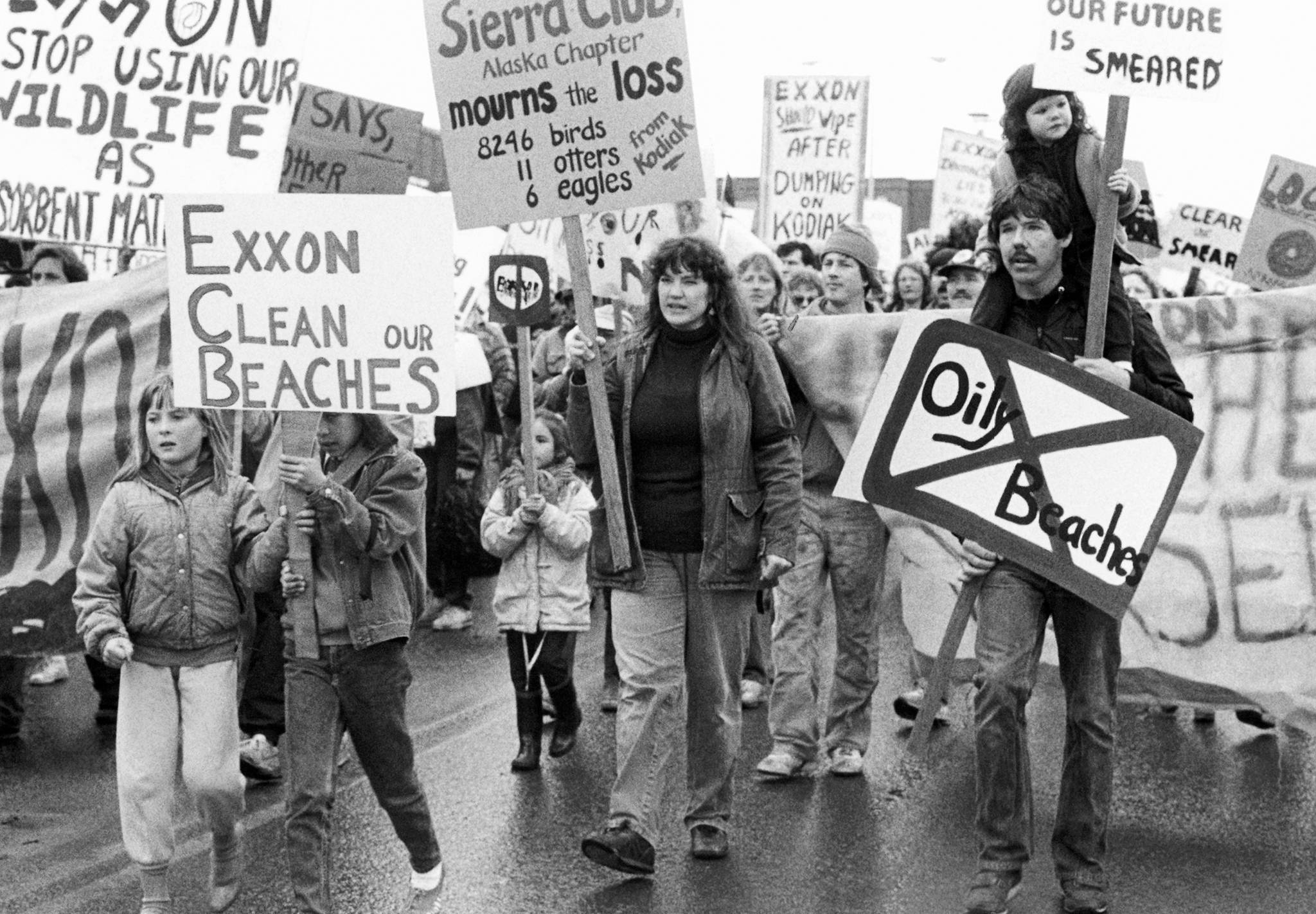

In this May 27, 1989 photo, people carry signs to protest the Exxon oil spill in Anchorage, Alaska. It’s been 30 years since the disaster, at the time the largest oil spill in U.S. history. (Marion Stirrup | Associated Press File)
In this May 27, 1989 photo, people carry signs to protest the Exxon oil spill in Anchorage, Alaska. It’s been 30 years since the disaster, at the time the largest oil spill in U.S. history. (Marion Stirrup | Associated Press File)

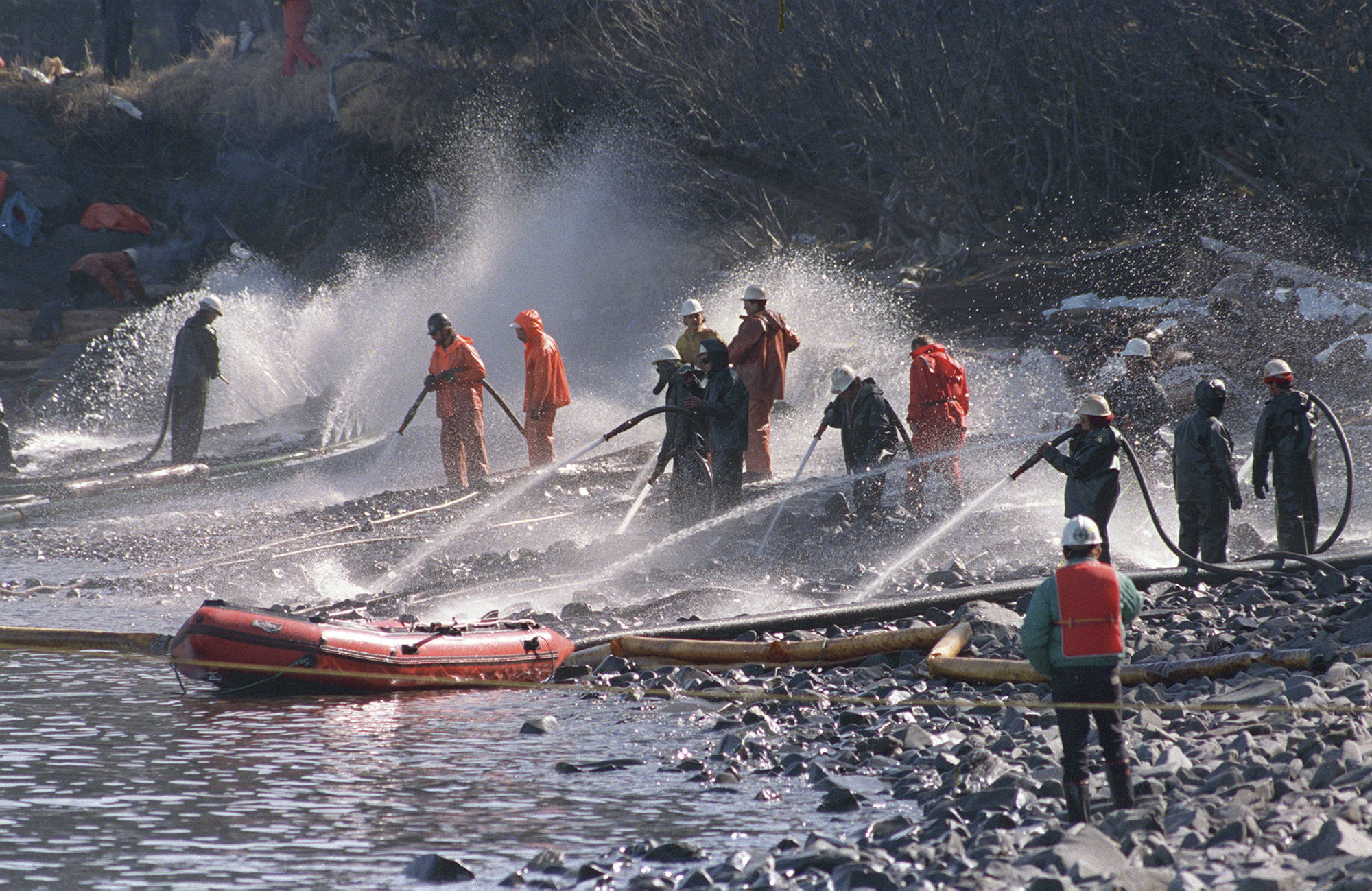
In this April 21, 1989 photo, crews use high pressured hoses to blast the rocks on this beachfront on Naked Island, Alaska. Just after midnight on March 24, 1989, an Exxon Shipping Co. tanker ran aground outside the town of Valdez, Alaska, spewing millions of gallons of thick, toxic crude oil into the pristine Prince William Sound. (Rob Stapleton | Associated Press File)
In this April 21, 1989 photo, crews use high pressured hoses to blast the rocks on this beachfront on Naked Island, Alaska. Just after midnight on March 24, 1989, an Exxon Shipping Co. tanker ran aground outside the town of Valdez, Alaska, spewing millions of gallons of thick, toxic crude oil into the pristine Prince William Sound. (Rob Stapleton | Associated Press File)

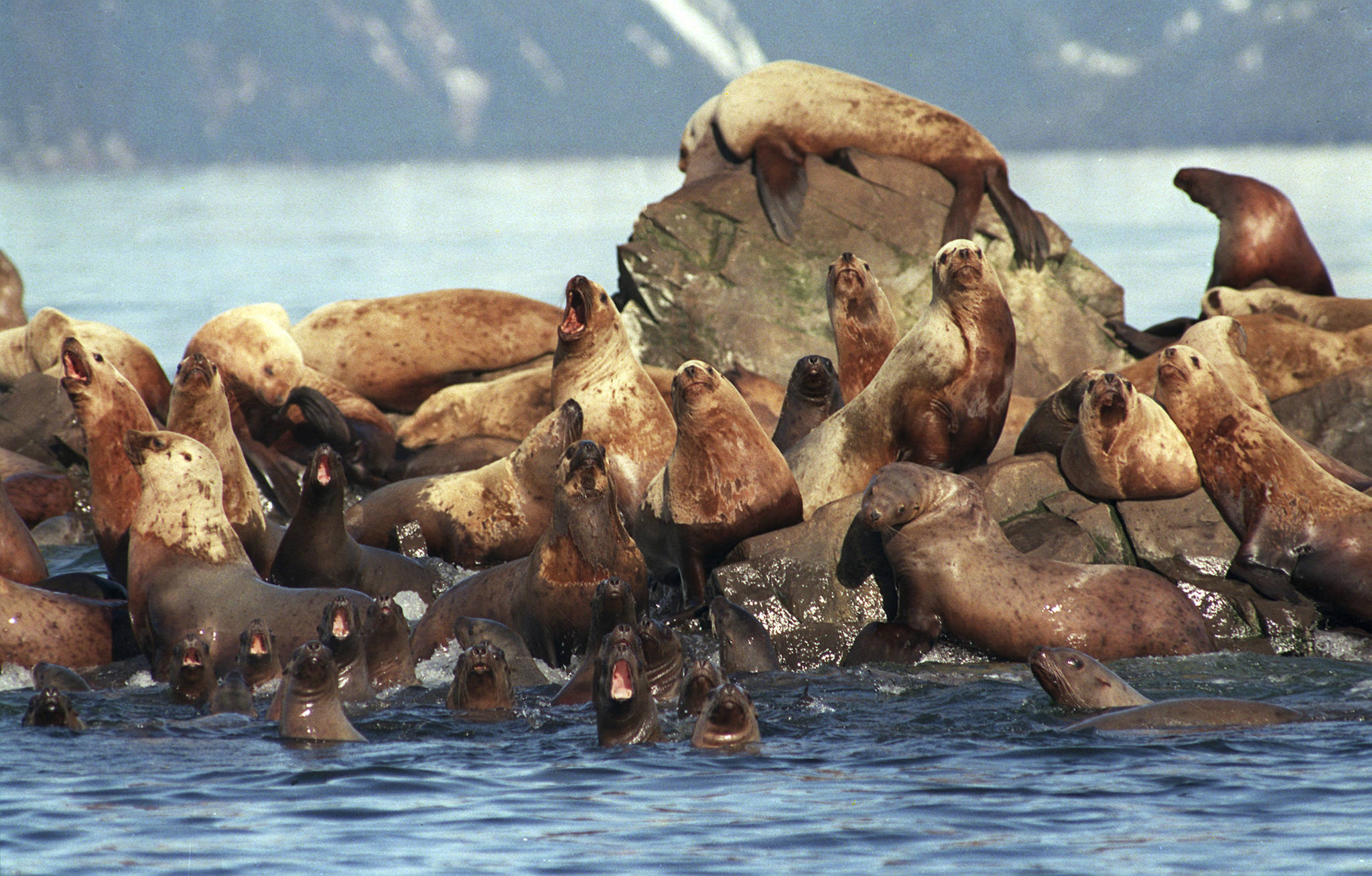
In this April 2, 1989 photo, sea lions get oil on them as they swim in the water and sit on the rock at Prince William Sound, Alaska. The Exxon Valdez oil spill 30 years ago produced striking images of sea otters and birds soaked in oil and workers painstakingly washing crude off beaches. (Jack Smith | Associated Press File)
In this April 2, 1989 photo, sea lions get oil on them as they swim in the water and sit on the rock at Prince William Sound, Alaska. The Exxon Valdez oil spill 30 years ago produced striking images of sea otters and birds soaked in oil and workers painstakingly washing crude off beaches. (Jack Smith | Associated Press File)

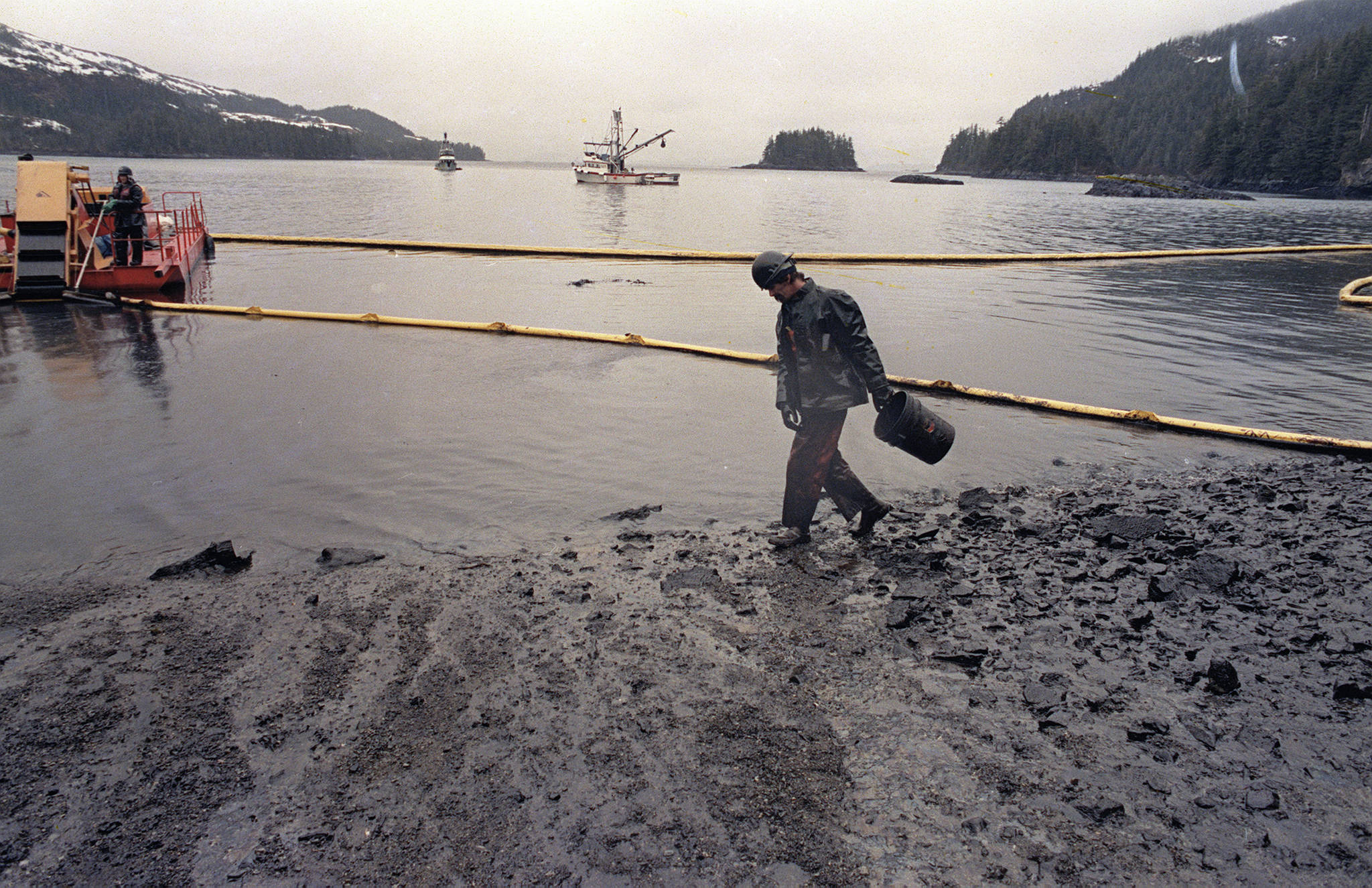
In this April 17, 1989 photo, a worker makes his way across the polluted shore of Block Island, Alaska, as efforts are underway to test techniques to clean up the oil spill of the tanker Exxon Valdez in Prince William Sound. The Exxon Valdez tanker struck Alaska’s Bligh Reef on March 24, 1989, while bound for California. It spilled about 11 million gallons of crude oil, which storms and currents smeared across about 1,300 miles of shoreline. (John Gaps III | Associated Press File)
In this April 17, 1989 photo, a worker makes his way across the polluted shore of Block Island, Alaska, as efforts are underway to test techniques to clean up the oil spill of the tanker Exxon Valdez in Prince William Sound. The Exxon Valdez tanker struck Alaska’s Bligh Reef on March 24, 1989, while bound for California. It spilled about 11 million gallons of crude oil, which storms and currents smeared across about 1,300 miles of shoreline. (John Gaps III | Associated Press File)

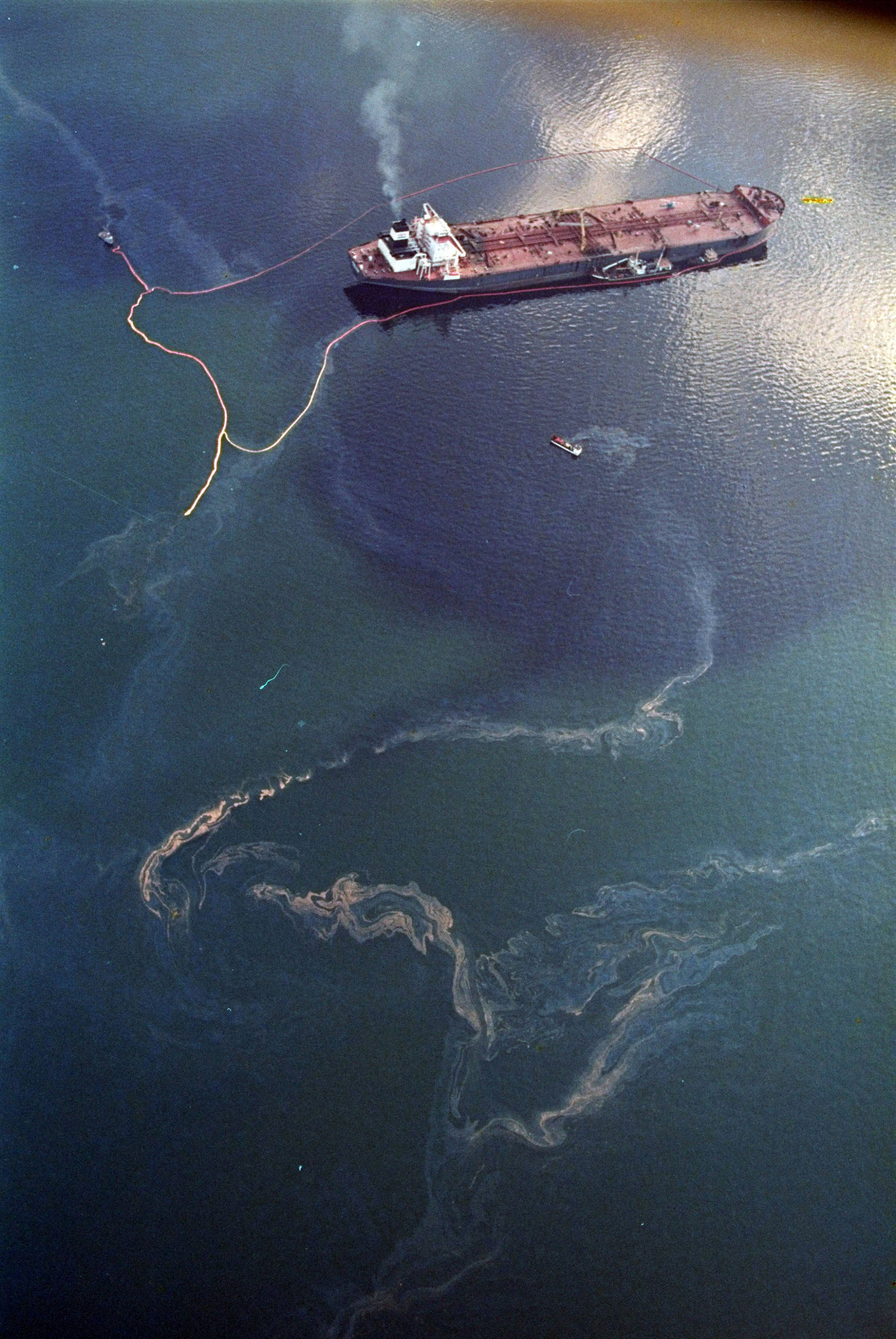
In this April 9, 1989 photo, crude oil from the tanker Exxon Valdez, top, swirls on the surface of Alaska’s Prince William Sound near Naked Island, days after the tanker ran aground, spilling millions of gallons of oil and causing widespread environmental damage. (John Gaps III | Associated Press File)
In this April 9, 1989 photo, crude oil from the tanker Exxon Valdez, top, swirls on the surface of Alaska’s Prince William Sound near Naked Island, days after the tanker ran aground, spilling millions of gallons of oil and causing widespread environmental damage. (John Gaps III | Associated Press File)

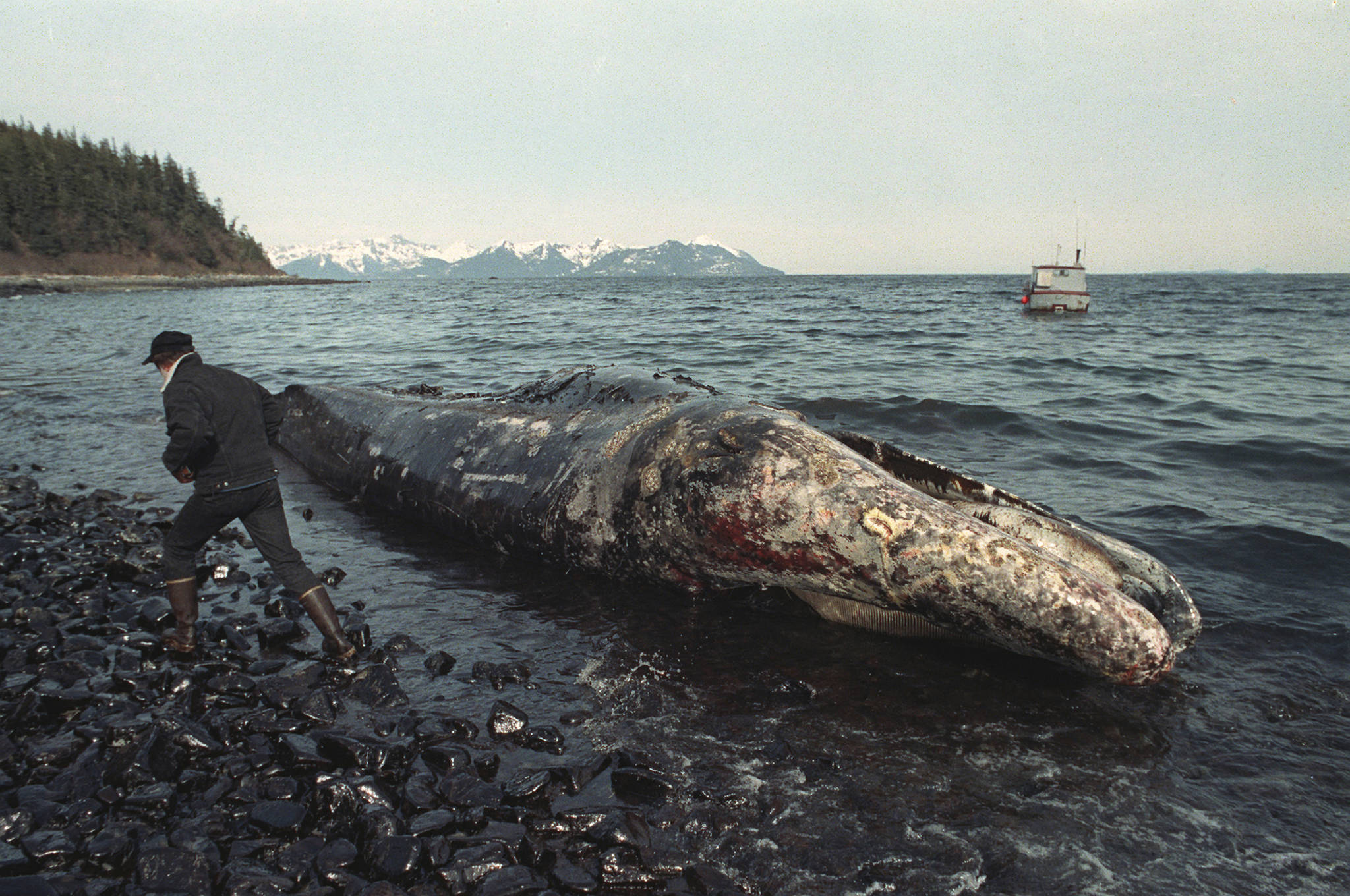
In this photo taken April 9, 1989 photo, a local fisherman inspects a dead California gray whale on the northern shore of Latouche Island, Alaska. The whale was found in the oil-contaminated waters of Prince William Sound. (John Gaps III | Associated Press File)
In this photo taken April 9, 1989 photo, a local fisherman inspects a dead California gray whale on the northern shore of Latouche Island, Alaska. The whale was found in the oil-contaminated waters of Prince William Sound. (John Gaps III | Associated Press File)

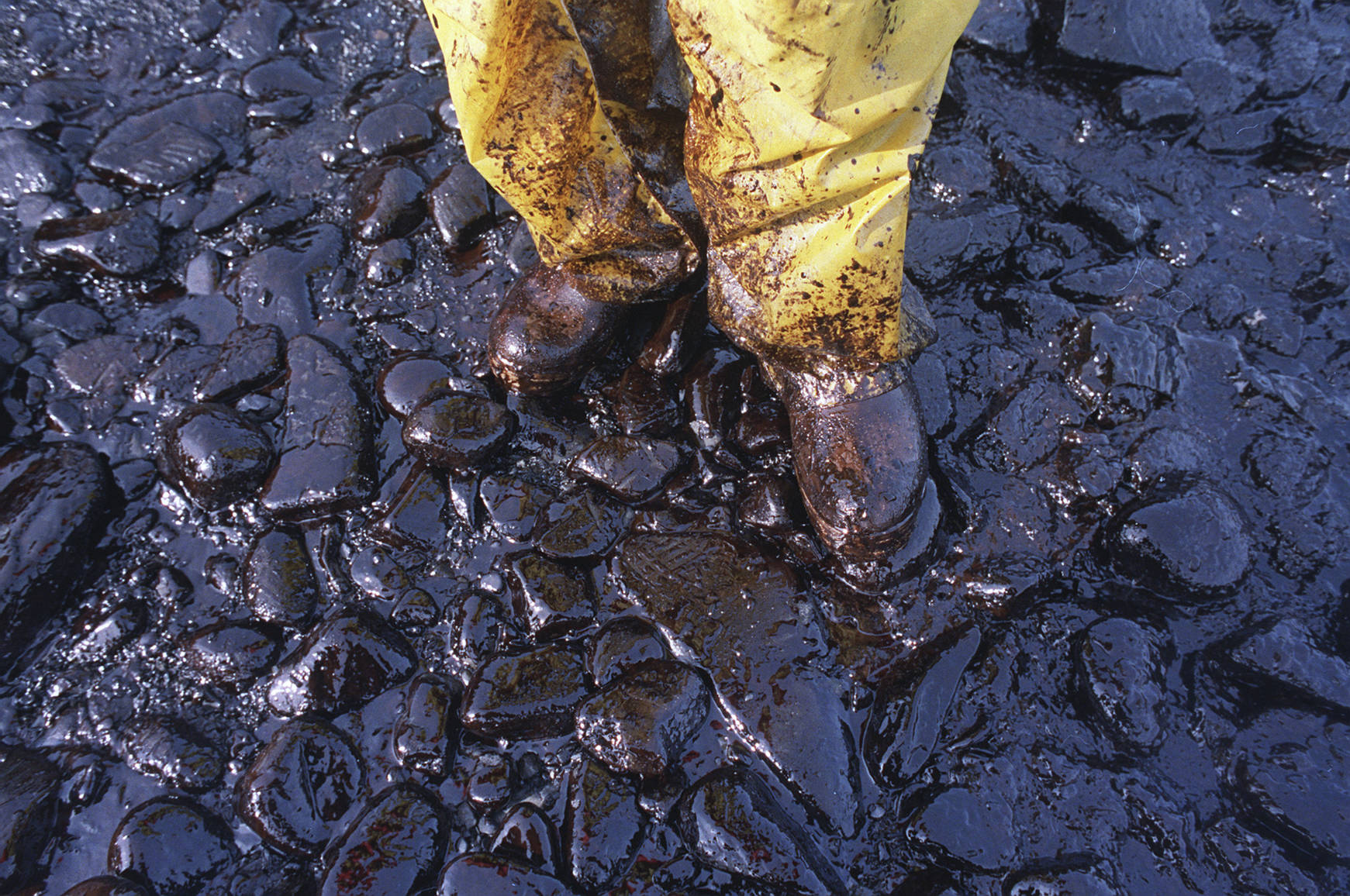
In this April 11, 1989 photo, thick crude oil that washed up on the cobble beach of Evans Island sticks to the boots and pants of a local fisherman in Prince William Sound, Alaska. The Exxon Valdez tanker oil spill on March 24 blackened hundreds of miles of coastline. (John Gaps III | Associated Press File)
In this April 11, 1989 photo, thick crude oil that washed up on the cobble beach of Evans Island sticks to the boots and pants of a local fisherman in Prince William Sound, Alaska. The Exxon Valdez tanker oil spill on March 24 blackened hundreds of miles of coastline. (John Gaps III | Associated Press File)

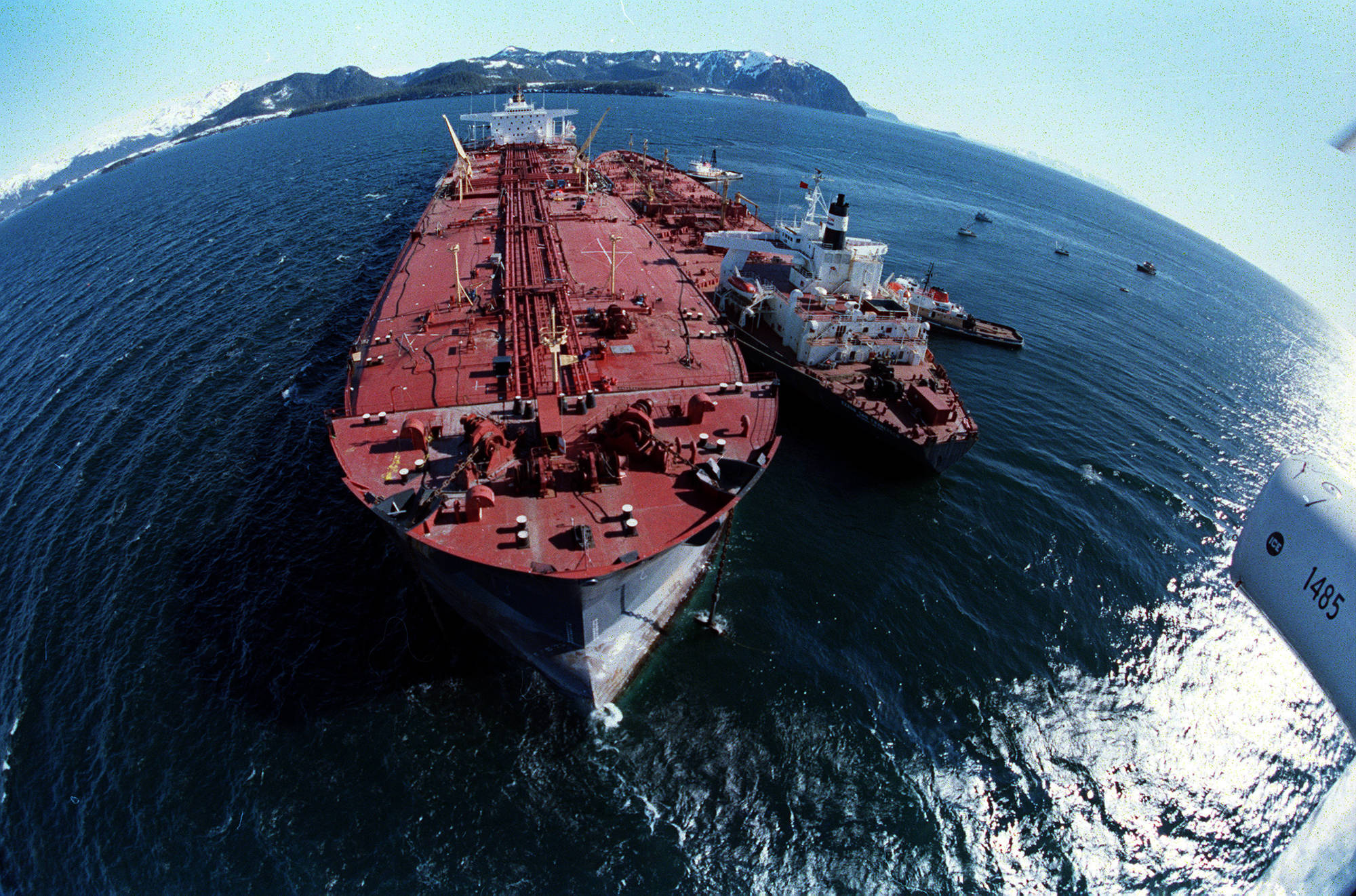
In this April 4, 1989 photo, the grounded tanker Exxon Valdez, left, unloads oil onto a smaller tanker, San Francisco, as efforts to refloat the ship continue on Prince William Sound. The Exxon Valdez tanker struck Alaska’s Bligh Reef on March 24, 1989, while bound for California. It spilled about 11 million gallons of crude oil, which storms and currents smeared across about 1,300 miles of shoreline. (Rob Stapleton | Associated Press File)
In this April 4, 1989 photo, the grounded tanker Exxon Valdez, left, unloads oil onto a smaller tanker, San Francisco, as efforts to refloat the ship continue on Prince William Sound. The Exxon Valdez tanker struck Alaska’s Bligh Reef on March 24, 1989, while bound for California. It spilled about 11 million gallons of crude oil, which storms and currents smeared across about 1,300 miles of shoreline. (Rob Stapleton | Associated Press File)

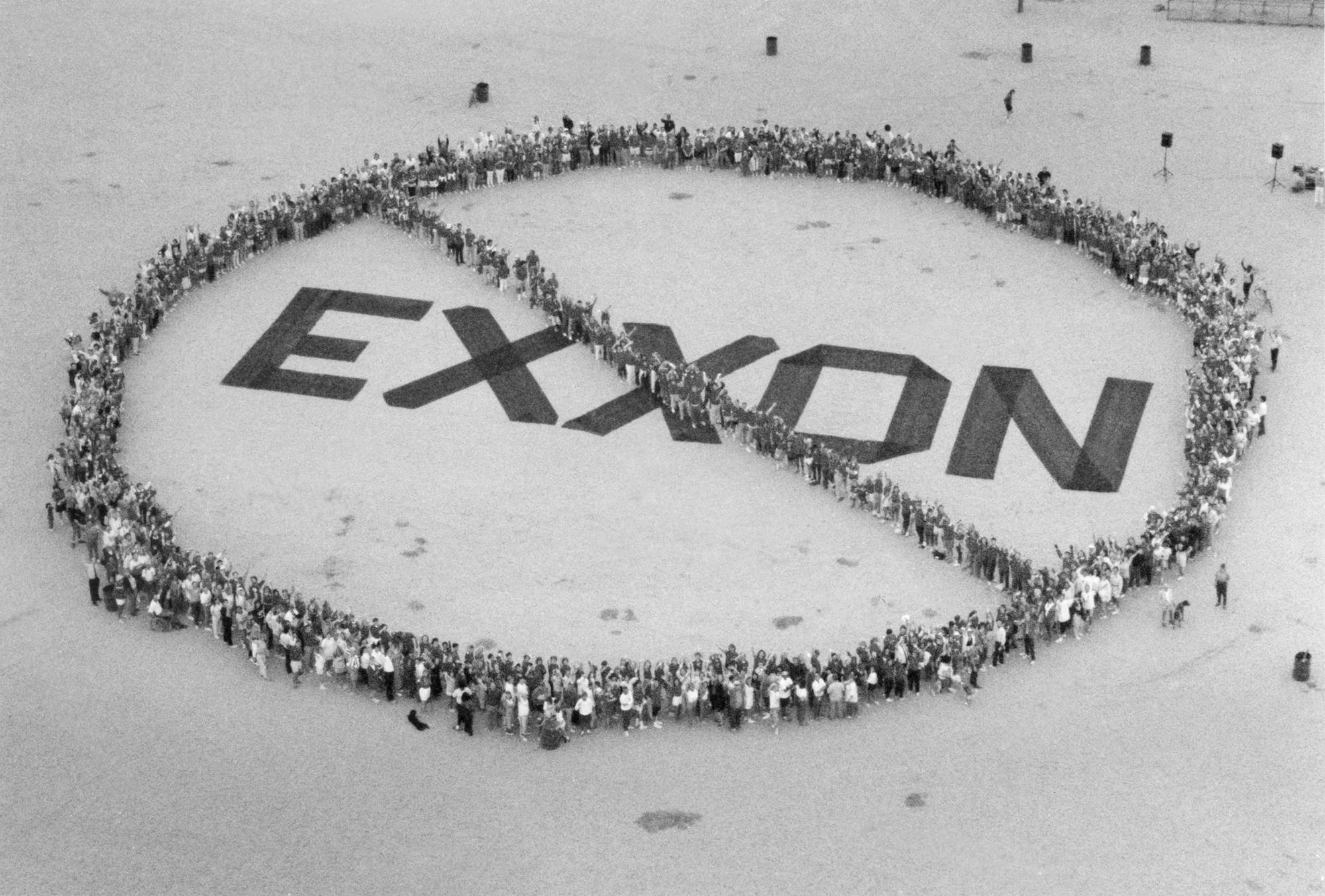
In this July 17, 1989 photo, around 200 people showed up at Fiesta Island in San Diego, to protest the use of Exxon products. The Exxon Valdez tanker struck Alaska’s Bligh Reef on March 24, 1989, while bound for California. It spilled about 11 million gallons of crude oil, which storms and currents smeared across about 1,300 miles of shoreline. (Brent Clingman | Associated Press File)

In this July 17, 1989 photo, around 200 people showed up at Fiesta Island in San Diego, to protest the use of Exxon products. The Exxon Valdez tanker struck Alaska’s Bligh Reef on March 24, 1989, while bound for California. It spilled about 11 million gallons of crude oil, which storms and currents smeared across about 1,300 miles of shoreline. (Brent Clingman | Associated Press File)

More in News

A commercial bowpicker is seen headed out of the Cordova harbor for a salmon fishing opener in June 2024 (Photo by Corinne Smith)
Planned fiber-optic cable will add backup for Alaska’s phone and high-speed internet network

The project is expected to bring more reliable connection to some isolated coastal communities.

Gustavus author Kim Heacox talked about the role of storytelling in communicating climate change to a group of about 100 people at <strong>Ḵ</strong>unéix<strong>̱</strong> Hídi Northern Light United Church on Wednesday, Dec. 3, 2025. (Mari Kanagy / Juneau Empire)
Author calls for climate storytelling in Juneau talk

Kim Heacox reflects on what we’ve long known and how we speak of it.

The Juneau road system ends at Cascade Point in Berners Bay, as shown in a May 2006 photo. (Michael Penn / Juneau Empire file)
State starts engineering for power at proposed Cascade Point ferry terminal

DOT says the contract for electrical planning is not a commitment to construct the terminal.

Members of the Alaska Air and Army National Guard, Alaska Naval Militia, and Alaska State Defense Force work together to load plywood onto a CH-47 Chinook helicopter, in Bethel, Alaska, Nov. 2, 2025, bound for the villages of Napaskiak, Tuntutuliak, and Napakiak. The materials will help residents rebuild homes and restore community spaces damaged by past storms. (U.S. Army National Guard photo by Spc. Ericka Gillespie)
Gov. Dunleavy approves Alaska National Guard assisting ICE in Anchorage

The National Guard said five service members will assist with administrative support; lawmakers and civil rights advocates worry that the move signals a ramping up of immigration enforcement operations in Alaska

A cruise ship, with several orange lifeboats visible, is docked in downtown Juneau. (Laurie Craig / Juneau Empire file photo)
CBJ seeks input on uses for marine passenger fees

Public comment period is open for the month of December.

Browsers crowd into Annie Kaill’s gallery and gift shop during the 2024 Gallery Walk. (Juneau Empire file photo)
Gallery Walk guide for Friday, Dec. 5

The Juneau Arts & Humanities Council announced community events taking place during… Continue reading

The Alaska State Capitol is seen on Tuesday, Nov. 25, 2025. (Photo by James Brooks/Alaska Beacon)
Alaska Senate Republicans confirm Rauscher, Tilton and open two vacancies in state House

The Alaska Republican Party is moving quickly after Republicans in the Alaska… Continue reading

Downtown Skagway, with snow dusting its streets, is seen in this undated photo. (Photo by C. Anderson/National Park Service)
Skagway’s lone paramedic is suing the city, alleging retaliation by fire department officials

This article was reported and published in collaboration between the Chilkat Valley… Continue reading

A spruce tree grows along Rainforest Trail on Douglas Island. (Mari Kanagy / Juneau Empire)
Where to cut your Christmas tree in Juneau

CBJ and Tongass National Forest outline where and how residents can harvest.

Most Read