
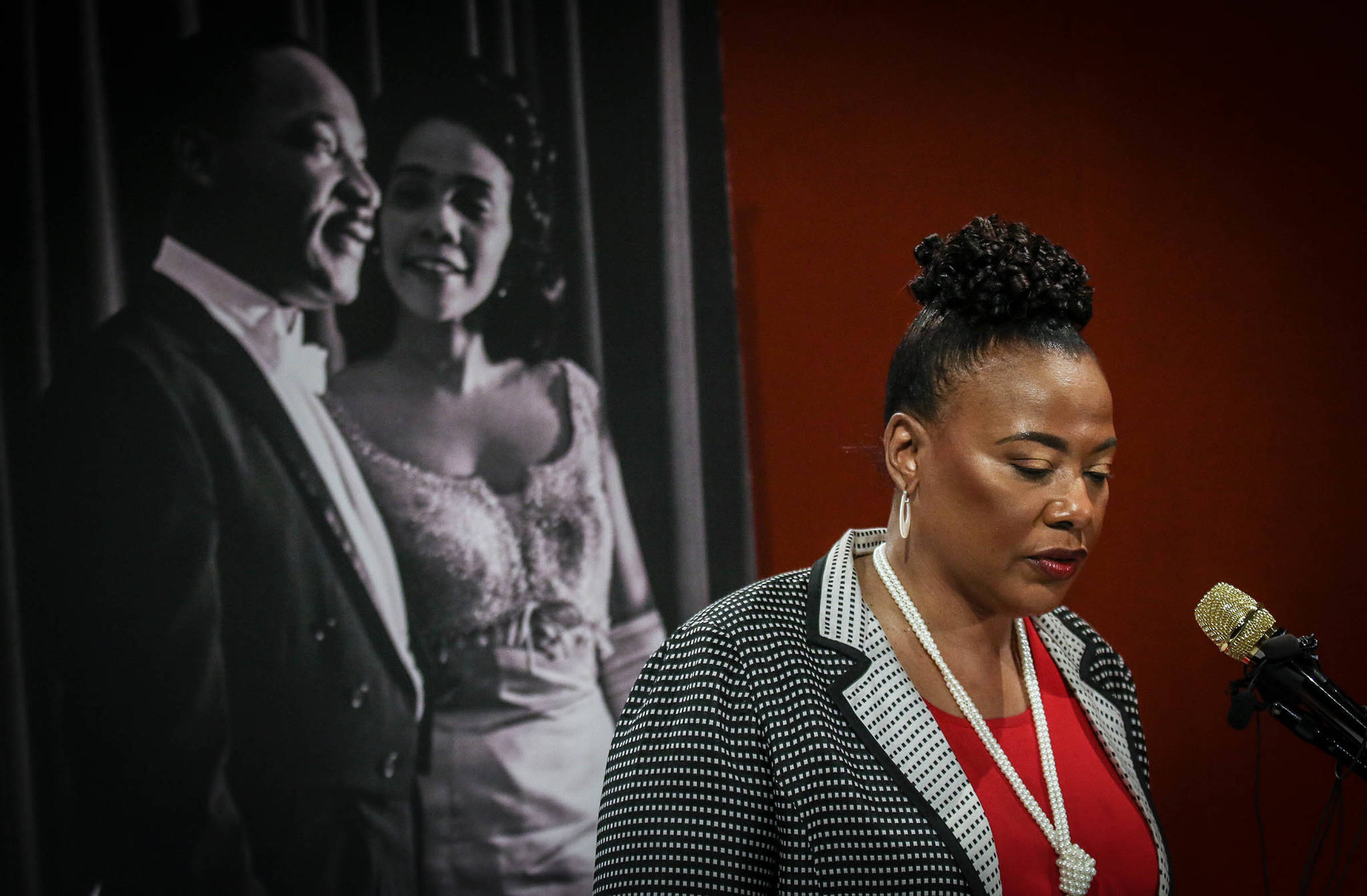
As we approach Martin Luther King Jr. Day, race relations are in the consciousness of every thoughtful American. What can Torah teach us about race relations in America?
I had a teacher, Rabbi Richter, who told our seventh grade class about an amazing audience he once had as a young man with the Hasidic scion of New Square, New York, Rabbi Yaakov Yoseleh Twerski, known as the “Skverer Rebbe,” back in the early ‘60s. People from all walks of life used to line up and wait hours for a private audience with the Rebbe – Skverer Hasidim, hobos, hippies, spiritual seekers of all types. You see, the Rebbe was renowned for his freakish ability to spend but a moment with you and offer you very relevant, very specific advice for what was on your heart. The young Rabbi Richter left the audience quite shaken; and although he never divulged to the class the substance of their discussion, he always spoke of the meeting reverently, and said that it changed his life.
How could the Skverer Rebbe get a handle on a person’s true essence in a matter of seconds? Rabbi Richter said that he had a penetrating gaze, almost like he was looking directly into your soul. In other words, he had X-Ray vision.
Do you remember Superman’s X-ray vision? That guy could see through solid stone walls. I wish everybody had Superman’s X-ray vision. Not to see through solid rock, or to sneak a peek under Lois Lane’s clothing. But rather, to have that ability, the Skverer Rebbe’s ability, to see past the externalities, right into a person’s soul.
The Torah is a book of distinctions. The opening verse states that the first thing the A-lmighty created was difference, distinction, discernment. Heaven and earth. The Torah goes on to speak of many types of distinction – between light and darkness, between good and evil, between the Sabbath day and the six weekdays, and between the unique mission of Israel in the world and the mission of the Nations. But nowhere – nowhere – in the A-lmighty’s Book does He distinguish between people based upon skin color.
Most non-black Americans strive to treat their black neighbors with the same respect and consideration they expect for themselves. Many people of good will, and not a few prominent Jews, advocated equal rights for blacks. But that is not enough. The Torah holds us to an even higher standard – the Gcdly standard – the ability to see past the externalities of our neighbor and see his soul. We dare not see a black man or a white man before us – we must see our brother, we must see his or her soul. Because that is the way Gcd sees us.
If we relate to our fellow, either for good or for ill, primarily on the basis of skin color, we have already lost. Black supremacists are as misguided as white supremacists. Common references to the “Black Community” versus the “White Community” or “Black voters” and “White voters” are demeaning and counterproductive.
This is the Torah’s secret: there is no such thing as a black person or a white person. Black people don’t exist, white people don’t exist. It is but a chimera. The only “race” is the human race. I am a person, we are people, you and me, created in the image of Gcd, a soul put on earth by the A-lmighty to fulfill a specific mission, in a specific place, at a specific time.
We must cultivate that intangible faculty, that sixth sense, to see the true essence of our neighbor, to transcend the veils that conceal the soul. What is their character? Are they honest? Are they kind? Are they learned? Are they wise? No physical characteristic can predict these soul traits. As the footsteps of the Messiah approach and as the human family matures spiritually, it is more important than ever to have X-Ray vision.
It is my hope and prayer that America rises to the Torah standard, to X-ray vision, to the Skverer Rebbe’s penetrating soul gaze; so that we may finally emerge from the long shadows that slavery has cast on this land, and grow together as brothers, as neighbors and as friends.
• Rabbi Yehoshua Mizrachi is affiliated with Congregation Sukkat Shalom. “Living & Growing” is a weekly column written by different authors and submitted by local clergy and spiritual leaders.
