
From Juneau Empire subscriber Catherine Reardon:
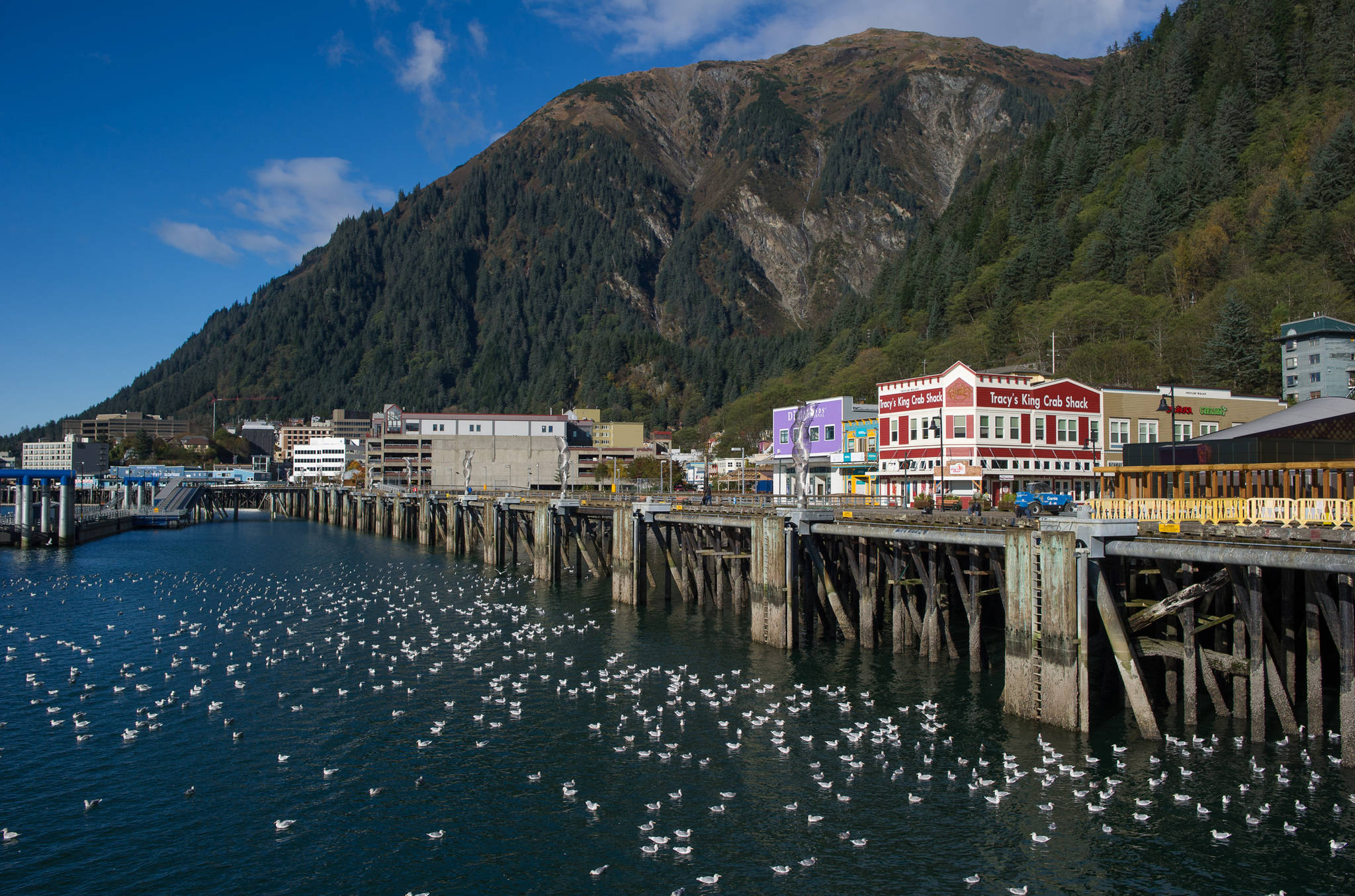
Hundreds of gulls are assembling at the dock downtown squawking loudly, apparently organizing themselves to migrate somewhere. Can the Empire tell us where they go each winter?
If you’ve taken a waterside stroll downtown recently, you know what Catherine is talking about: seagulls are everywhere, and they seem to congregate on the mainland side of Gastineau Channel.
After speaking with experts, the short answer to Catherine’s question is that most Juneau seagulls likely aren’t migrating far. Or at least not en masse. They may just be grouping up to feed, scavenging for fish scraps from Taku Smokeries or eating mussels off dock pilings.
But without knowing what species of gull is downtown — there are 21 gulls listed in the 2017 University of Alaska Department of Ornithology checklist of Alaska birds — it’s impossible to tell if they’re preparing to migrate, much less where to.
Author, naturalist and photographer Bob Armstrong might be able to tell us where the gulls go. Armstrong has written and contributed to dozens of Alaska field guides and frequently collaborates with Empire columnist Mary Willson. The sixth edition of his “Birds of Alaska” guide was released in 2015.
Four kinds of gulls commonly make their home in Juneau, Armstrong wrote via email, with other species making their way in and out. There is some discrepancy which species would make this list, but in Armstrong’s opinion, Juneau has four permanent gull residents: the glaucous-winged gull (the largest), herring gull (almost as large), mew gull (mid-sized) and Bonaparte’s gull (the smallest).
Armstrong has known only the Bonaparte’s gull to leave town in the winter. He thinks food, rather than migration, causes gulls to group up downtown.
“I suspect a large number of gulls seen in town are attracted to the fish parts released into the area by Taku Fisheries,” Armstrong wrote. “The gulls also like to feed on the mussels and barnacles that adhere to the posts along the cruise ship dock in Juneau.”
Dr. Kathy Kuletz, who’s studied Alaska seabirds since 1978, added a few species to Armstrong’s list, including the Thayer’s gull and the black-legged kittiwake, which is classified in the gull (Laridae) family.
Gulls disperse more in winter, Kuletz said, sometimes traveling as far south as California, but they don’t generally have strong migratory patterns.
Like most seabirds, younger birds tend to explore more and travel farther than adults, who are more aggressive scavengers and generally get the best spots for feeding.
Some gulls might even be coming from elsewhere to Juneau for the winter.
“They generally head where there is open water, warmer weather and food, typically south of the Juneau area in winter, but there is a lot of individual variation,” Kuletz said.
In other words, downtown’s gulls likely aren’t organizing to migrate anywhere. Some may leave to find food, which is scarcer in the winter, but their travel is more individually determined, not predictable like some other birds.
But why are they so noisy? And why do they all seemingly come downtown in the fall?
The lack of cruise ships could open up gulls’ access to the cruise ship docks — and the tasty mussels and barnacles that live on them. Gulls congregate around food sources and make a lot of noise when they’ve found them, Kuletz said.
Others may just be noisy because they’re having trouble “adulting.”
“Gulls often do a lot of squawking when there’s food around or they want to set up a hierarchy to the best feeding spots. Also, this time of year there are likely to be lots of juveniles, and they may still be begging from their parents, despite being ‘fledged,’” Kuletz said.
• Curious by Nature answers reader-submitted questions about Mother Nature in Juneau and Southeast Alaska. Ever wonder why Juneau’s water get so much murkier in the summer? Just how fast is the Mendenhall Glacier melting? Is the Fukushima disaster hurting Juneau’s salmon stocks? Why your dog loves the smell of bear poop? Submit your question to outdoors@juneauempire.com and we will scour mountains, rivers, labs and university hallways to try to find the answer. You can also contact reporter Kevin Gullufsen directly at 523-2228 or kevin.gullufsen@juneauempire.com.
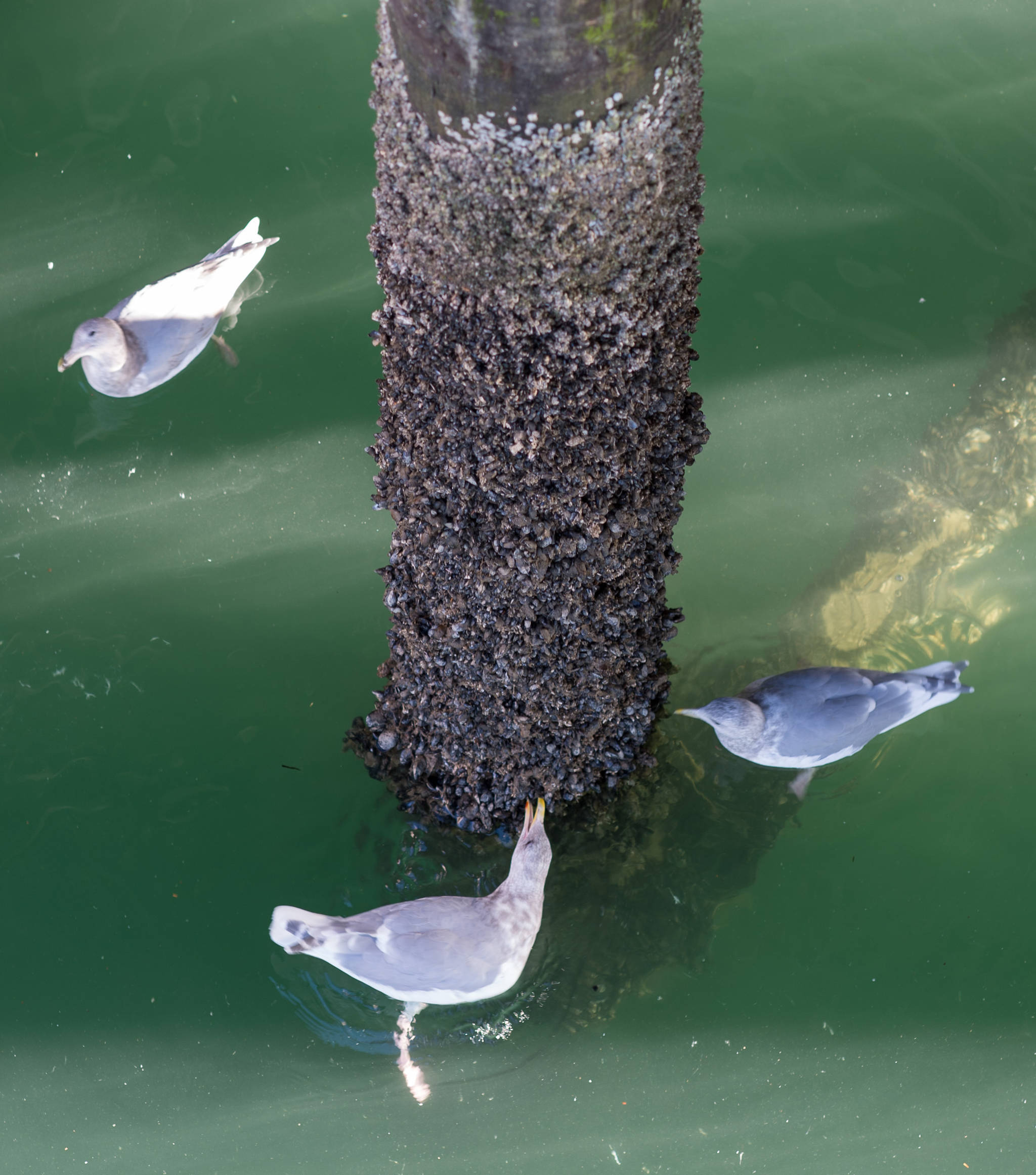
Glaucous-winged gulls gather at Juneau’s downtown waterfront to eat mussels and barnicles off the pilings on Wednesday, Oct. 11, 2017. (Michael Penn | Juneau Empire)

Glaucous-winged gulls gather at Juneau’s downtown waterfront to eat mussels and barnicles off the pilings on Wednesday, Oct. 11, 2017. (Michael Penn | Juneau Empire)
