
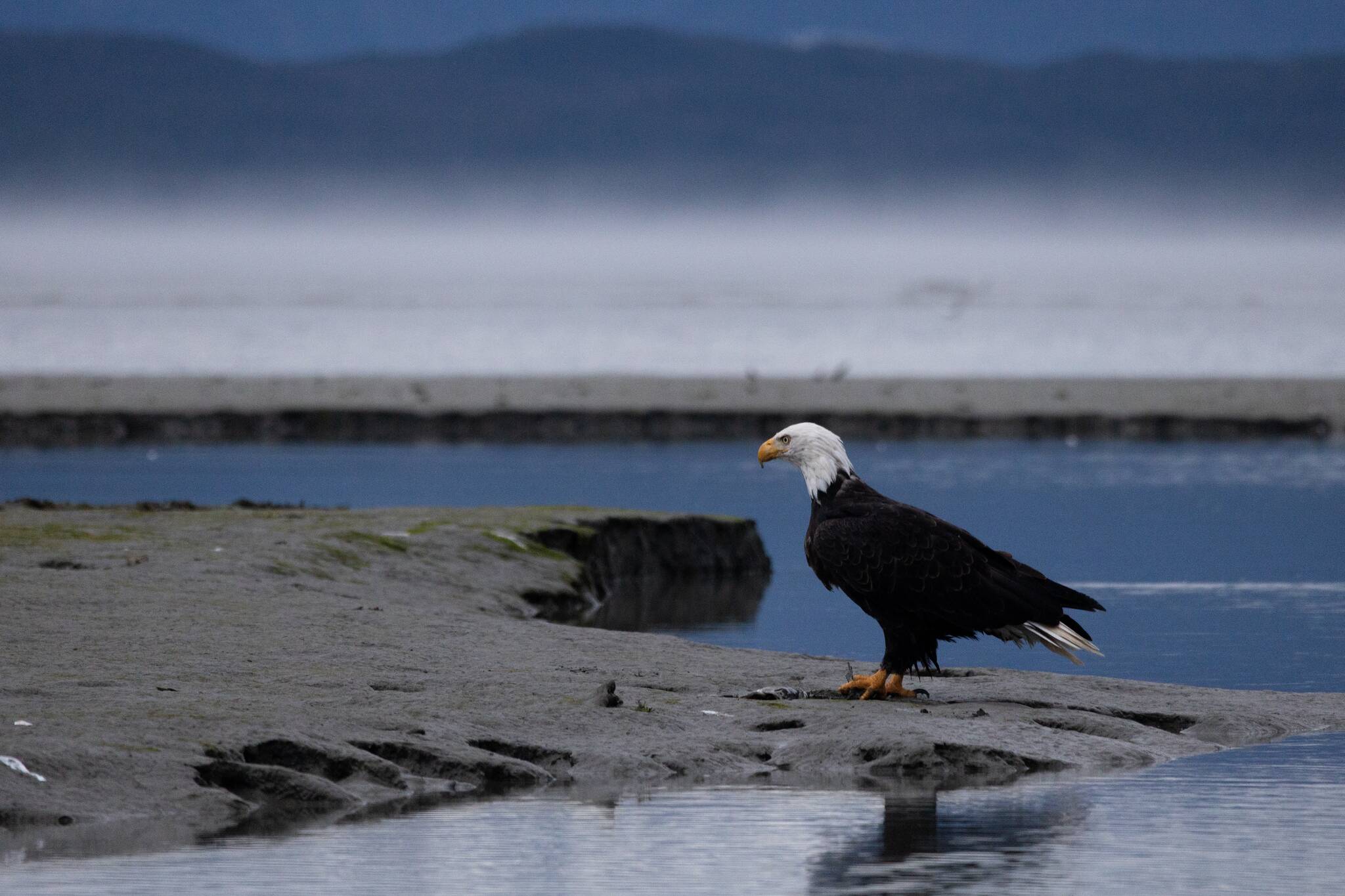
Countless aspects of Juneau are easy to take for granted. It’s easy to forget to look up at the fog as it intermingles with treetops when it’s pouring rain; salmon swimming thousands of miles to spawn lose their wonder once they die and start to smell; eagles become mere birds around commonly seen around town.
My parents recently came to town for the first time, and they were massively excited by the eagles. Their awe reminded me of how incredibly special these birds are: In addition to being a symbol of freedom, they’re one of the greatest conservation success stories on earth.
Dichloro-diphenyl-trichloroethane, or DDT, was introduced as an insecticide in the 1940s. Dubbed a miracle chemical, it was initially used to ward off insect-borne diseases. The most memorable marketing campaign featured a scientist eating DDT with his porridge, declaring, “DDT: So safe you can eat it!”
One spring day in 1957, a biologist and author named Rachel Carson received a letter from a concerned writer named Olga Huckins detailing how the songbirds in her birdbath dropped dead after an aerial spraying program passed through the airspace over her Cape Cod property.
“The “harmless” shower hath killed seven of our lovely songbirds outright,” Huckins wrote. “We picked up three dead bodies the next morning right by the door. They were birds that had lived close to us, trusted us, and built their nests in our trees year after year.”
Eagles were among the affected creatures. Exposure to DDE, a metabolite of DDT, interfered with eagles’ calcium metabolism, resulting in weaker eggshells and a higher mortality rate. The population of bald eagles in the Lower 48 plummeted to a mere 400 breeding pairs. Carson, who had previously pitched articles about the dangers of DDT to various publications — all of which had rejected the premise — began meticulously researching her next book. “Silent Spring” was published in 1962.
The book’s release had mixed reception. For environmental advocacy groups, it was proof of what many had long suspected. DDT manufacturers and their employees had a different reaction, threatening to sue Carson and her publishers. The Secretary of Agriculture Ezra Benson asked President Eisenhower in a letter “why a spinster with no children was so concerned about genetics.” Various chemical industry representatives attacked her appearance and scientific credibility, with American Cyanamid biochemist Robert White-Stevens saying, “If man were to follow the teachings of Miss Carson, we would return to the Dark Ages, and the insects and diseases and vermin would once again inherit the earth.”
Undeterred despite a breast cancer diagnosis, Carson continued to advocate for DDT regulation and research. Her hard work paid off in 1972, when the widespread use of DDT was banned in the U.S. Today, it’s classified as a probable human carcinogen. It is not, in fact, so safe you can eat it: It causes birth defects in children, an increased risk of liver cancer and is toxic to dozens of animals, including birds, fish and amphibians. Like other persistent organic pollutants, or POPS, it still lingers in ecosystems today. Bald eagle populations in the Lower 48 were able to recover with help from Alaska: In 1987, 58 bald eagles were sent from Alaska to five states where they had gone extinct.
Every time I see an eagle down south, I think of Rachel Carson. Without her bravery, our nation’s symbol of freedom may very well have been a thing of the past.
These incredible birds, who mate for life and return to the same nests year after year, are a reminder to fight tooth and nail for the things that can’t speak for themselves. They’re a symbol of the bravery it took for Carson to stand taller and speak louder when everyone told her to sit down and shut up. Her story begs the question: What’s more patriotic than standing up for the natural beauty that makes America great?
Chloe Anderson is a naturalist photography guide and freelance photojournalist based in Juneau. Her work has appeared in The Associated Press, The Denver Post, Alpinist magazine and more. For more, visit www.chloeandersonphotography.com.
