
A new conference launches this week at the University of Alaska Southeast, bringing together Native Hawaiians and Alaska Natives to share on indigenous ways of knowing: “Tléix’ Yaakw — One Canoe.”
“We wanted to make this event unlike a traditional conference,” organizer Frank Coenraad said. “It’s going to be a gathering around our wisdom.”
This five day event hopes to draw participants from all ages and backgrounds and open a conversation on the importance of indigenous people’s knowledge in the 21st century and its everyday role in people’s lives.
“We compartmentalize so much in our Western thought,” organizer Frank Coenraad said. “This is science. This is math. But in indigenous cultures it’s all. It’s a way of life. Art is part of it. Everything is all interrelated. We really want to celebrate that and we also want to celebrate that we are in such a rich cultural place — it’s all around us — and we don’t really pay homage to that.… In Hawaii everyone knows ‘aloha’ and ‘mahalo.’ Wouldn’t it be great since culture is all around us if we started using ‘gunalchéesh’ at the coffee shop,”
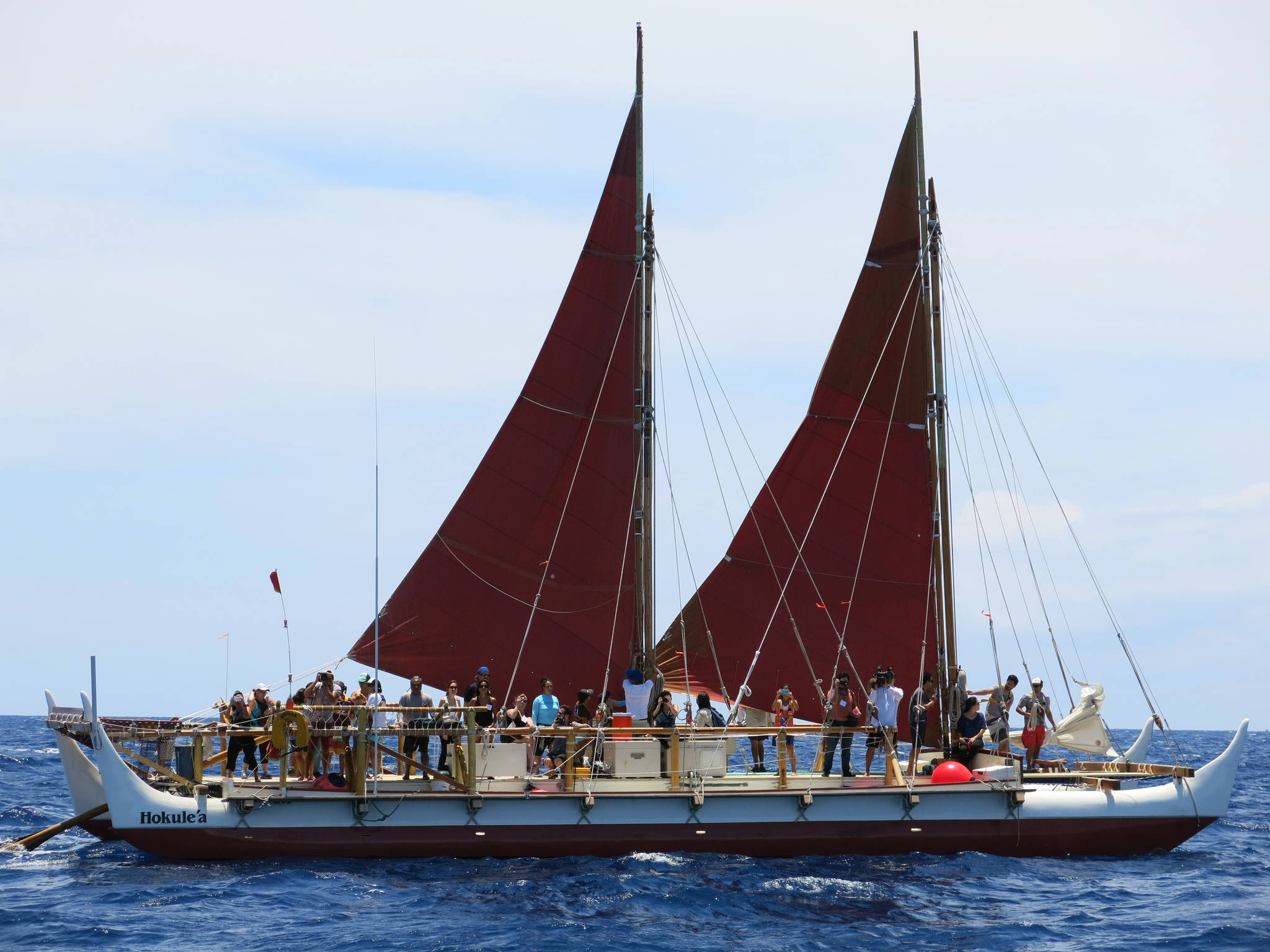
Coenraad explained that part of the conference will be centered around the Hawai’iloa and the Hōkūle’a, ocean voyaging canoes whose crew made up of members from the Polynesian Voyaging Society navigated around the world using indigenous techniques. The Hawaiian Voyaging Traditions archival website run by the Polynesian Voyaging Society details the connection between Native Hawaiians and Alaska Natives of Southeast Alaska.
Hawai’iloa was being planned in the late 1980s. It was going to be made through traditional methods and then sailed with recovered navigational knowledge. The Polynesian Voyaging Society wanted to use traditional materials found locally on Hawaii but ran into a big problem early on; there weren’t any koa trees large enough that could be used for the canoe’s hull. The Hawaiian forests had been decimated due to farming and cattle grazing, one of the many legacies of colonization. The builders had to search elsewhere for an appropriate trees, which led them to Southeast Alaska. Sealaska gave the Polynesian Voyaging Society two Sitka Spruce so the construction of the Hawai’iloa could move forward. The canoe later sailed north to Alaska in 1995 to give thanks.
This connection between the indigenous cultures of Hawaii and Alaska has lasted over the decades, and now navigator Nainoa Thompson of the Polynesian Voyaging Society will be one of three keynote speakers, or thought leaders, at the conference. The other thought leaders will be Lance X’unei Twitchell, UAS Assistant Professor of Alaska Native languages, and Dr. Linda H. L. Furuto, a mathematician whose knowledge covers traditional wayfinding which includes celestial navigation that was used aboard the Hōkūle’a.
Hōkūle’a’s mission was not only to revitalize Native Hawaiian’s cultural knowledge but to encourage caring for Earth’s environment. The conference will look at revitalization efforts of cultural knowledge, in particular, sustainability.
“Why the voyage of the Hōkūle’a was important because right now there are many nations who are looking at their indigenous people to find out how they can protect their lands. Because that was all part of traditional values, is to be part of the land and not be wasteful,” Coenraad said.
On the second day of the conference, participants will go to Berner’s Bay to view the petroglyphs and to learn about indigenous art forms while traveling to the site. On the third day of the conference, the discussion will focus on mālama honua which means “caring for our Island Earth.” On the third and fourth day there will be “ecosystem excursions,” trips to the Mendenhall Glacier (Sít Áa Hídi) and Village That Moved Auke Rec (Aanchgaltsóow), and Head of Auke Bay (Áakw Tá), states the website which has registration information and a full schedule of events.
The conference is limited to 100 participants to promote dialogue between people on the many questions that’ll be discussed, Coenraad said. While topics will range from language, art, sustainability and other knowledge, there is no set takeaways, he said, though he is a sure a variety of interesting discussions will be started.
“We want people to dig deep,” he said. “As we uncover, as we unlayer, we’ll find more. There’s really not an answer yet.”
• Clara Miller is the editor of the Capital City Weekly. She can be reached at cmiller@capweek.com.
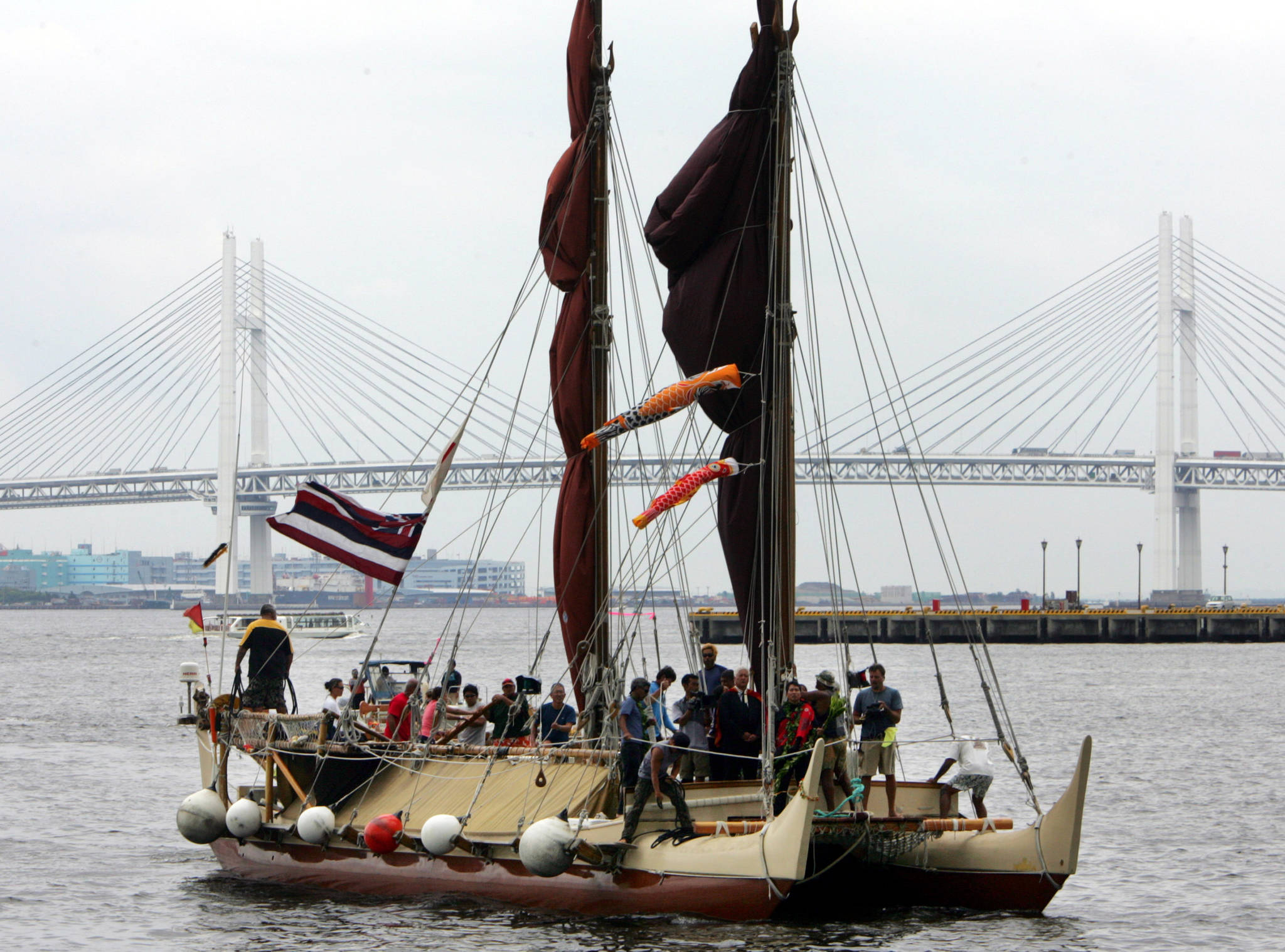
Hawaiian ship Hokulea sails into Yokohama port, near Tokyo, Japan, on Saturday June 9, 2007. The crew of the Hawaiian canoe Hokulea arrived at this port south of Tokyo Saturday, completing a five-month journey of more than 13,600 kilometers (8,500 miles) across the Pacific. The vessel, flying orange and burgundy sails, was met by the sounding of conch shells, hula dancers and a crowd of several hundred at the Yokohama port. Associated Press | Koji Sasahara
