
Here are three small stories, two from the field and one from home — two that were simply fun and one that leaves some questions.
One day in early February, I put on snowshoes with the intention of poking around in some meadows out the road. There was not a lot of snow, but the ‘shoes sometimes make it easier to walk over snow-covered grassy humps and bumps. And off I went, seeing a few tracks of mink, shrew, mouse, and weasel. A porcupine had wandered from the meadow down to the ice-covered creek and up the other side. Its trail intersected another trail, made by a river otter that had come upstream on the ice. In fact, there were two and possibly three otters, weaving in and out over the ice and finally coming up the bank. They went over a short stretch of meadow, under some trees, and down to a tiny, frozen slough. I decided to follow this trail as it went along the slough. The frozen channel got gradually wider, but I found one place where the ice was broken, perhaps by the otters. The edge of the opening was packed flat by otter feet, so it was clear that they had spent some time by this hole in the ice. What could they have found there? The trail continued down the icy slough, eventually joining the main creek again where there was some open water and a good chance of finding small fish. The total journey from creek-leaving to creek-joining was maybe half a mile. I think that these hunters knew where they were going and were just checking out another part of their home range.
I was having so much fun that I didn’t pay attention to my feet. When I finally happened to look down at my feet, I was surprised to see that I’d thrown a ‘shoe. So I back-tracked to retrieve that lost one, almost all the way back to where I’d picked up the otters’ trail. Having fun seems to be distracting!
One day in the middle of February, I wandered out into the Dredge lakes area, following a tip from a friend. After threading my way through a noisy passel of school kids, I went straight to one corner of Moose Lake. This is where we often see migrating trumpeter swans in fall, but this time I was looking for some patches of open water. I found them, under some snow-laden alder branches. The surface of the water was roiling periodically, so I knew something was going on in there. Peering closely into the dark water, I saw them: several big Dolly Varden moving slowly about in the shallows. I could pick out the white borders of their pectoral and pelvic fins, which are a good field mark. There was another big fish in the same bit of open water, a fish with no white on the fins and black speckles all over the body…probably a cutthroat trout. Dollies and cutthroats are known to overwinter in Mendenhall Lake and some of the accessible ponds in this area, where they hang out but feed little in the cold water. Why would they be in this spot? This area also sometimes hosts spawning coho in fall, so there is something special about it — and that’s the upwellings, where ground water burbles up through the sediments, bringing oxygen with it. Those fish are probably there to take advantage of the oxygenated water, which can be in short supply in some of these small ponds. As I watched, a dipper zipped out from just under the snowy bank and disappeared under the arching branches.
On the way back to the trailhead, I started to duck under some low-hanging alder branches and saw something flit to the side. So I quickly looked up and saw a redpoll, perched not eighteen inches from my face. On the branch I had ducked under was a cluster of alder cones, a favorite food of redpolls. This bird scolded me roundly, so I apologized and moved on, while the bird went straight back to “his” cones. I only saw one redpoll just then, but shortly later and not far away, I saw a whole flock of them at the seed feeders on my deck, cleaning up the millet seeds. Redpolls seem to show up around here sometime in February, most every year, making me wonder what they were doing in the earlier part of winter.
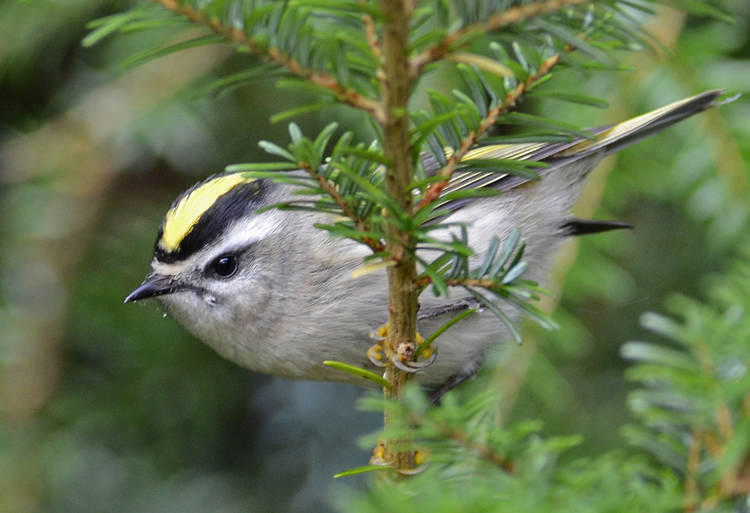
My suet feeder at home normally attracts chickadees and juncos. But sometime in January I noticed other visitors. There were two very small birds that spent several minutes clinging to the wire-mesh suet holder and pecking at the suet. I was astonished to see that these were golden-crowned kinglets, birds that customarily feed on dormant bugs and spider eggs among the conifer needles. This was not a “one-off” visit; they returned several times over the next few weeks (maybe more often than I noticed, given that I don’t spend the whole day watching from my windows).
This observation seems so unusual to me that I asked one of Juneau’s ace birders about it. I was told that, indeed, golden-crowned kinglets had occasionally visited their suet feeder too. Further inquiry via the internet revealed that this feeding behavior by golden-crowned kinglets has been reported, but very rarely, in Michigan and Tennessee, for instance.
Golden-crowned kinglets are so small (about six grams) that they lose heat rapidly (having a high surface- to-volume ratio), but they can’t store much fat. So they have to eat a lot each day, moving continuously through the foliage in search of tiny, sparse prey. They may save some energy at night by lowering their metabolism a bit and by huddling up together in sheltered spots, but the risk of going hungry and perhaps starving is significant. Given the high demand for energy, why don’t they visit suet feeders more often?
And what got these few birds started on suet-feeding in the first place?
• Mary F. Willson is a retired professor of ecology. “On The Trails” appears every Friday. Her essays can be found online at onthetrailsjuneau.wordpress.com.
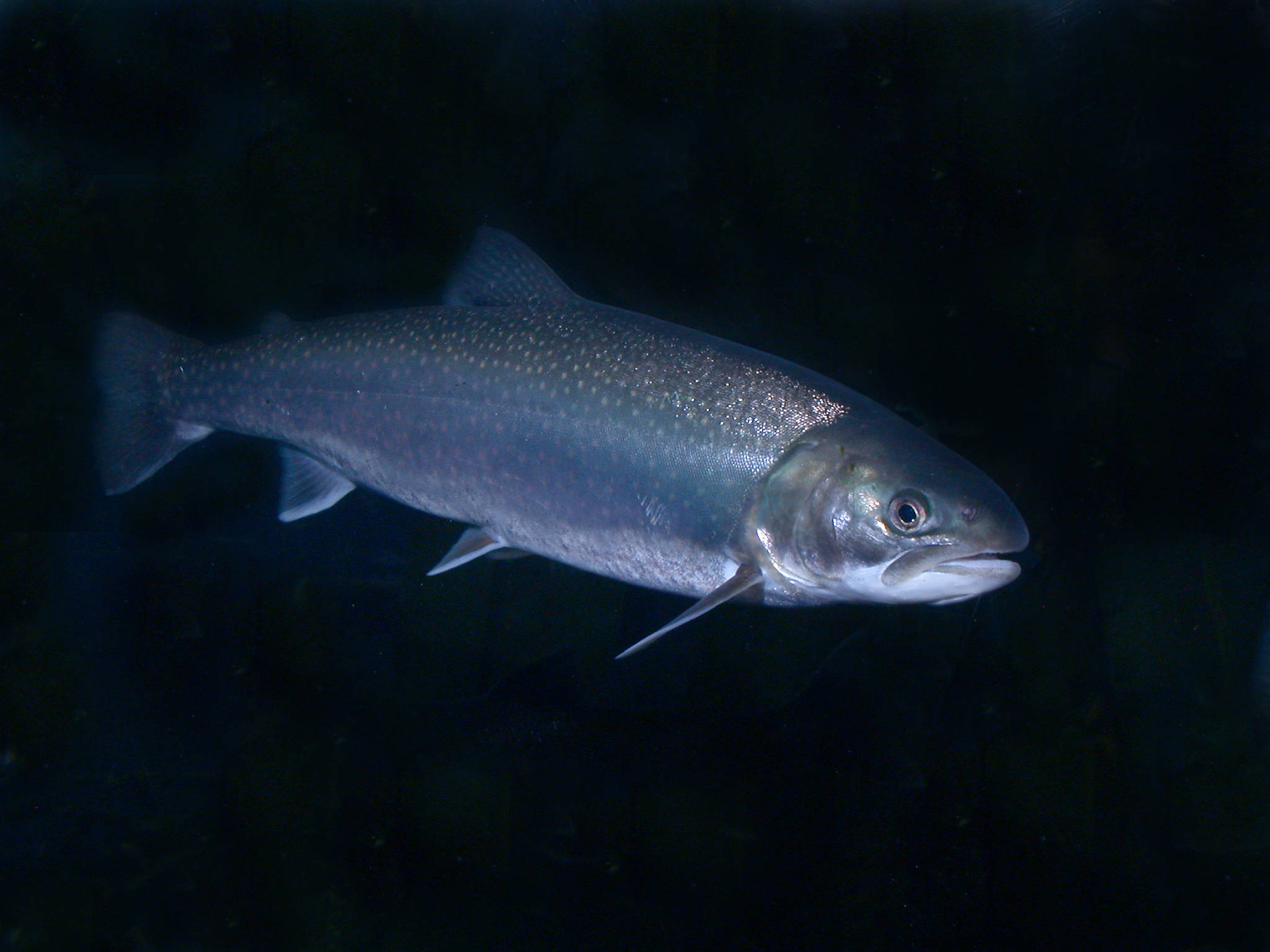
Dolly Varden are spangled with pink and gold dots and sport white margins on their ventral fins. (Photo by Bob Armstrong)
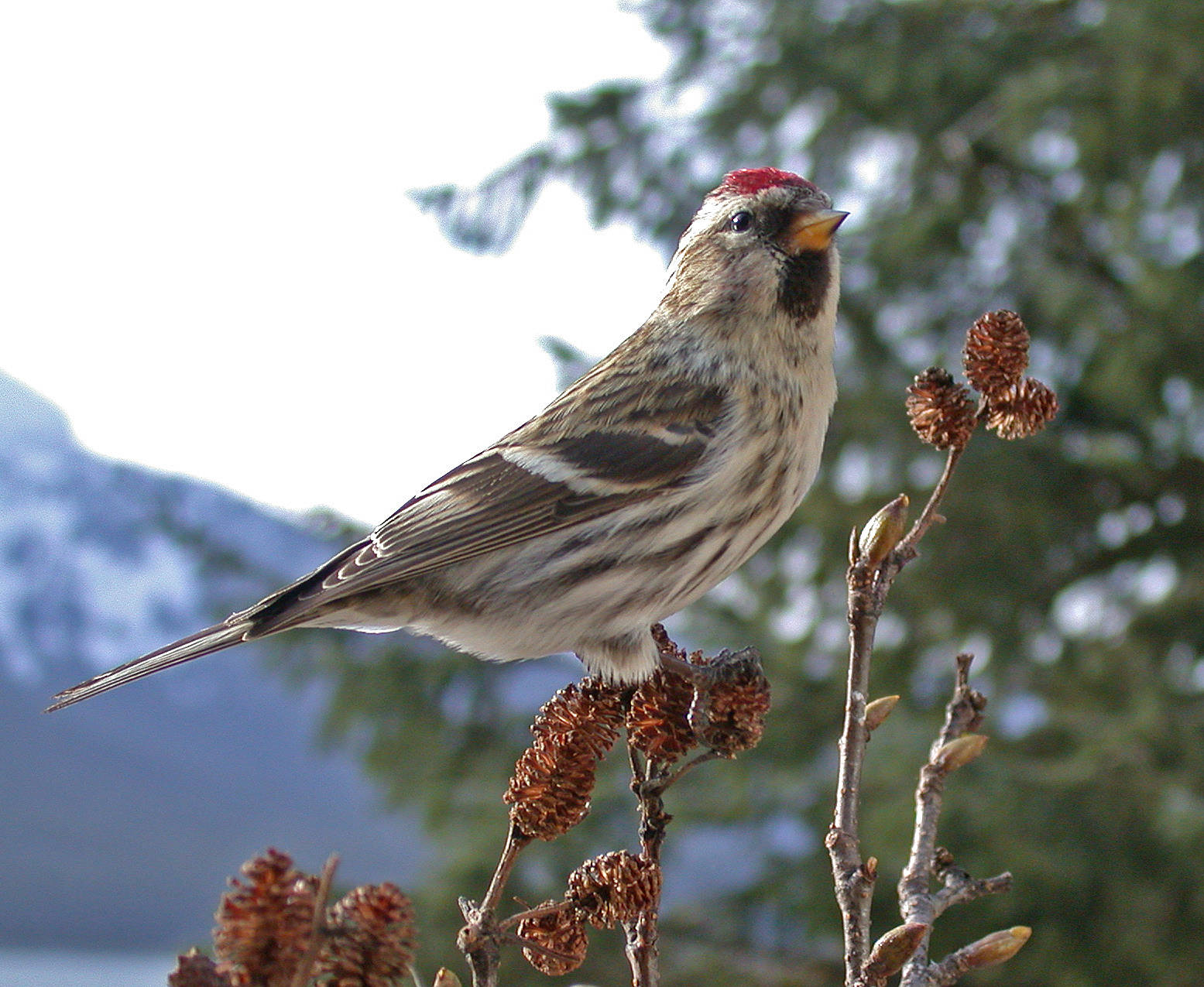
Redpolls forage on alder cones in late winter here and also visit bird feeders regularly. (Photo by Bob Armstrong)
