
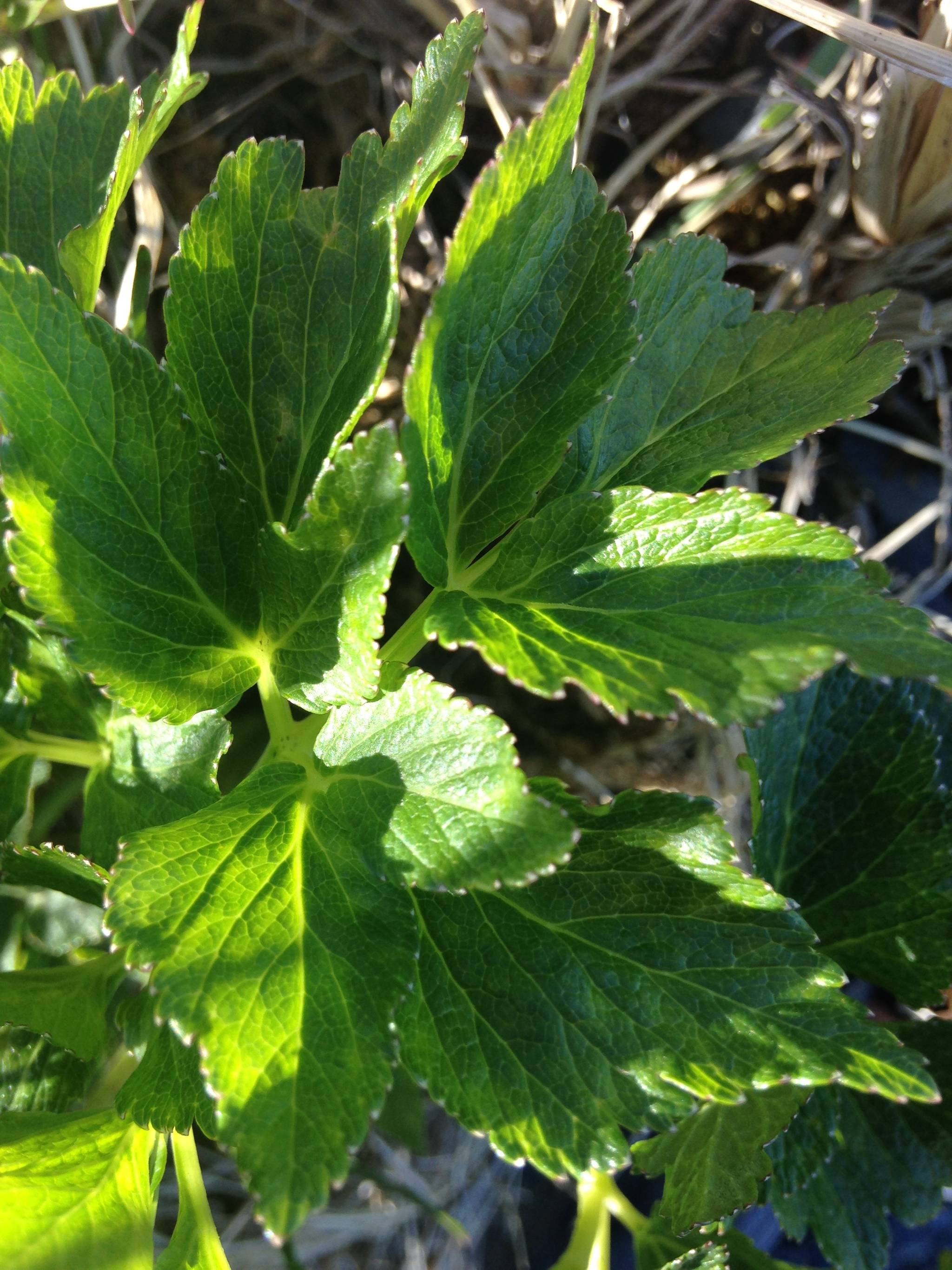
Each year there seems to be a particular plant that captures my imagination. Last year it was rose petals. I spent weeks testing different ideas, experimenting with things I had experienced such as rose water and syrup to trying new things such as throwing them in honey to capture the enticing aroma that evokes memories. This year, I find my attention drawn to lovage.
I first noticed lovage last year, but was concerned about its family members. Although there are differences between lovage and its cousins, they are often subtle and can be confused, sometimes with toxic results. Apiaceae, formerly known as the Umbelliferae family, are easy to spot. They are marked by the distinctive whiteish flowers that form multiple umbrella-like ellipticals.
Around Southeast, this family is widespread. Cow parsnip or pushke can cause a nasty rash when exposed to sunlight. It looks fuzzy in the spring as it emerges and as it develops you can see the irritating hairs on its stem. The outer layer can be removed and eaten as it has a mild celery flavor. However, it can be a bit intimidating if you’ve ever had a nasty reaction to the plant.
Another lovage relative, angelica, should not be eaten until its second year because of possible toxicity. Like the poisonous water hemlock, it has hollow stems. Water hemlock can be detected by its honey-combed root base. Its stem has purple splotches as if someone took a paint brush and flicked a dotted pattern over the green.
Lovage has the same purple, but it has solid streaks instead of points of color. It, too, has hollow stems as it emerges. The best way to distinguish lovage from others is its smell. It doesn’t smell like anything else. A combination of celery leaves with a touch of anise and maybe a tad bit of a lemon grass scent.
This uniqueness is why lovage is my favorite this year. Just as I am hesitant about collecting mushrooms, constantly double checking to make sure I am foraging safely, I have a similar disinclination about collecting these plants. I dug up some lovage last year and transplanted them in my garden. Happily, it took and appeared this spring.
Having the confidence in this lovage has resulted in some great culinary discoveries. Although there are people who braise it and dip it in seal oil, I prefer to use it sparingly as a seasoning. Unlike herbs such as parsley which are added at the final stages as an accent, cooking lovage slowly for a long time brings out the flavor.
I’ve found that lovage does particularly well with lentils and potatoes. Combined together in a soup, it has been a staple of this lackluster summer. Lovage infused food reminds me of how lucky we are to live in this place even when the weather gets us down.
As with any wild plant, you want to be 100 percent positive of what you are ingesting. With carrot-parsley family members, it is especially important to be certain. But, if you are hiking, pay attention to the different scents and see if you can pick out the particular smell of lovage.
• Corinne Conlon’s column Gathering Alaska appears in the Capital City Weekly seasonally.
