“The Tao of Raven:” Hayes’ new book explores the wisdom of traditional stories
Published 8:00 am Wednesday, November 2, 2016
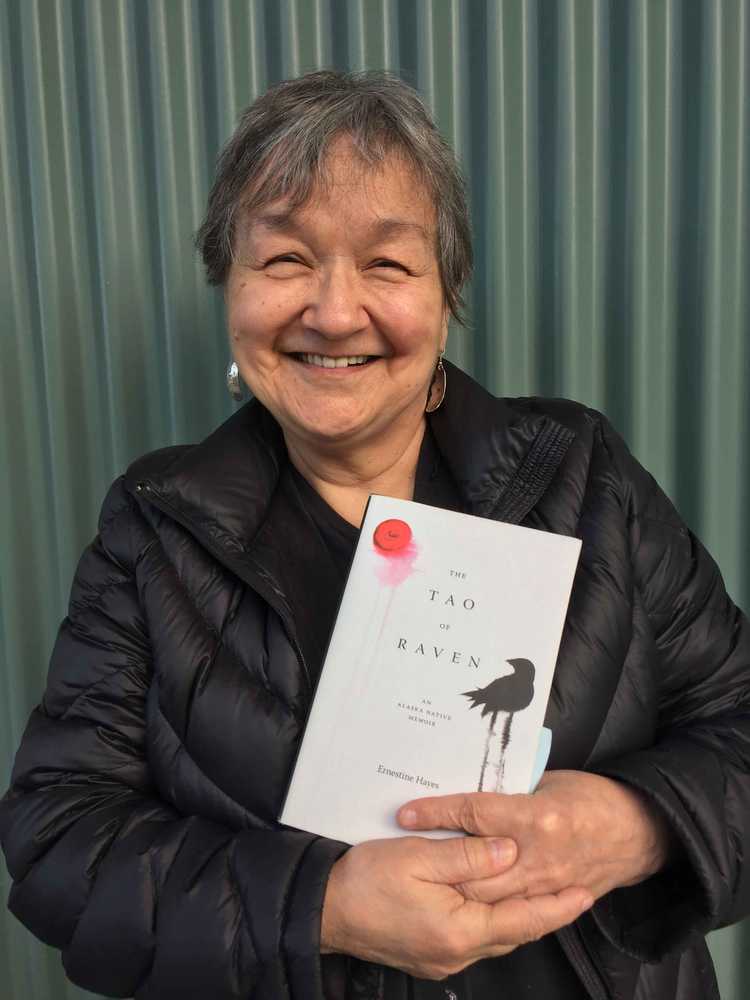
Ernestine Hayes used to tell people she didn’t understand the story of Raven and the box of daylight until she had grandchildren.
But when one of her grandchildren stole from her, she began thinking about the story in a new way — that of the grandfather and mother “left behind in the dark.”
Hayes, a Juneau writer and University of Alaska Southeast assistant professor of English, began to see even more lessons on how to live, how to share and how to persevere.
The result is her newest book, “The Tao of Raven: An Alaska Native Memoir.”
Readers of “Blond Indian,” Hayes’ first book, will find much that is familiar: the characters of Old Tom and Young Tom, Hayes’ technique of interweaving traditional stories, fiction and memoir — and the lessons we can learn from traditional stories and ways of being.
“I began to think about the Raven story and wonder why some stories survive and become well known and others don’t. What is it about that story that made it so long lived?” she asked.
She began thinking about modeling parts of the book after Sun Tzu’s “The Art of War,” she said, because she is tired of people treating Alaska Native stories like they’re intended only for children.
“It does a disservice to oral traditions to treat them as children’s stories, which is essentially where they’ve been relegated for the most part,” she said. “And I like the idea of returning to a work that someone else has written or that anyone has written and learning new things. So I began to relate some of the lessons that we can draw… from this story in particular. That we can learn from Raven’s actions and incorporate into our choices.”
Initially, the threads were separate works. The book as a whole really took off, Hayes said, when she received a residency at the Djerassi Resident Artists Program in California through the Rasmuson Foundation.
“The Tao of Raven” is beautifully written, both thoughtful and thought-provoking.
“Treasure” is a central idea and theme in the book; hoarding it, sharing it, losing it. Treasure can be many things, of course. Material wealth. Stories. The light of the sun, the moon and the stars. Time.
“I’m redefining treasure, and now, when I say my treasure has been spent, I think I mean years,” Hayes said. “My years have been spent, and that’s all the treasure we have, in the end.”
Haye writes “Although Raven could well have decided to keep light and luster and blinding brilliance for only his own pleasure, he knew that to keep riches to oneself guarantees their decline. In this regard, Raven was wiser than even that old man who had sought to hold those owned things in those hidden boxes and never show them to any but his own precious loved ones.”
Hayes also writes of other kinds of treasure, stolen and now being revitalized — stories, culture, language and tradition.
She delves into what colonization and the 20th century have meant for her family, for the fictional family of Old Tom, Young Tom and Patricia, and for indigenous peoples the world around, both years ago and today.
“After all, Indian education isn’t designed to teach Native children to be white. Indian education is designed to teach Native children to want to be white,” she writes.
At the same time, there is hope.
“For a few generations, Alaska Native people stood at a precipitous brink, at the end of a path constructed out of someone else’s history,” she goes on to write. “And now an Indigenous path will be carved.”
Her generation, and the 20th century for indigenous peoples, Hayes said, is largely defined by loss. Today’s younger generations are revitalizing and reclaiming what was lost.
Ultimately, everyone, indigenous and non-indigenous, will need to move forward together, Hayes said.
“We’re all here together, and we have to go forward together, and I think that might be the hope — that we can all inhabit together,” she said.
Hayes’ book launch in Juneau is at Trickster Company on First Friday, Nov. 4, beginning at 4:30 p.m. “The Tao of Raven” is available at Hearthside Books, other local bookstores, and on Amazon.com.
• Contact Capital City Weekly editor Mary Catharine Martin at maryc.martin@capweek.com.
Excerpt:
Editor’s note: “The Tao of Raven” offers lessons from spiders as well as from Raven.
My grandmother’s name was Saawdu.oo. Ruth Willard Hayes. She chopped wood for the cookstove and washed clothes with a scrub-board. She rolled a scarf around her head, picked up a knife, and went to work sliming fish. After putting me to sleep, she bathed herself, and the next day she powdered her face while I watched. She drew eyebrows atop brilliant knowing eyes and reminded me from my first day: Get ready. Be prepared. Don’t let anything surprise you. You must be willing to face every threat.
For the first few years of my life, I lived with Saawdu.oo while my mother was in the hospital for tuberculosis. During those years, my grandmother taught me how to see the world. She taught me to listen to the spiders in our house, for they knew the things that I needed to know.
During summers, I sat on the hill behind our old house and waited for her to call me in for soup or to send me on a chore. During fall, I tried not to go to school. Spring was not much different from winter. In winter, I listened for the grandfather about whom my grandmother told me, the Taku wind, and hoped for a sled to ride down frozen Capitol Avenue. Inside the house, I stayed away from the snow that drifted under the door into the dark hall. I sat in the kitchen and with my grandmother waited for my grandfather to come home. We both wondered what mood he would bring with him through the door with the drifted snow. With the wind. With a wide smile carrying gifts or with a cold grip on a cheap bottle of something to help him forget.
Winter in Lingit Aani brings magpies and ravens. Eagles allow themselves to be more freely seen. We take measure of the wood, we sweep the stove, we unpack blankets from their summer store. We watch the mountains and the birds for marks of early snow. We wait.
Unlike spring, winter does not bring signs of spiders into the house. Like the bears, they must be holing up somewhere. Or dying. Or dead.
My grandmother instructed me about spiders. Don’t hurt them, she warned. Learn from them. Watch them. Learn.
Spiders hunt. Although we might consider them bashful around humans, they show no such timid spirit with their prey. Even the webspinners remain at the ready, testing their woven silk for the struggles of unwary victims. Though their size is small, their nature persuades us to boldness.
Spiders greet the world early. They wake and get busy early in the day and early in the spring. While the more familiar admonition for those of us who would lead a correct life is to wake before the ravens, rising before the spiders behooves us even more. The industry of spiders exemplifies right living.
In the garden, spiders occasionally mimic the colors of nearby blooms. Their sly lurking reminds us that boldness and industry, without which we cannot prevail, suffer in the absence of cunning.