

Every Southeast Alaskan fisherman knows not to “cry halibut” when they very well could have snagged the bottom. It’s a lesson that took Bjorn Dihle, author of “Never Cry Halibut, and Other Alaska Hunting and Fishing Tales” and “Haunted Inside Passage,” a long time to learn.
Dihle’s most recent book, “Never Cry Halibut,” is a collection of stories about his experiences hunting and fishing in Southeast Alaska, with a few tall tales thrown in for good measure. Peculiar stories about posing as a Njord to get hired on a fishing vessel and initiating his previously-vegetarian girlfriend in the gore of a caribou hunt join relatable stories of deer hunts gone awry and a family trying to figure out how to make it in the wilds of Alaska.
Dihle describes his book as “stories of growing up in Southeast Alaska hunting and fishing, and a family and friend memoir.”
The memoir aspect is part of what sets Dihle’s book apart from the pseudo-fictional Alaskan television shows populating the History Channel. The characters in his stories are real people, recognizable in their obsession with goats or their night terrors about the fish that got away. While Dihle admits that he exaggerates sometimes, he always makes sure that the people in his stories feel like they’re represented accurately.
Stories about his family frame the book; his dad is featured in both the first and the last. The two stories took place 40 years apart, representing all of the wisdom his dad has taught him over the years. All the stories in between show Dihle learning how to hunt and fish, and becoming self-sufficient in his own right.
Hunting and fishing are “the fabric of my family and my friends. It’s the only thing I really talk about with my brothers,” Dihle said. He described the way that he and his brothers talk as “part humor, part seriousness, and just giving each other s—-.”
Dihle’s sense of humor runs rampant through his writing. Sometimes it’s in the form of small, unexpected quips that make you laugh out of surprise, and sometimes it’s in the form of a letter asking the government to sponsor his Alaskan diet plan.
But even though some of his stories seem too outlandish to be real, Dihle said “If you think there’s any chance they’re true, they’re true.”
There’s still plenty of fish fiction in “Never Cry Halibut” and lots of stories that are “totally ridiculous.” Dihle thinks it should be obvious to the reader what’s real and what’s not, or so he hopes.
“Part of my humor is just making fun of all the seriousness in the world,” he said.
His book’s title is a spin-off of Farley Mowat’s “Never Cry Wolf,” a book which takes itself much more seriously than Dihle’s. He wanted “Never Cry Halibut” to be a response to what he calls the “weird macho hunting culture” that permeates much of nature writing.
For that reason, many of his stories didn’t make the cut. He excluded most of his more serious stories, even if they were dear to him. Dihle writes with an element of nostalgia that reveals how much he cares about his writing subjects despite the sarcasm and the humor in the stories that did make it into the book.
The light tone he was aiming for is reflected in his cover art, which features a cartoon version of the author fishing against a typical Southeast Alaskan background. Dihle thinks that it’s “almost too pastel,” but the artwork makes the book more approachable to a wider audience.
“It’s good for a chuckle, it’s good for maybe inspiring you to get outside,” Dihle said about what he was hoping to accomplish with his book. “It’s for the hunters and non-hunters alike.” He’s even had people tell him that their little kids really like his book.
While he wants to reach anyone who is interested in the outdoors, Dihle believes that the people who grew up in Southeast Alaska will recognize their own experiences in his writing. It’s the woods and the ocean, as well as the shared experience of gathering food, that he thinks sets them apart.
“I think there’s a commonality that a lot of people in Southeast Alaska share.”
• Jack Scholz is a freelance writer living in Juneau.
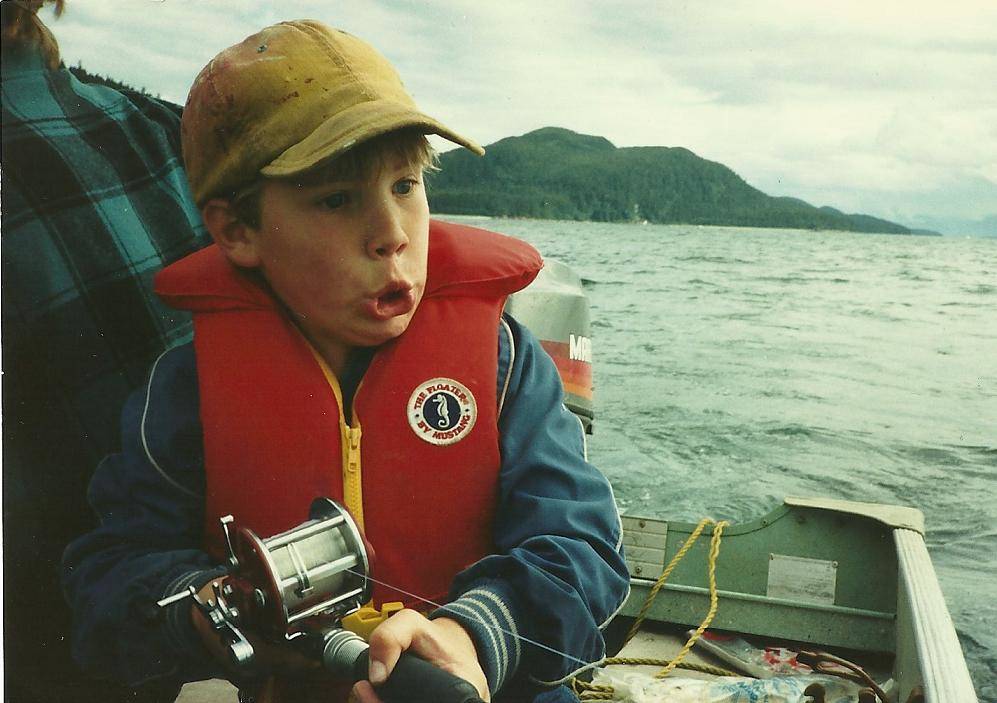
Bjorn Dihle, six years old, fishing for halibut. Courtesy image.
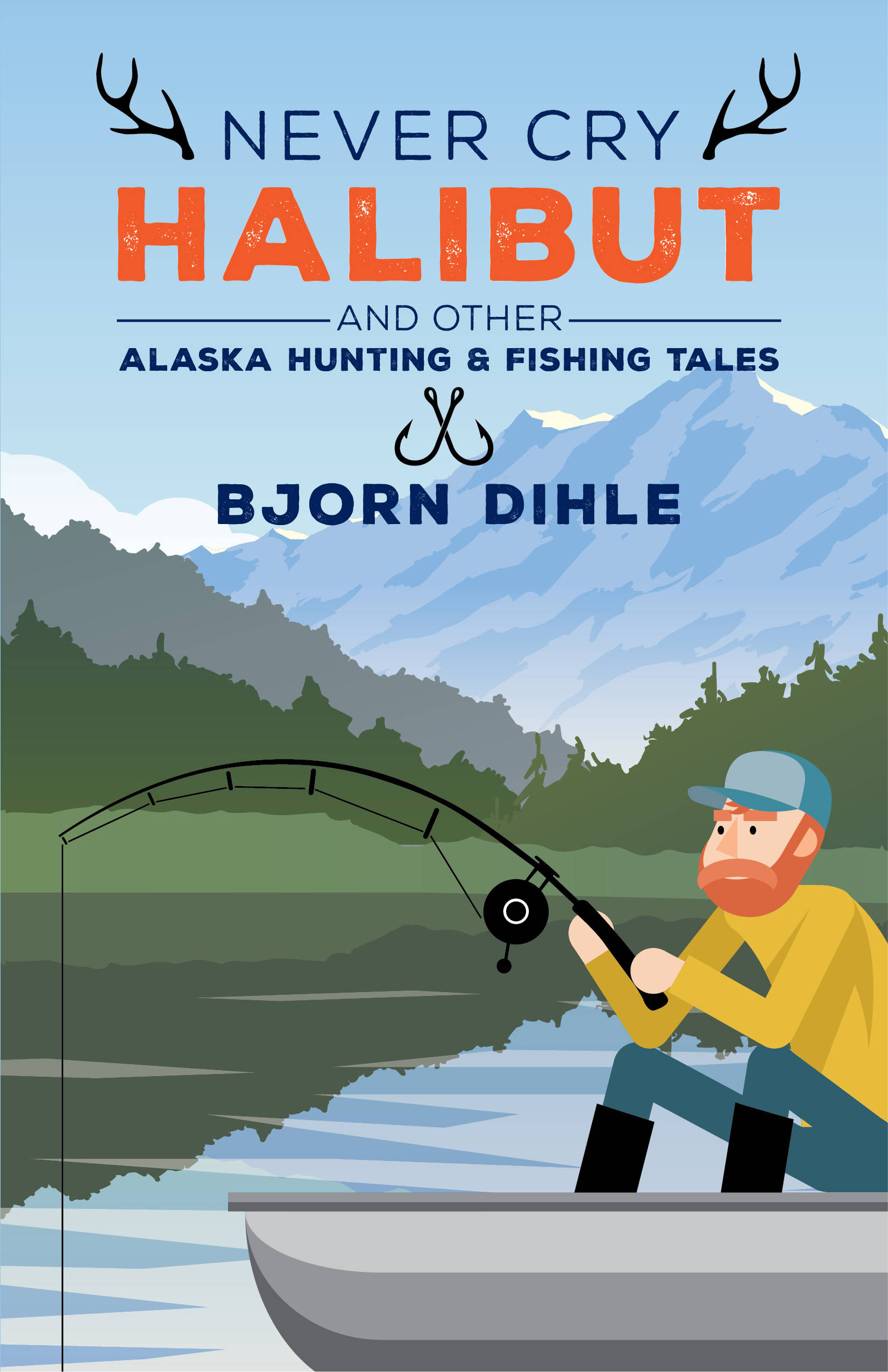
Book cover for “Never Cry Halibut” by Bjorn Dihle. Courtesy image.
