
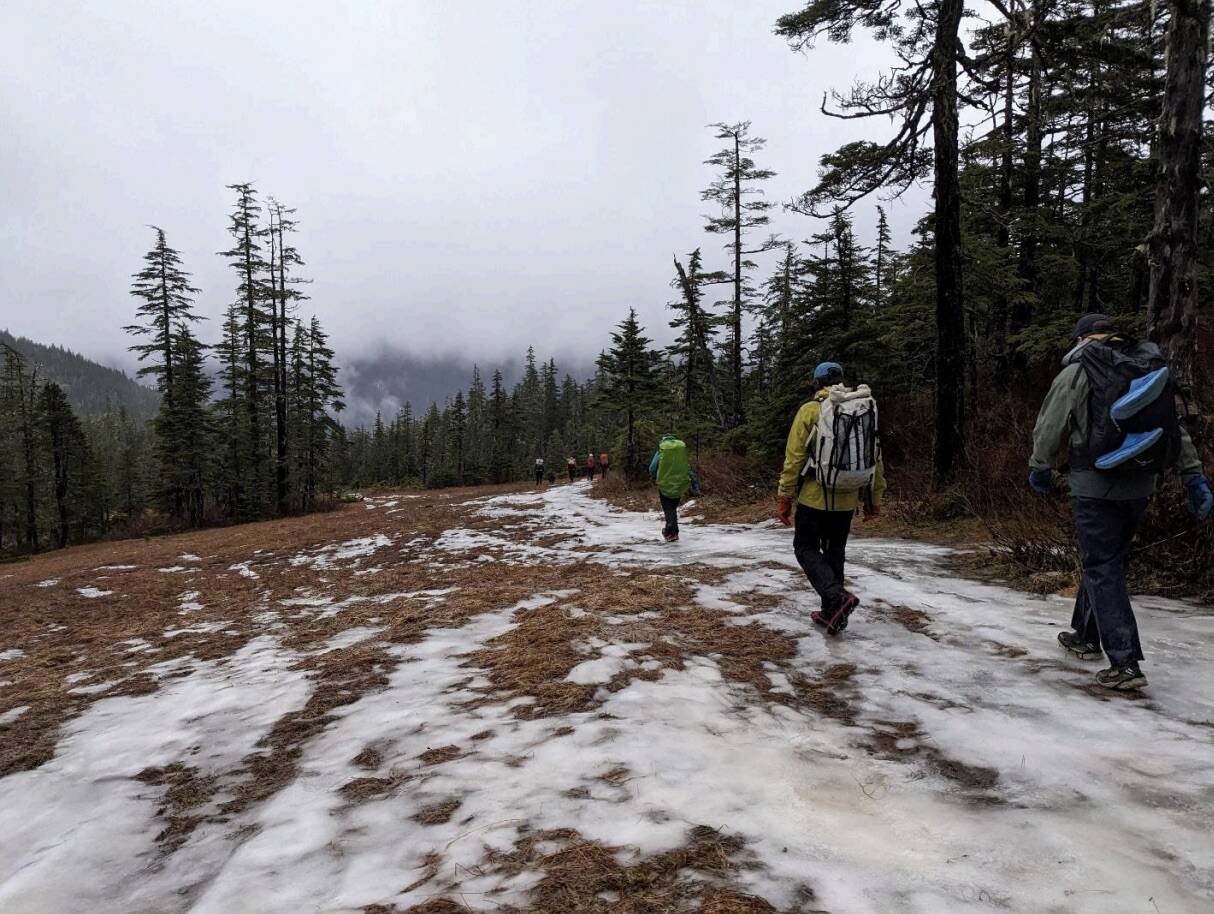
One thing that unites Juneauites even more than talking and/or complaining about the weather is our goldfish-like memory when it comes to said weather. I blame a lot of that on the weather itself; a glorious weekend of sunshine seems to dry soggy reminders of a month-long rains and a winter storm that brings two feet of snow is more than sufficient to bury the memories of weeks where the ground sat brown and cold.
Remembering weather more than a few years in the past becomes a Herculean task. I’ve only lived in Juneau for 7 years and they’re already starting to blend together. Last year was a pretty good snow year, right? Or was it the year before? What year was the really rainy summer, 2021?
This phenomenon is not unique to Juneau, and is intimately related to one of the reasons some people struggle to relate climate change with lived-experience. It’s hard to notice a difference of a few degrees or a couple inches of snow in the same way that it’s hard to notice that the Mendenhall wetlands are a bit drier than they used to be or that salmon are
a bit smaller. The wetlands still look absolutely bank-full at a spring high-tide and I caught a massive silver this fall. It’s really hard to compress landscape and generational scale changes in a way that jives with our day-to-day drives to Costco and back.
I am not a meteorologist, nor am I a climate scientist. I’m a skier and a data nerd, and if I’m being honest I’m a pretty mediocre skier. I love playing with ways to visualize data (make graphs). Yes, some of that is choosing pretty colors. But a lot of it also comes down to finding ways to convey information in a way that is digestible and sticky.
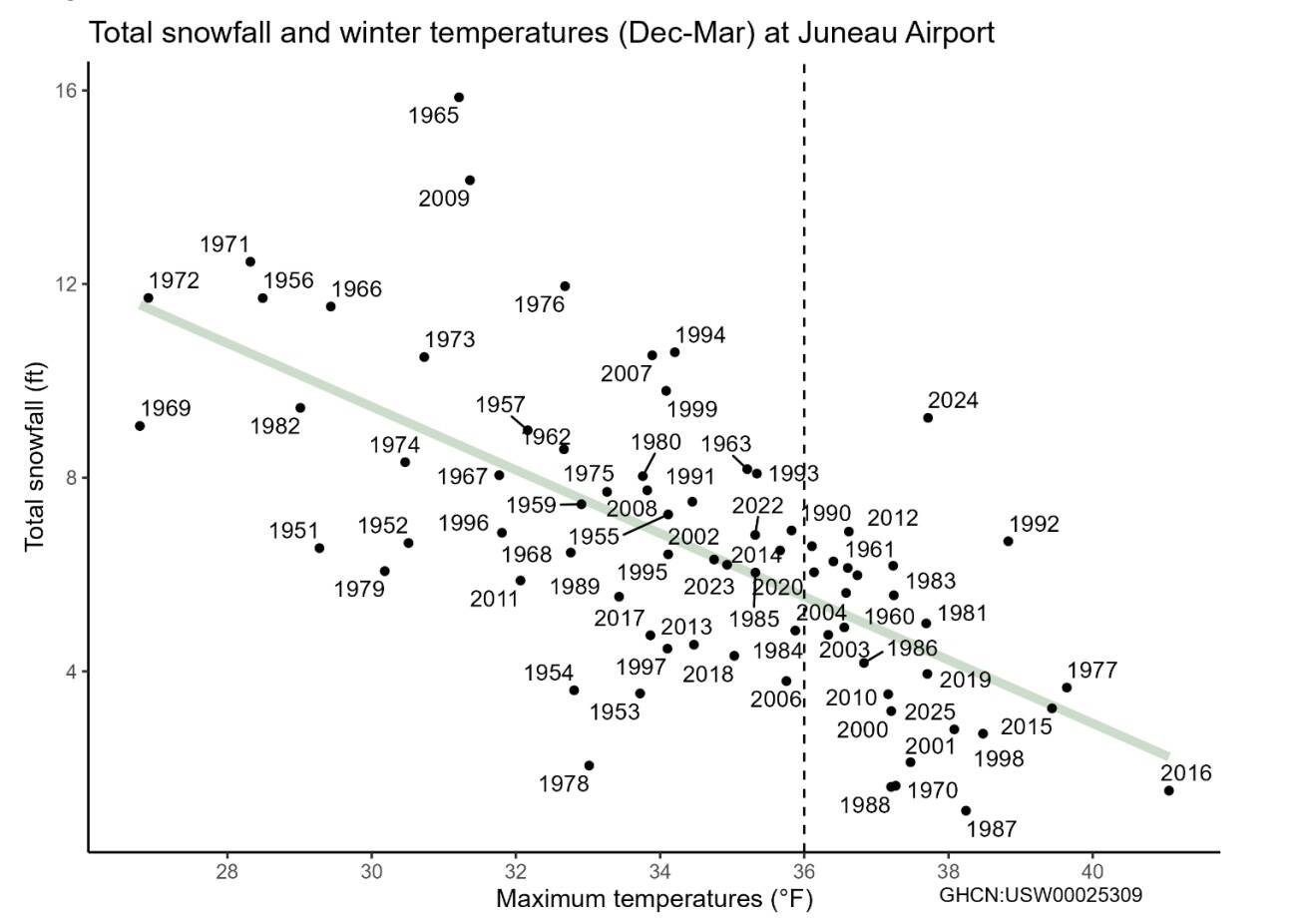
Figure 1 shows average winter air temperature and snowfall over winter seasons in Juneau. (graph courtesy John Harley)
Figure 1 shows the relationship between average winter air temperature and snowfall over winter seasons in Juneau. It should come as no surprise that colder winters generally have more snowfall. I’ve drawn a somewhat arbitrary line here at 36°F. On the left side of that line, there have been some great snow years. 2007 and 2009 both had over 10 feet of snow at the airport for the entire period from December 1stto March 31st. There were some poor years as well, I wasn’t in Juneau nor existence in 1978 but I can’t imagine it was a banner ski season.
On the right side of the dashed line, we have an unfortunate collection of very low snow years. 2015 and 2016 are in there, both years where Eaglecrest had extremely limited operations due to lack of snow coverage. Last winter is also in there, a year where Eaglecrest opened late and closed early and was never without the “unmarked hazards exist” signs. I’m sure there will be some silver-haired shredder sending me an email about an epic powder day they had in 1970, but I would be surprised to find anyone who identifies more than a few years to the right of this line as great years for snow sports in Juneau.
Figure 2 is an attempt to compress a lifetime of data into a single graph — the same temperature data (average maximum winter temperatures) over the past 75 years. There’s nothing magical about the line at 36°F, but I include it here so we can compare it to the other graph. While winters where the average temperature is above 36°F have occurred even prior to 1960, they are undoubtedly more common in the past 30 years, and climate models predict winter temperatures increasing several more degrees in the next 30.
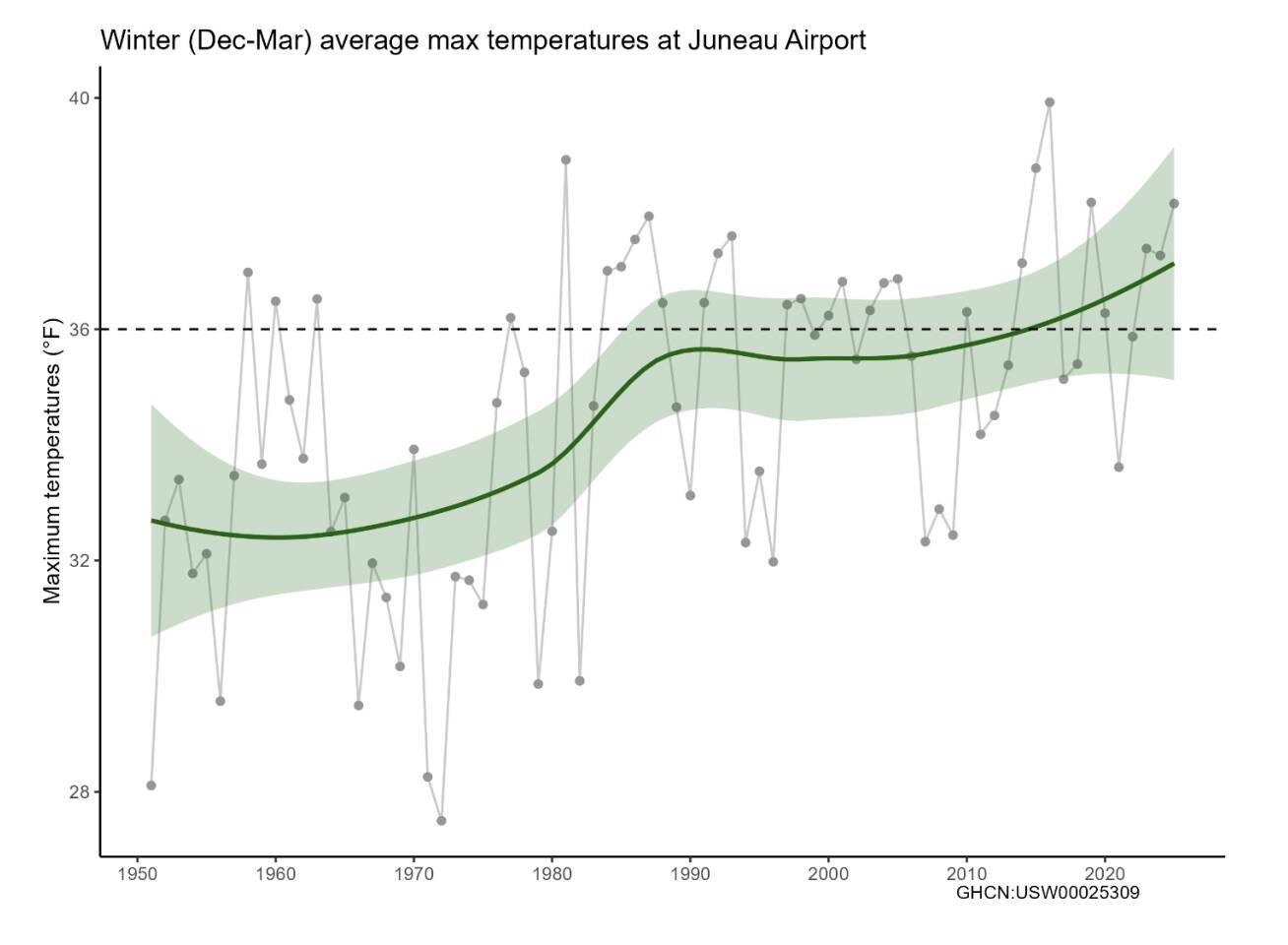
Figure 2 shows the average winter maximum temperature in Juneau from 1950-2020. (graph courtesy John Harley)
There’s still hope in any given winter, or even any given weekend. We’ve had some solid snow years in the past decade, and we will continue to have more in future years. Each year isn’t warmer than the last, and there are some other large-scale climate patterns that drive temperature in snowfall like El Niño and the Pacific Decadal Oscillation.
But the fact remains that the difference between a great winter for skiing and a bad one can sometimes be a matter of one or two degrees, each day balancing on the knife edge between a foot of snow or an inch of rain. With each passing year the odds of warmer years are increasing, but I’m nowhere close to selling my skis, and you can bet that myself and many others will be out there to enjoy whatever snow falls in the mountains this winter.
But I’m also taking up winter trail running.
Melissa Dolese is an assistant professor of psychology in the Department of Social Sciences on the Áak’w Kwáan campus at the University of Alaska Southeast. Sustainable Alaska is a feature by the University of Alaska Southeast Sustainability Committee. The views expressed here do not necessarily represent the views of the University of Alaska Southeast.
