
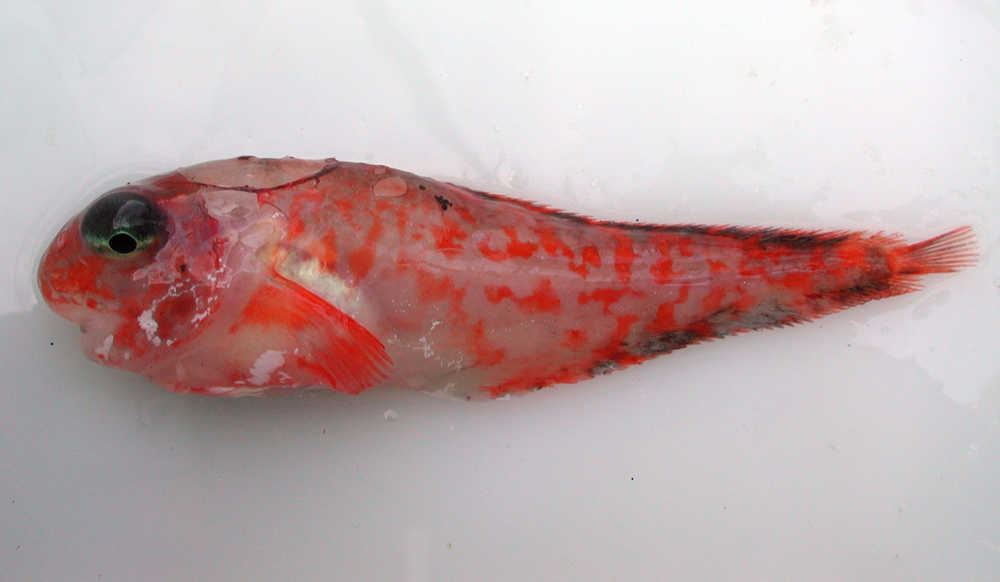
ANCHORAGE — Federal biologist Jay Orr never knows what’s going to come up in nets lowered to the ocean floor off Alaska’s remote Aleutian Islands, which separate the Bering Sea from the rest of the Pacific Ocean. Sometimes it’s stuff he has to name.
The National Oceanic and Atmospheric Administration biologist is part of a group that uses trawl nets to survey commercially important fish species such as cod in waters off Alaska. Sometimes those nets come up with things no one has seen before.
With co-authors, Orr has discovered 14 kinds of new snailfish, a creature that can be found in tide pools but also in the deepest parts of the ocean. A dozen more new snailfish are waiting to be named. Additional species are likely to be found as scientists expand their time investigating areas such as the Bering Sea Slope, in water 800 to 5,200 feet deep, or the 25,663-foot deep Aleutian Trench.
“I suspect we are just scraping the top of the distributions of some of these deep-water groups,” Orr said from his office in Seattle.
Orr and his colleagues measure the abundance of rockfish, flatfish and other “bottom fish” for the Alaska Fisheries Science Center, the research arm of the NOAA’s National Marine Fisheries Service. The center studies marine resources off Alaska and parts of the West Coast.
Five boats with six researchers each surveyed Alaska waters in late June. The teams trawl on the Bering Shelf every summer and in either Aleutian waters or the Gulf of Alaska every other year.
Their findings on fish abundance are fed into models for managing fish populations.
The scientists put down a 131-foot trawl net that captures whatever is along the ocean bottom. A ton of fish is a standard sample. Along with fish, they get clues to the seafloor habitat. Sponges, for example, indicate a hard seafloor, or substrate.
Fifteen years ago, research biologist Michael Martin suggested a small modification: a net just 2 to 3 feet wide at the front of the trawl net.
“We realized we didn’t have a really good picture of the substrate that we were trawling over, and we figured we were missing some things in the big meshes that the larger net had,” Orr said. “So one of the other guys here decided to put this little net on, mainly as a means to see what the substrate looked like.”
On one of the first hauls, the small net returned with a variety of small, soft-bodied fish, including snailfish, that likely would have fallen out or gotten mashed in the main net. Orr took a look and knew they had found something different.
As someone who studies fish, “I sort of knew what I was looking for and what was known out there,” he said. “The first ones that came up, I saw them right away and said, ‘We don’t know what these are. These haven’t been named.’”
Snailfish have no scales, feel gelatinous and look like fat tadpoles. Aristotle described a Mediteranean variety found in ancient Greece as “sea slugs.”
Many fish have pelvic fins on their bellies, just behind the gills. Most snailfish species, instead of pelvic fins, have a sucking disc that they use to cling to rocks.
Orr identified some new varieties that did not have a sucking disc. Another had a hardened bone in its head. Another had a projecting lower jaw. Others varied by shape, color or body parts, such as vertebrae.
“Nearly all of them have genetic characters that distinguish them, too,” Orr said.
He has wide latitude for giving new species both common and Latin names. A red, white and black snailfish with a big, bulbous nose struck him as funny-looking. He gave it the common name of “comic snailfish” and the Latin name Careproctus comus, after Comus, the god of comedy in Greek mythology.
Snailfish made headlines in 2014 when researchers recorded them swimming nearly 27,000 feet, or more than 4 miles, below the surface in the Marianas Trench, making them the deepest-dwelling vertebrate on the planet. The Marianas Trench is about 200 miles southwest of the Pacific island of Guam and is known as the deepest part of the world’s oceans.
A critical part of the work is on the species his agency actively manages. Orr helped distinguish the northern rock sole, which spawns and grows differently than other rock sole. Fishing at the wrong time could disrupt a population important to the seafood market.
“Ultimately we’re managing an ecosystem,” Orr said. “It’s really important to know what each of the elements are.”
—
Related stories:
Off the Trails: Looking at intertidal algae
Climbing season comes to a close on Denali
A ghost town on the Tanana River
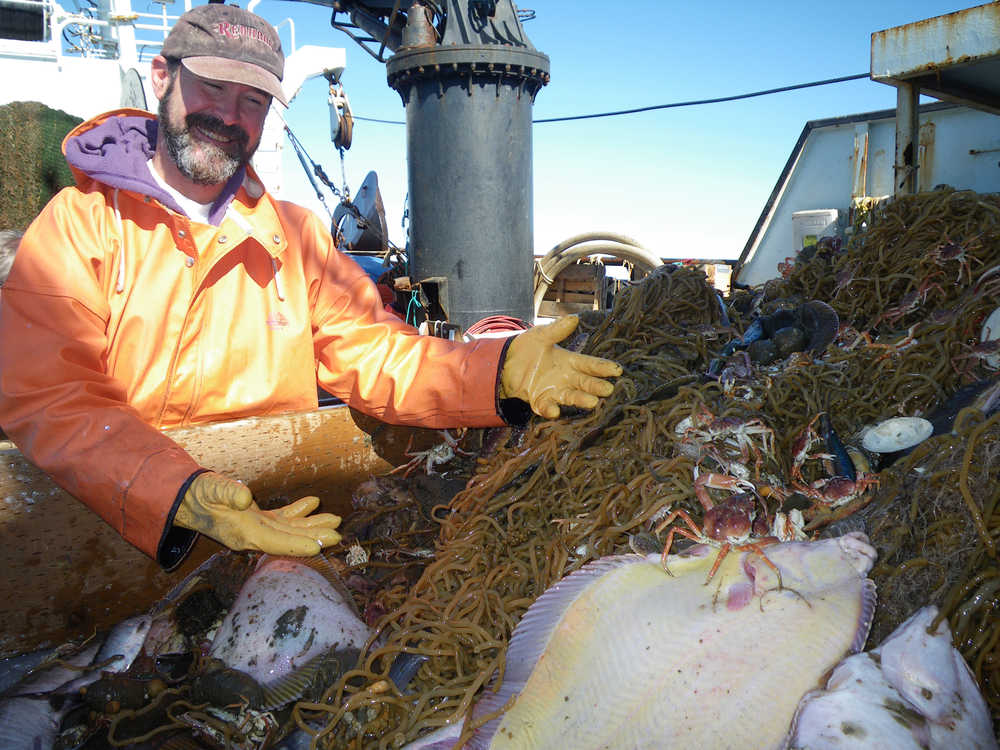
This July 31, 2010 photo shows James Orr, research fishery biologist in Norton Sound. Federal scientists sampling commercial fish species off Alaska’s Aleutian Islands keep finding new species. The Alaska Fisheries Science Center, part of the National Oceanic and Atmospheric Administration, has helped name more than a dozen new species over the last decade.
