
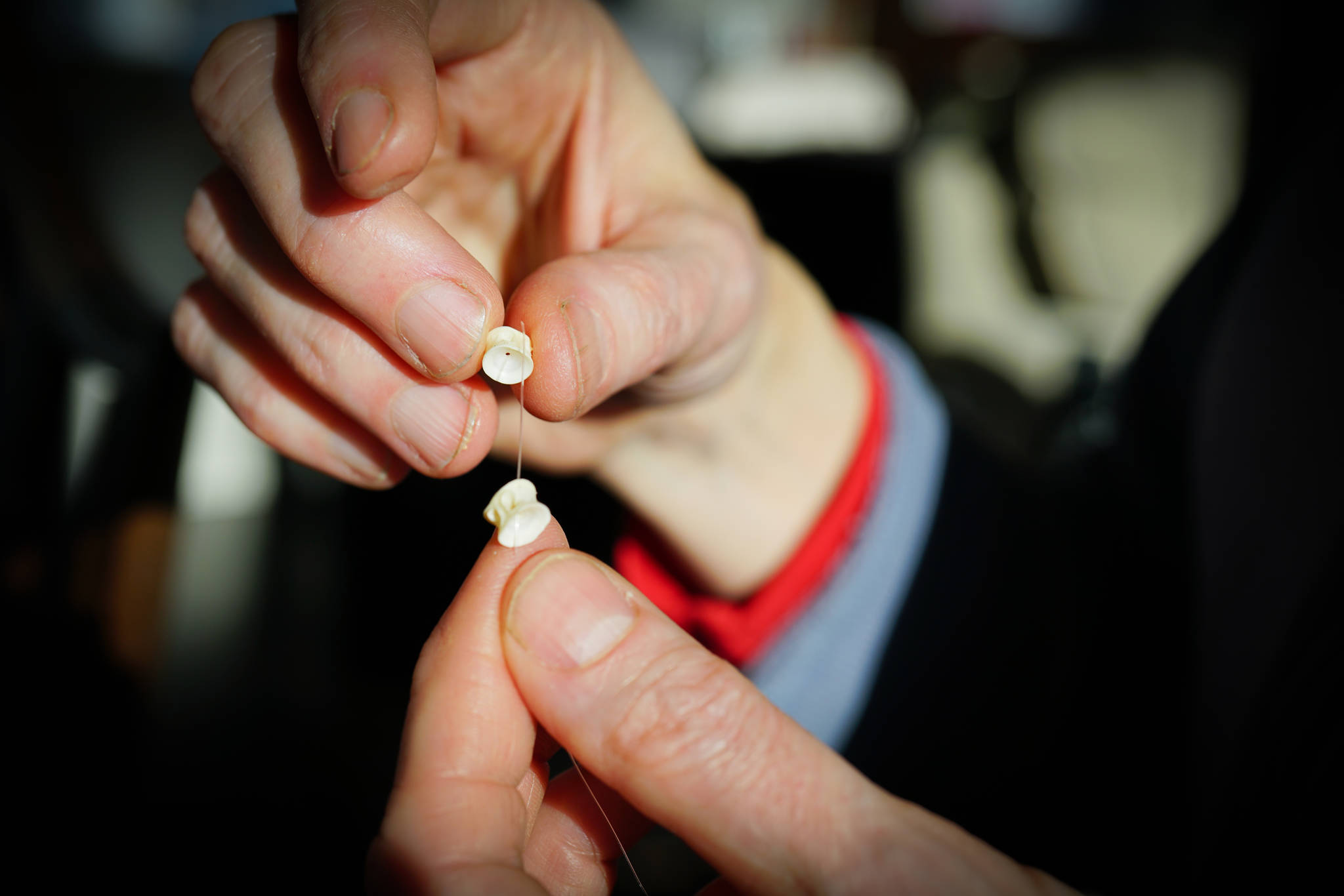
Delicately yet firmly pinching the tiny vertebrae of a Chinook salmon between her thumb and pointer finger, Cynthia Gibson pushed fearlessly toward a rusty grinder churning an aggressive 3,400 rpm. The spur where a rib was once connected flew off into a cluttered garage leaving a smooth bead behind.
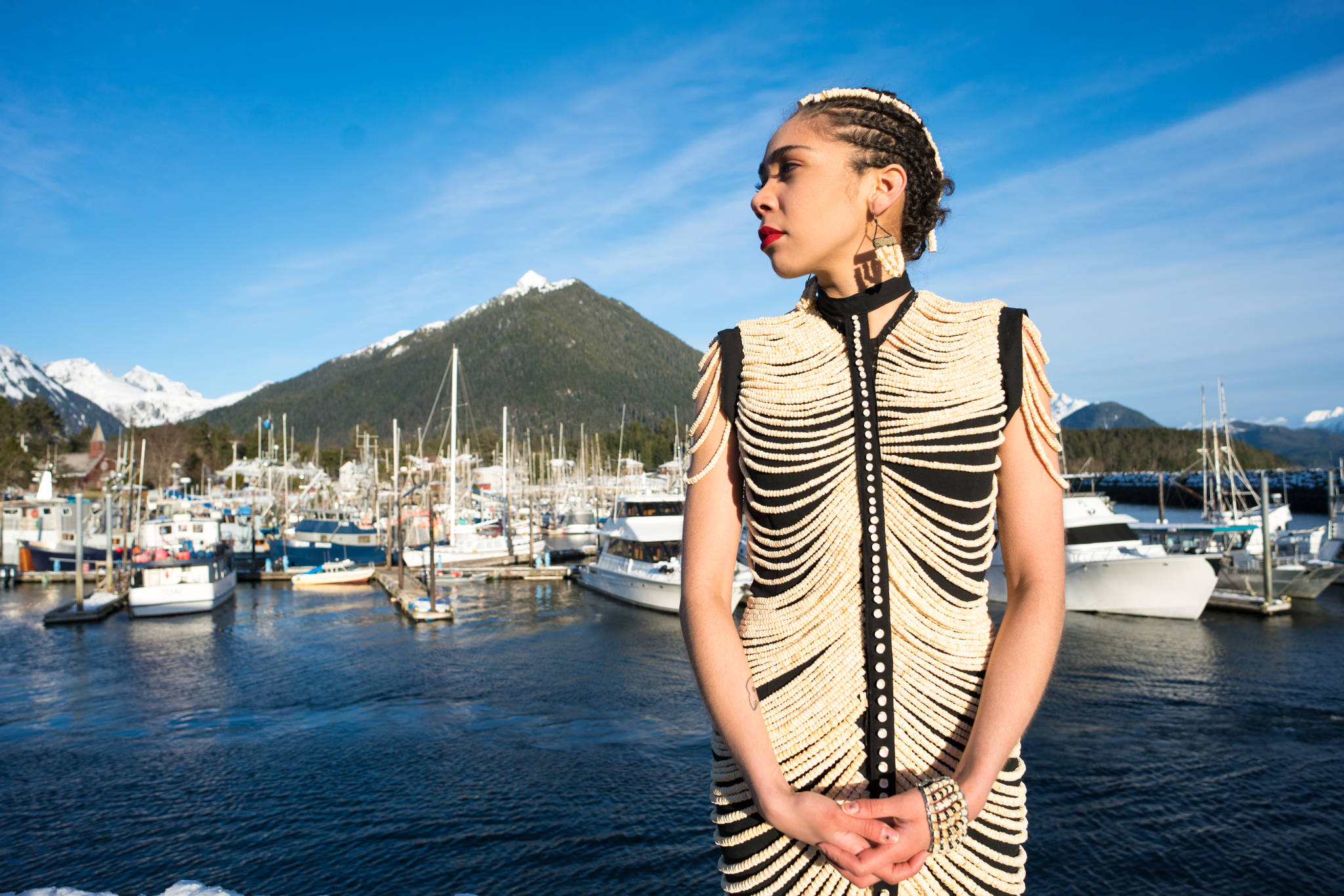
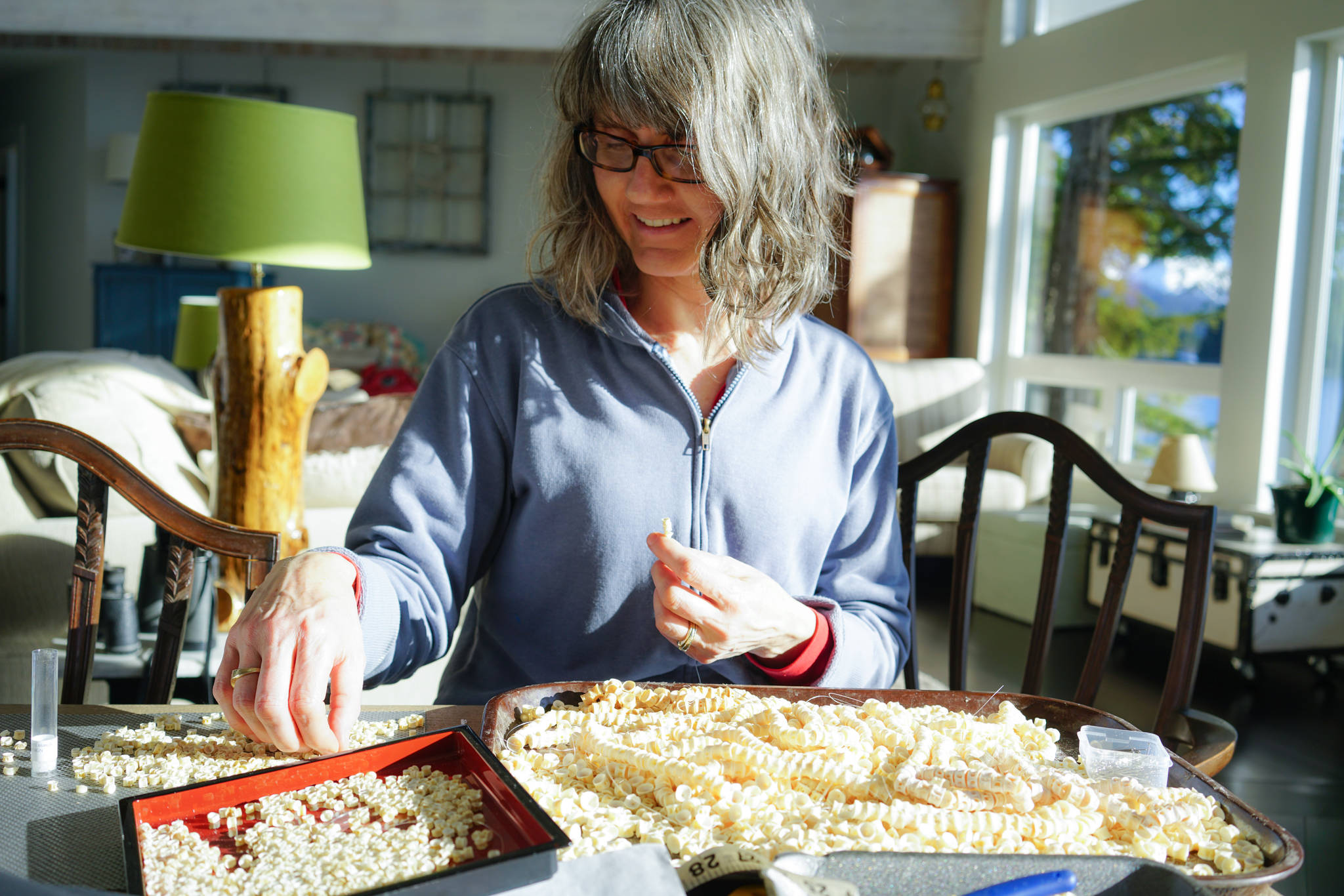
With patience and confidence, Gibson slowly built a dress from 20,000 salmon bones.
“I’ve always been fascinated with the natural world,” Gibson said. On her belly as a child, she would examine the delicate joints on blades of grass — dismantling them, weaving them, inspecting them. In nature, she discovered her passion for art and sought inspiration there. “There’s so much outside that is used in regular art today, and we don’t always recognize that.”
When she settled in Sitka, salmon became her muse. Walking down the beach one day, eyes focused on the pebbles, shells and other ocean treasures in her path, Gibson became entranced by a pile of salmon vertebrate.
The idea was born.
“Salmon connect us all. They are in our waters, on the beach, in our forests, in our freezers. Salmon are a part of who we are,” Gibson said.
Intrigued and inspired, Gibson decided to combine her passion for natural elements with her interest in wearable arts and fashion. She began collecting, dreaming and eventually, imagining a dress adorned with Alaska’s wild beads.
“When you see them on the beach you’ll see small piles of maybe 20 vertebrae but I knew I would need thousands. I wanted to challenge myself. One fall, there was a particularly heavy concentration of salmon carcasses downtown and I would go down each weekend and collect buckets of them,” she said.
It quickly became clear that simply gathering on beach walks wouldn’t be enough. After a quick call, Sitka Sound Seafoods generously donated a stinking tote of king salmon carcasses for the project. Throughout the collecting process, Gibson went to work figuring out the best method for effectively cleaning those delicate bones.
“Maggots do a great job,” Gibson said.
She also let piles of bones rot and lowered nets full of spines into the coastal waters beside her home. The scavenging sea creatures went to work. There were a few missteps along the way, but her ingenuity led Gibson closer to fulfilling this peculiar salmon dream.
“We don’t give creativity credit in our society as much as we should. Being creative helps you find new solutions to old problems that can be used in everything: budgeting, city planning, any aspect of life, healthcare, anything,” Gibson said.
Even engineering her salmon bone dress.
Gibson mastered the intricacies of salmon anatomy, identified a proper balance of peroxide and bleaching and found herself with totes of polished bones filling her family home.
She organized the beads by size and shade and grinded smooth any burrs that would catch on skin or fabric. Then the beading began. Pressing the needle through the tiny hole once occupied by cartilage, she carefully strung each vertebrae like strings of pearls. Gibson fashioned string after string to the dress, testing for movement and ensuring the bones fell perfect to form.
The whole process, from idea to full reality, took four years.
On a particularly harsh, cold afternoon, Sitkan Mia Nevarez modeled this masterpiece of salmon bones. She strode fiercely to Nina Simone’s Feeling Fine at Sitka’s Wearable Arts Show, an annual fundraiser showcasing the most innovative original fashion in Sitka. The cascading bones bounced rhythmically with each confident step and the audience stood mesmerized.
Salmon are our identity and our collective passion. This dress and the countless hours that went into it honor Alaska’s relationship with land and sea.
“I certainly feel a new sort of kinship to salmon,” Gibson said.
Salmon enter Alaskan’s lives in formidable and sometimes surprising ways. Some face churning seas in pursuit of a commercial haul. Others force themselves awake at an ungodly hour, shuffling in their slippers to check on fragrant smokehouses. Gibson crafted an original dress from 20,000 salmon bones.
Some people call this devotion crazy. Alaskans call it love.
• Bethany Goodrich is a freelance storyteller and the Communications Director for the Sustainable Southeast Partnership (SSP). SSP is a diverse group of partners dedicated to the cultural, ecological and economic prosperity of Alaska’s rural communities. Visit www.SustainableSoutheast.net or www.bethany-goodrich.com for more.
A version of this story also appeared on “The Salmon Life,” a blog hosted by The Salmon Project, a 501(c)(3) charitable organization. The group’s stated mission is to “give voice to Alaskans’ deep relationships with salmon to ensure that Alaskans’ lives will always be salmon lives.” Visit http://salmonlife.org.
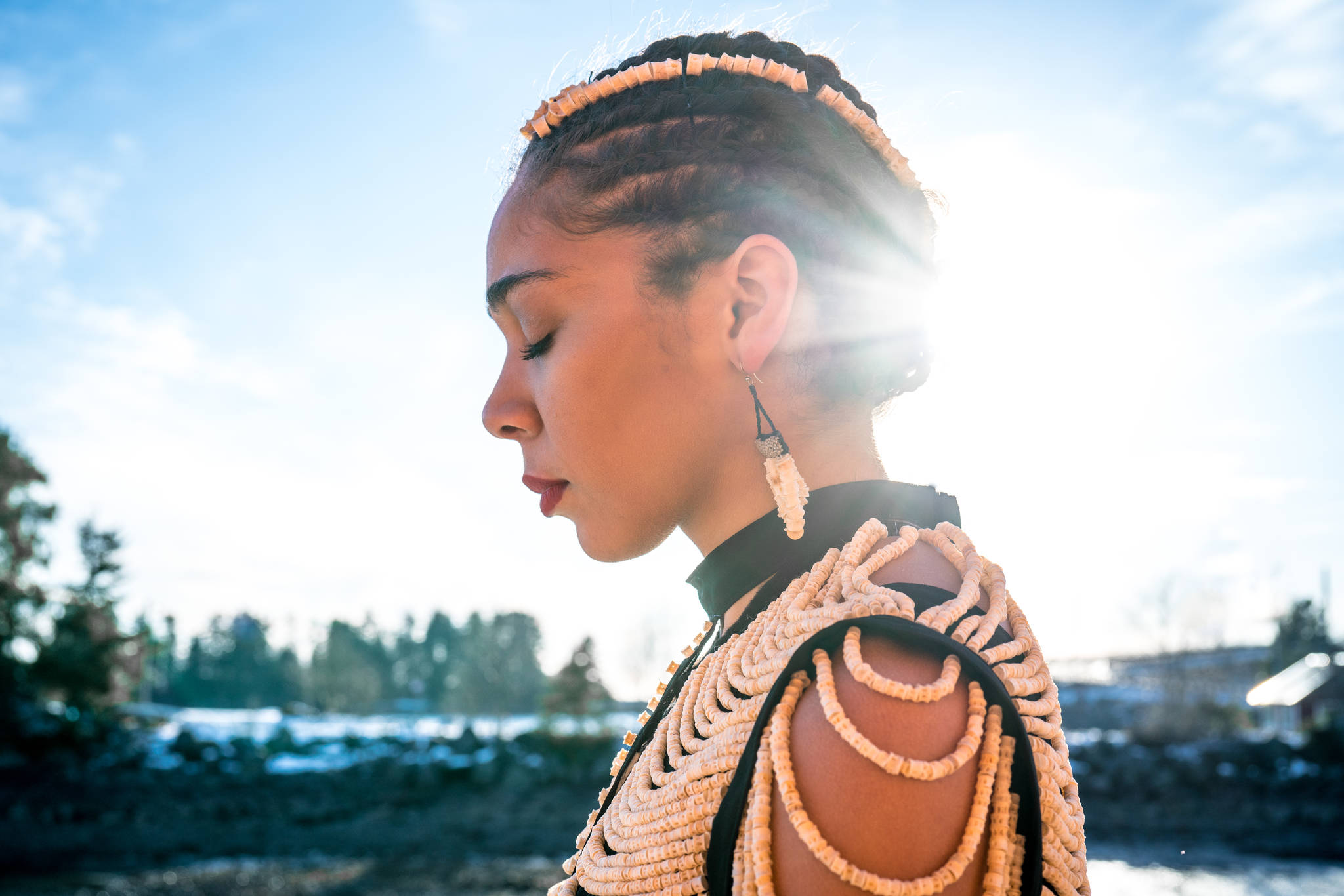
Mia Nevarez stands in front of Crescent Harbor in Sitka wearing a salmon bone dress made by Cynthia Gibson. (Photo by Bethany Goodrich)
Mia Nevarez stands in front of Crescent Harbor in Sitka wearing a salmon bone dress made by Cynthia Gibson. (Photo by Bethany Goodrich)
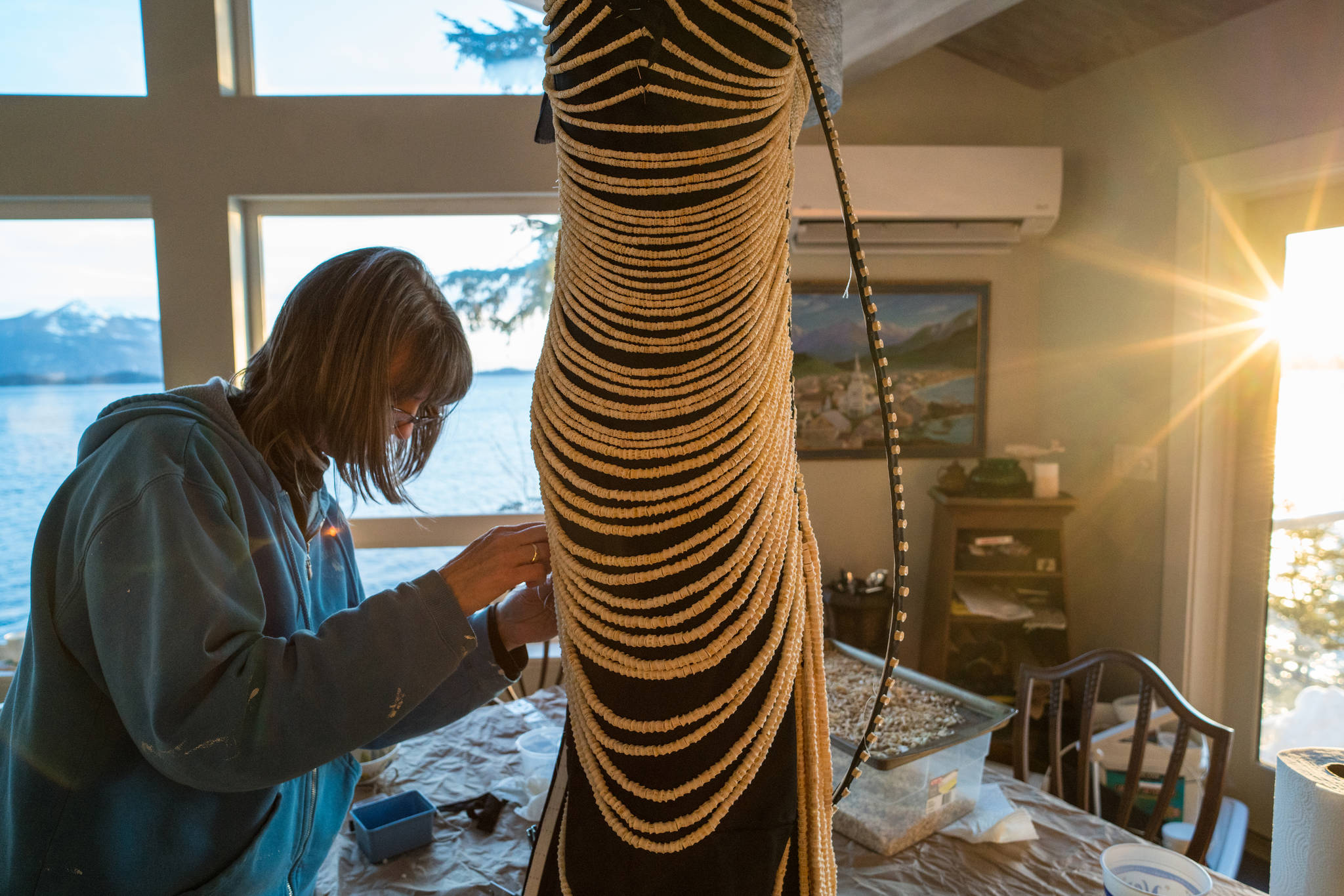
Cynthia Gibson works with 20,000 salmon bones in Sitka. (Photo by Bethany Goodrich)
