
Non-Alaskans that watch reality television may have what they think is a clear idea of Alaska: scary bears, stormy seas, feuding hotel owners. Odds are, though, that’s different from what you — and every other Alaskan — knows. Yet, each Alaskan understands Alaska in a different way, too, and that understanding influences how you understand yourself within it — and, if you’re an artist, portray it.
At a recent 49 Writers CrossCurrents panel, moderator Scott Burton of KTOO led three writers and a photographer in discussing how the north and its landscape has influenced their work.
Melinda Moustakis, author of “Bear Down, Bear North: Alaska Stories,” was born in Fairbanks to a family that originally arrived in Alaska to homestead. She left when she was a toddler, but her family mythology was “shaped by the north” — the name of the panel.
“When you hear a story growing up… how it changes is a lot like a fishing story,” Moustakis said. “(As a fiction writer,) my job is to excavate and cultivate.”
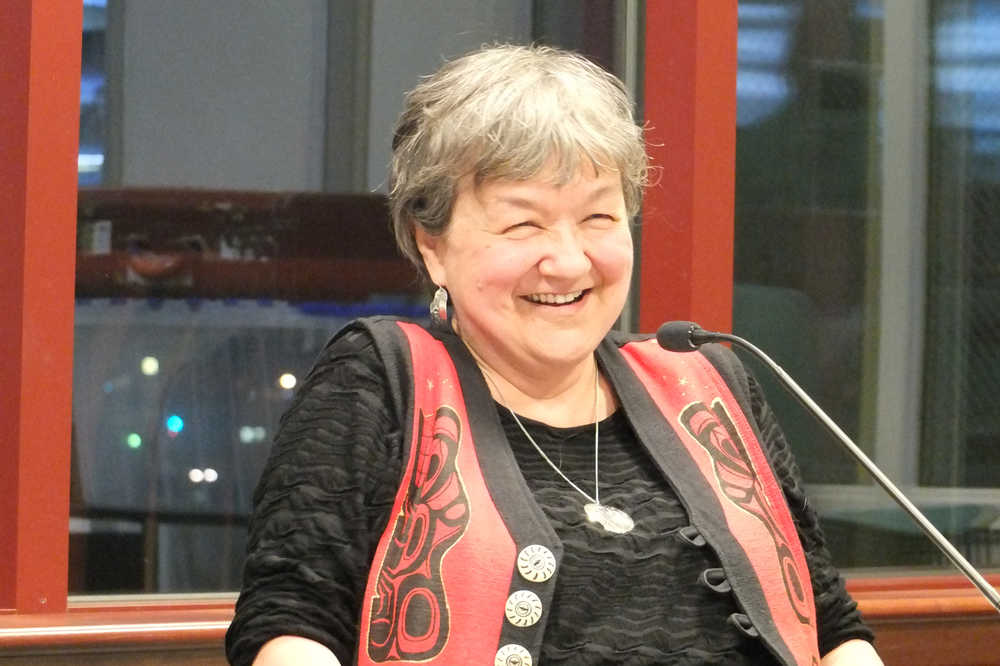
For Ernestine Hayes, author of “Blonde Indian,” it begins with her grandmother.
“I always think of my grandmother and the way she connected me to the world, not as being at the top of the hierarchy but as equal to my relatives, the wind, the bear, and so on,” she said. “That to me has always been the fundamental aspect of how place shapes my identity. But… it is landscape and the land that has, as its consequence, the colonial impact on Native lives. And perhaps even more than the belief that the bear is my cousin, and the wind is my grandfather, (what) even more strongly shaped my identity was the colonial experience, which is based on land.”
When Brendan Jones, author of the forthcoming novel “The Alaskan Laundry,” first came to Sitka to work at a hatchery at 19, he was “disgusted by it, initially,” he said.
He’d grown up in Philadelphia and found Sitka overwhelming.
“Coming to Sitka just blew the top of my head off, and not in a very nice way,” he said.
Then he moved into the woods and began paying attention to smells. Sounds. Details.
“I think time plays a really large role in distilling those details and helping them come into relief,” he said.
Photographer Ben Huff, author of “The Last Road North” first came to Alaska via Fairbanks in the summer of 2005. He, too had a hard time.
“I grew up as a product of sort of a National Geographic childhood,” he said. “I had this idea of what Alaska was…. The place was challenging and foreign to me in a way that I didn’t expect.”
He made pictures in the land; he made them in downtown Fairbanks. Both felt dishonest.
“That spot in the middle, that messy bit that was what I was struggling with, that I found complicated, that I found unsettling, was really the thing that I wanted to know more about,” he said.
He’s fascinated by the overlap of Alaska’s wilder places and “these spaces that we’ve created,” he said.
Moustakis said her goal “was to get Alaska right the way that my family has experienced it.”
“It is populated, and people have been here,” she said. “It’s a fraught history… I wanted, in my own way, to bring that complication and sort of dark underbelly.”
A more complex picture of Alaska is emerging, one supported by the current Renaissance in Alaskan fiction, Jones said.
“I think it’s really an interesting time where we’re moving from these reality shows into that imagined space,” he said. “I think it’s really exciting time for the state and the state of literature.”
Place, Hayes said “emerges from place itself.”
“It’s not a panorama to be conquered,” she said. “There are bones that are buried in what others might call wilderness… it’s something that can be developed and defined by our words, but it’s not something that depends on our words to exist.”
• Contact CCW staff writer Mary Catharine Martin at maryc.martin@capweek.com.
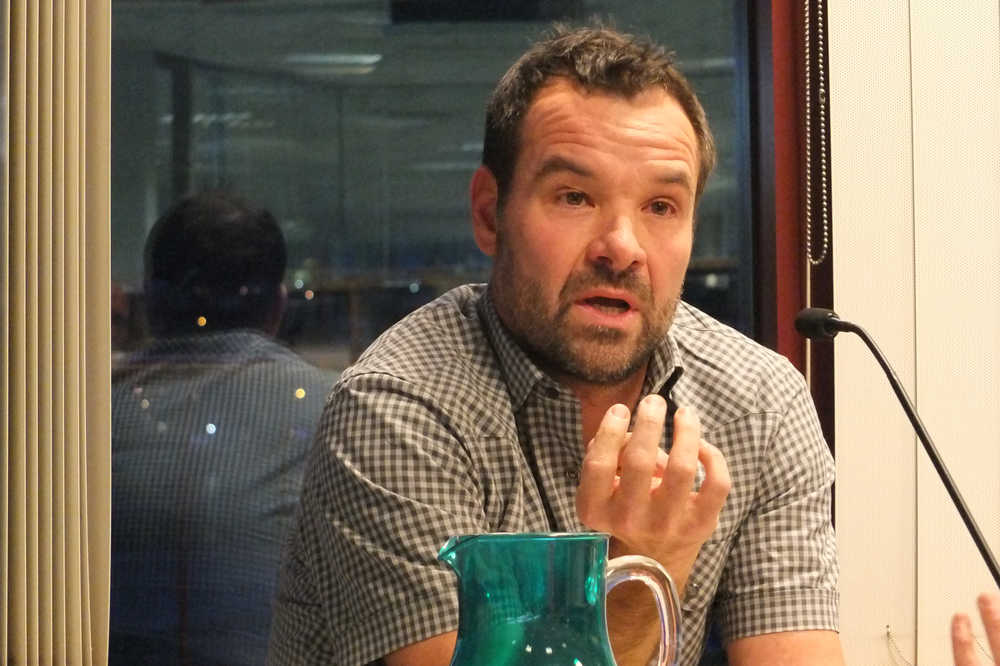
Juneau-based photographer Ben Huff, author of “The Last Road North,” discusses Alaska’s effect on his work.
