
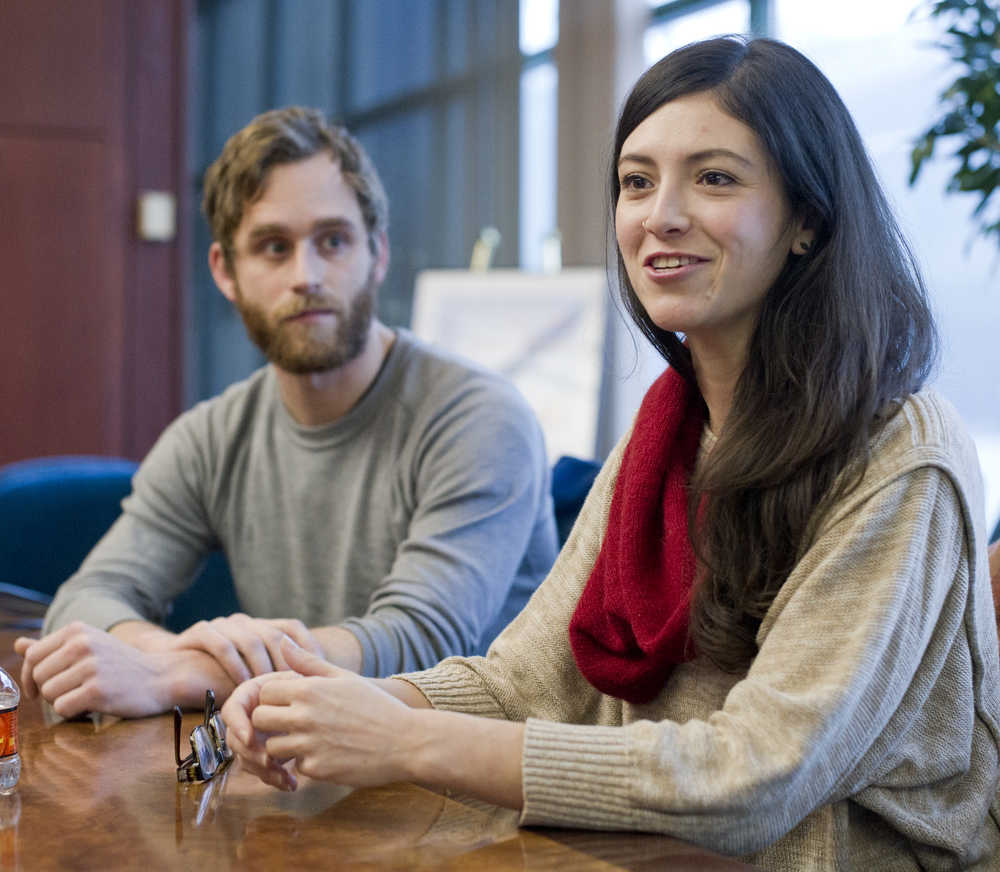
The product Leah Wagner and Nick Schlosstein sell is small, but it’s one of life’s essential ingredients — and they’re growing it the natural way for Southeast Alaska’s particular climate.
They sell seeds sourced for Alaska’s climate, and next year, they plan to begin selling an early ripening tomato, a pickling cucumber, and a cold-tolerant zucchini for their first Alaska-generated commercial seeds in 2017.
It’s more than just seeds, though. They also have a mission: to bring food closer to home, and to empower people to provide for themselves.
Wagner had farmed several different places — the Mat-Su Valley, Arizona, Maine, and British Columbia — and was struck, when she came to Alaska, by how seeds weren’t part of the conversation about “the gardening experience” as much as they were in the Lower 48.
So, after Wagner attended “Seed School,” they decided to try and help that conversation along.
Right now, they have more than 100 kinds of seeds in their collection, and more than 60 for sale, that have come from coops and small farms, all bought because they grow well in Southeast Alaska’s climate. Some of them are flowers, or non-edibles.
“We’re always trying different varieties,” Wagner said.
Hundreds of varieties of seeds grown a hundred years ago are no longer commercially available.
“There’s a huge movement to get back to those varieties,” Wagner said. “The best way to preserve seeds is to get more people growing them. If you want those varieties to stick around, you’ve got to get them out there.”
There are also exchanges where people trade seeds — they’ve gotten some “really amazing seeds” from Alaskan gardeners, including some varieties brought during homesteading days in the Gold Rush, or at other points in Alaska’s history.
“One thing we hope to do by providing good varieties is empowering people to start more from seed,” said Schlosstein, who grew up in Anchorage and went to school at the University of Alaska Southeast. “I think a lot of people are scared (to start from seed), thinking they can’t get it off the ground. A lot of time people buy starts of things like kale, which is really unnecessary.”
Many times, that’s actually bad for the plant, which “wants to grow where it is,” Wagner said.
They’ll also recommend certain seeds for clients with particular climates or challenges.
“Whenever we get an order from a customer in a place that we haven’t before, we always look it up. We look at the elevation, what the climate is like in the summer… if they seem like a new gardener… and we can offer them some better suggestions. Growing lettuce in Juneau is no big deal, but maybe in Anaktuvuk Pass it’s a challenge,” Wagner said.
Though they’re working on crops targeted for Alaska’s growing season, they also get clients from outside Alaska — even California, which can grow some of their crops in the winter.
They set up a yurt last summer on the land they bought in 2012, the old Charles Anway homestead in Haines, and spent the last two seasons clearing their land. They use bikes to get around much of the time, and also wanted to live within the community itself.
They use open (traditional) pollination and grow permaculturally, which the dictionary defines as “the development of agricultural systems intended to be sustainable and self-sufficient.”
It’s not without challenges. Southeast Alaska is “probably the least ideal climate to be growing seeds in,” Wagner said.
Drying the seeds in Southeast’s climate, she said, is going to be the hardest part.
“We don’t ever expect seeds to be the new gold,” she said. “It’s a labor of love in many ways. Our main focus is to be to provide for ourselves, and to be able to eat well.”
“And to have a community that provides a lot of its own food. A better standard of food,” Schlosstein added.
Foundroot’s website is http://www.foundroot.com/.
• Contact Mary Catharine Martin at maryc.martin@capweek.com.
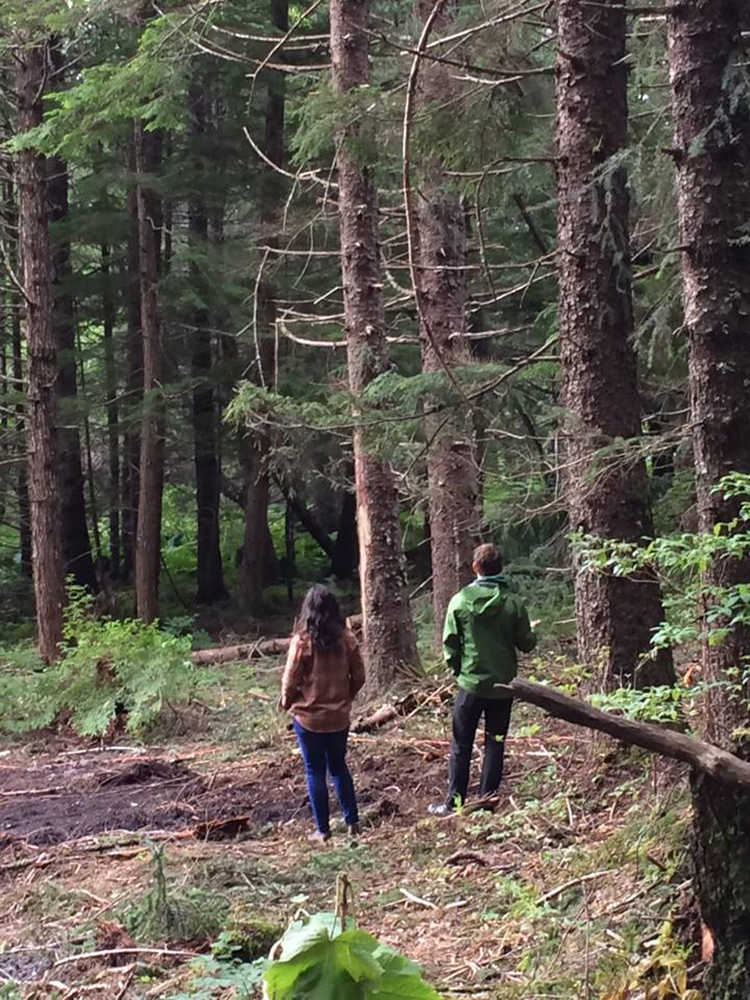
Leah Wagner and Nick Schlosstein stand on their land, the old Charles Anway homestead, in Haines. They spent the last few seasons clearing and building a yurt, and plan to offer Alaska-grown and Alaska-adapted seed varieties by the 2017 growing season.
