
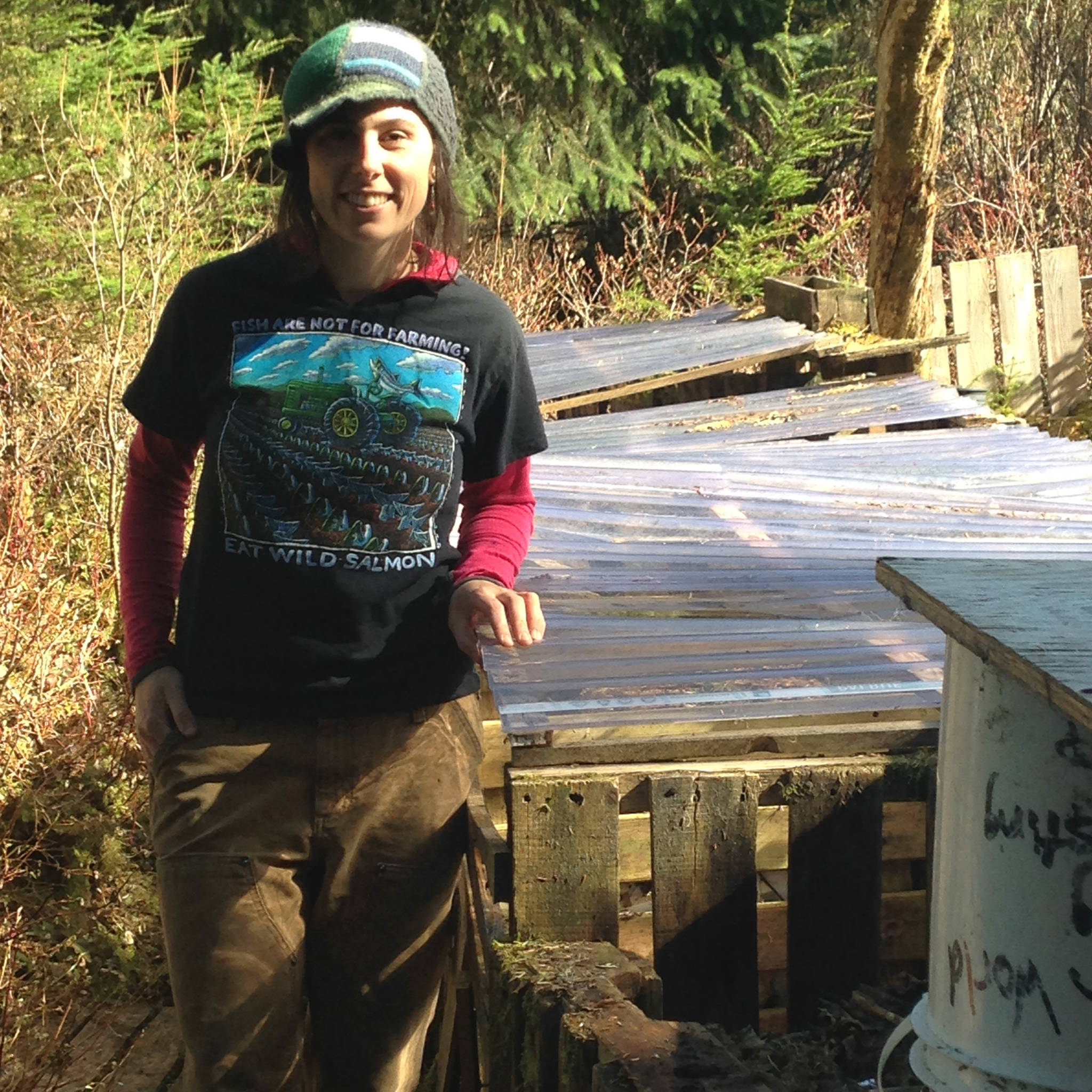
Almost everything that I had learned about composting in Southeast Alaska was debunked by Lisa Daugherty. I was confident in my understanding that you couldn’t generate hot enough temperatures to eliminate weeds, cooked food items were a no-no, and you certainly didn’t compost citrus. All of these things Lisa does on a regular basis.
Lisa started Juneau Composting this spring. Using a bucket system, she collects food scraps from families who want to compost, but don’t have the space. She exchanges the full container for an empty one and then brings it out to her site. Eventually, she plans on returning the bucket with composted dirt for the families to use.
She’s just beginning her project out the road, so she showed me her pilot composting system at her home in North Douglas. Past the shed and chicken coop, we walk on planks resting over roots and the typical soggy Southeastern turf.
Lisa utilizes pallets to form her square bins. At one end is a bin filled with nitrogen-rich browns: a mix of leaves and yard scraps followed by bins that are in various stages of composting. Lisa said key to composting is having enough mass to generate a hot inner core. The bin we looked at was about three-quarters full.
Lisa removed the simple wood frame with plastic shielding that protects the box. She explained that although you wanted a certain amount of moisture, too much rain would decrease the central temperature of the heap and wouldn’t allow the transformation of greens and browns into dirt.
She removed the long thermometer sticking out of the pile and created a nest by pushing away leaf matter to the outer edges. There were some weeds and she moved them to the center. “If they stay on the outside, they don’t break down.” She then took out a bucket of scraps she had collected from a deli. She poured out what looked like the remains of salad with dressing, some pasta, and a collection of orange peels.
Then, Lisa went to the chicken coop and filled the buckets with shredded paper that had been fouled by the chickens. She said that she doesn’t just add plain shredded paper because it tends to clump up. The manure acts as a catalyst to help it break down. She added this layer to the nest, filling in the hole. She then added the combination of the leaf matter and dead spruce needles that had been collected from her yard.
Lisa said that it’s important to add enough of this brown layer. If you don’t, flies, particularly the golden salmonberry bodied fly are drawn. “Sometimes, I’ll try to skip out and not add as much, but I find I’m always caught if I try to get away with not adding enough.”
She replaced the compost thermometer and we watched the needle move upwards. You need three days of 160 degree Fahrenheit temperatures to break down chicken manure. Lisa said that she sometimes will put starts on top of the compost and under the plastic lid in the spring as an improvised cold frame. She said others plant their seeds directly into the top layer and then transplant them later into their beds.
Having always been told that hot composting wasn’t possible here in Juneau, it felt like Lisa had revealed a secret door. As the rains compact our soil and nutrients are leached out, compost offers a way to transform garbage into not only usable, but ideal replacement soil. And, if you don’t have room or you can’t build up the mass you need, you can always hire Juneau Composts to do it for you.
• Corinne Conlon is a freelance writer based out of Juneau. She can be reached at dirtgirlgardening@gmail.com.
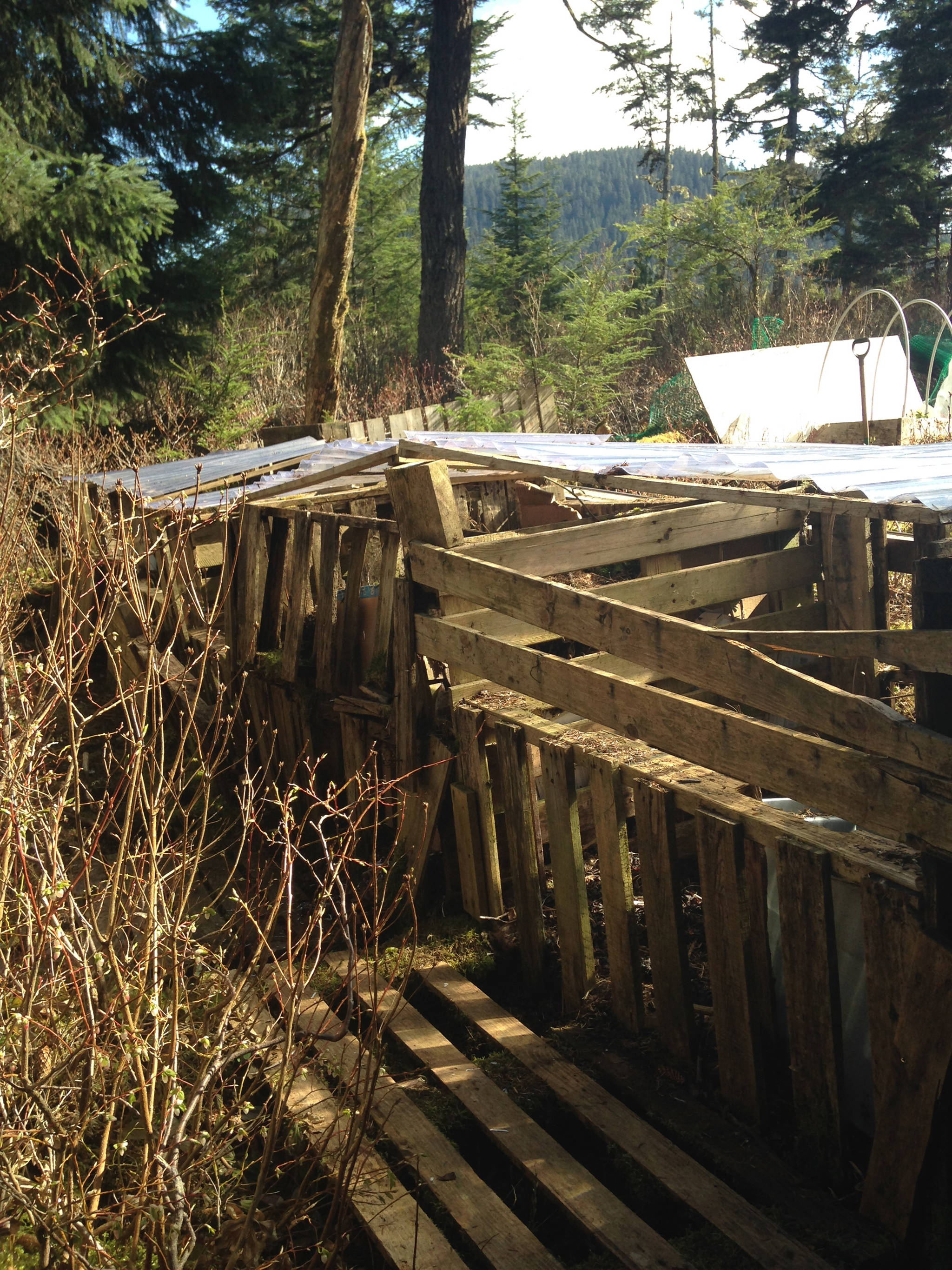
Part of the compost pilot project. (Corinne Conlon | For the Juneau Empire)
