
The morning before I began a trek across Chichagof Island, I was so nervy I vomited. I came up with rational reasons to stay home — safety, money and writing projects I needed to finish. It had been years since I’d felt this weird before a trip. I forced myself onto a floatplane bound for Tenakee and watched Juneau disappear as we cut across Stephens Passage.
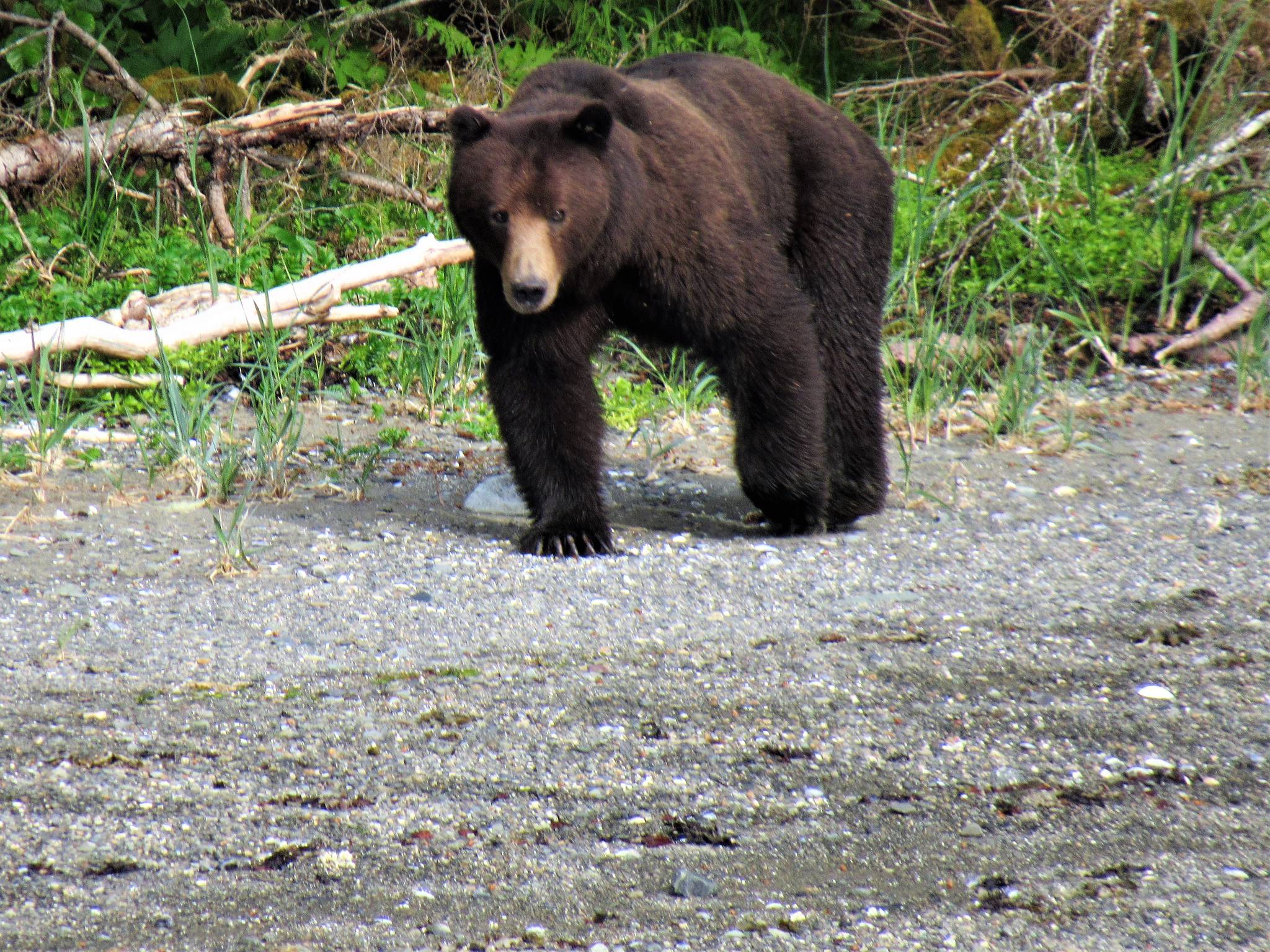
Six hours later, as I hiked up Tenakee Inlet, I saw my first bear of the year. Nearly black, the sub-adult got my wind and ran off. An hour later I encountered a bigger but equally dark bear that, upon seeing me, flexed its forearms and lowered its head. A gentle greeting was enough to make it run into the woods. Seeing them made me less anxious — the bears in my head were much scarier.
That night I lay in my tent reading Doug Peacock’s “In the Shadow of the Sabertooth.” The book was about the extinct giant predators that the first Americans lived with. It may not have been the best choice of reading material considering the setting. When the last light faded I put the book away. The forest swayed in the wind, rain dripped through spruce boughs and I listened for a broken branch or heavy step that could indicate a bear.
My .44 pistol was positioned near my head for quick use. The gun was more for my psychology than anything else, but there’s something to be said about having a large magnum for better sleep in brown bear country. I wondered if I was cheating in some abstract way, especially when I thought of the giant predators — the steppe lion, a large skulled feline twice the size of the African lion, numerous species of saber-tooth cats, dire wolves and, my favorite, the 14-foot-tall short-faced bear – that the first Americans had to face armed only with spears.
Their spears were special, though — archeologists call them Clovis points. These chipped stone spearheads, between 2 and 9 inches in length, were designed to fit on wooden shafts. They could be thrown, jabbed and even braced against the ground to impale a charging animal. The people who created the spear, referred to as the Clovis culture, are thought to be the first people in America. Their arrival coincided with the mass extinction of the aforementioned predators and other megafauna 13,000 years ago — think wooly mammoths, giant ground sloths and many more. Opinions differ on why much of America’s megafauna so quickly died out when people entered their world. Some say the Clovis hunters played a significant role in the mass extinction. Others say massive changes to the ecosystem caused by rapid global warming led to their downfall.
It’s hard to imagine that world. It’s even harder to imagine bands of people armed with spears eradicating a pantheon of such formidable animals. Perhaps they set huge fires, much like Lewis and Clark recorded the Plains Indians doing, to wreak havoc. If I tried really hard, I could almost convince myself I could imagine the hunger and fear that was a key component of their lives. It’s even harder to imagine global warming leading to the mass extinction. Without having much more than a gut feeling, I have to think it was a combination of both.
A branch broke; my heart beat faster and I grasped for my pistol. Then silence. I listened for movement and breathing. I imagined the tent slowly being pushed in and claws tearing the flimsy fabric as the night erupted in groans and gun fire. I imagined taking on a brown bear — tiny in comparison to a short-face bear or steppe lion — with spear and felt less than pathetic. Minutes passed and nothing but the quiet of the forest disturbed the darkness. Bears own the night in more way than one.
The next day at the head of the inlet I stood watching two bears plod through the snow above the high tide line. I guessed it was a male lazily pursing a female, but they were too far away to know for sure. I thought of the ancients with their spears, global warming and mass extinctions. Humans fearing bears, I thought, is like monsters being afraid of the light.
• Bjorn Dihle is a Juneau writer. He is the author of Haunted Inside Passage: Ghosts, Legends and Mysteries of Southeast Alaska and Never Cry Halibut: and Other Alaska Fishing and Hunting Tales. You can contact or follow him at facebook.com/BjornDihleauthor.
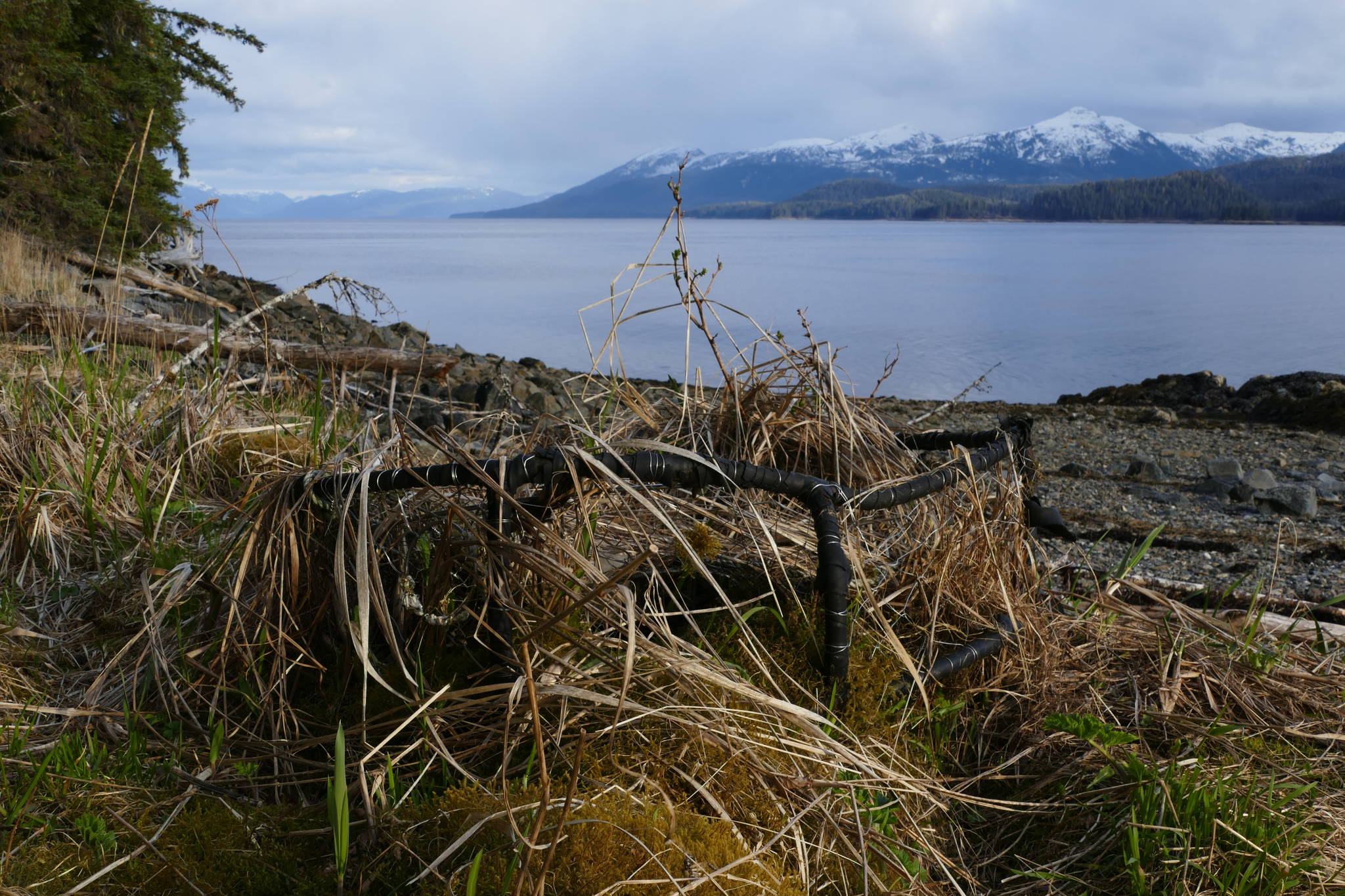
An abandoned crab pot in Tenakee Inlet in April. (Photo by Bjorn Dihle)
