
On May 5 at the Alaska State Museum a new exhibit with artwork ranging from fishskin screens, weavings, masks and even remnants of moose antler will open. The work of 30 Alaska Native artists will be on display for “Decolonizing Alaska,” an exhibit that has been housed in Washington D.C. at the Corcoran School of Arts and Design, and has and will continue to be shown in museums across Alaska as well as a future stop in Portland.
“Decolonizing Alaska” is inspired by the idea that artists should challenge expectations of how Native art should look, curator Asia Freeman wrote in a statement, continuing to say that the exhibit redefines the idea of what Native art can be.
“Alaska’s art market has for decades reflected the colonization and repression that has defined the industrialization of Alaska,” Freeman wrote. “The art market is heavily invested in selling and exporting reductive ideas of Alaska. Rather than mostly focusing on what artists are making, the market appeals to what consumers want to buy: a stereotypical idea of Alaska featuring dogsleds and Eskimos, igloos and objects of native iconography often reproduced abroad. In reality, Alaska artists propose expansive ideas of Alaskan culture and people in art that explores both endangered traditions and new constructs of identity. Alaska’s artists are exploring a confluence of indigenous and global materials. They are expanding and redefining the roles of tradition and technology to explore difficult territories and express new ways of being.”
Several of the 30 will be present at the opening reception: Rika Mouw, Michael Walsh, Ricky Tagaban, Crystal Worl, Melissa Shaginoff, and Joel Isaak, along with Freeman. The reception will run from 4:30-6:30 p.m. A panel discussion will follow in the museum lecture hall.
Meet one of the artists
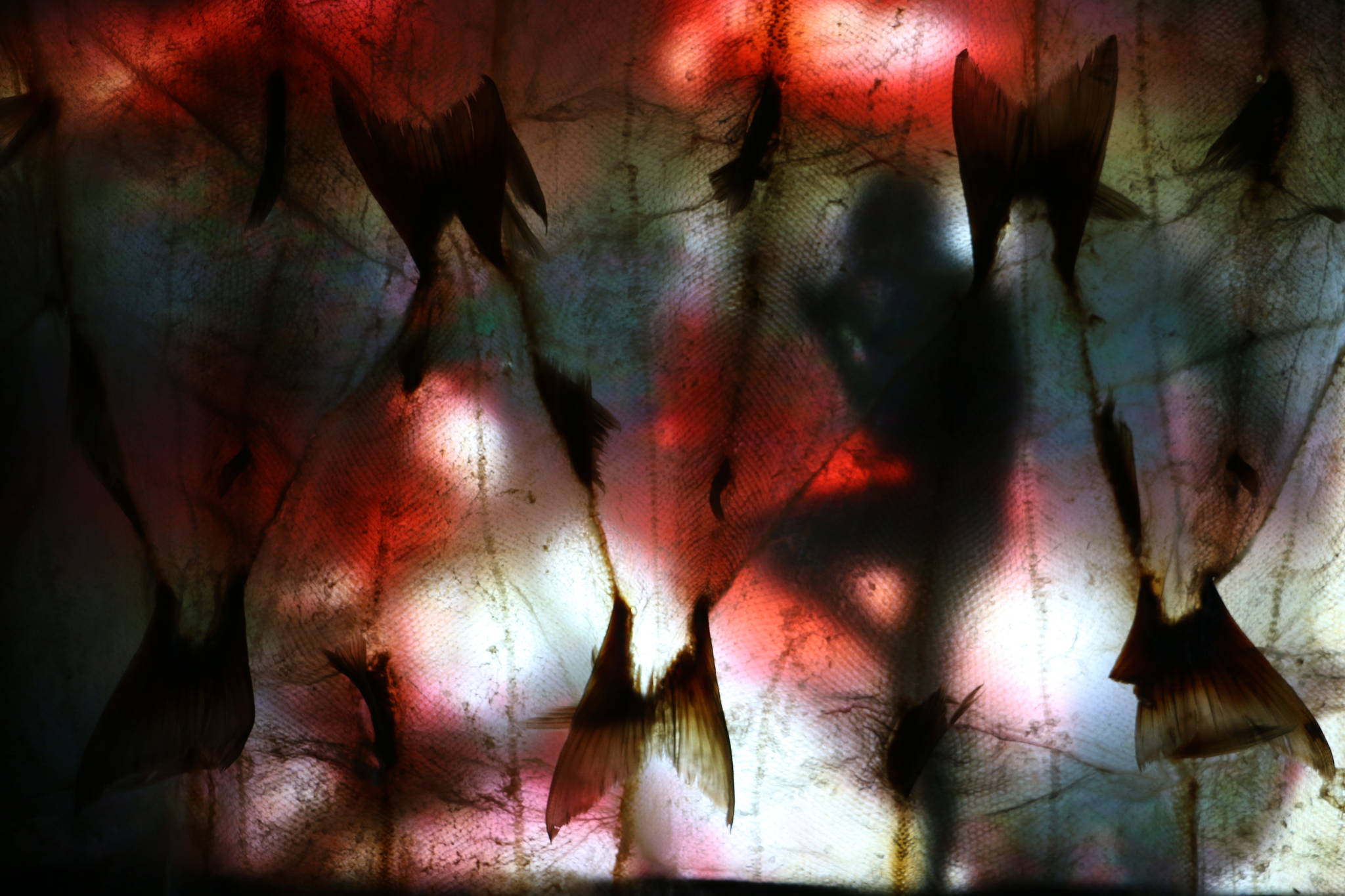
Joel Isaak, a member of the Keniatze Indian Tribe from the Dena’ina region in South Central Alaska, sewed fishskins together for the “Decolonizing Alaska” exhibit. Then he added a video to be projected through the back of the salmon skin screen. In it, the viewer can see Isaak’s silhouette dancing and hear the sounds of his family at their fish camp.
“The video translates my experience working with fish into movement,” he wrote in his artistic statement. “The video includes dance, but I am not trained in traditional dance. It is not traditional, but like traditional dance, it aims to tell a story. Embracing decolonization, I explore my freedom as an individual, as a person, as a Native American to express myself through movement. The raw sound of my family cutting fish is grounding for me and provides a steady rhythm to tie the story together. The sounds of fish camp, skin sewing, and fish processing travel with me wherever I walk in my salmon skin boots.”
Growing up, Isaak skinned fish before cooking, feeding the skins to the family dog; he never used the skins artistically for anything until he became an adult. While at an exhibit in the Museum of North at the University of Alaska Fairbanks, he saw a piece that used fishskin. He wanted to learn how, and did so by “reverse-engineering the process,” he said. He began reading about fishskin sewing – there wasn’t much written about the topic so he supplemented the knowledge through reading about other kinds of skin sewing like with deer or moose – and then talked with an elder and had her observe his work. Now he interviews different elders as he travels to learn different methods.
He also shares his knowledge through workshops, which he’s done10 of since 2013. He will hold a free workshop on Saturday, May 6 at the museum’s classroom. It’ll run from 9:30 a.m.- 4:30 p.m., with a break for lunch. Space is limited so those who are interested should register by calling the museum at 465-2901.
Isaak said to him “decolonizing” means many things. It’s challenging Western narratives of indigenous people by showing an indigenous viewpoint on historical events; it’s about healing. The exhibit shows that Alaska Native artwork is on the same level as Western fine art, he said.
On the panel, he hopes those who come will consider something new. Decolonizing begins at the community level, he said. Building a bridge between indigenous and non-indigenous people is a big part of that, as is listening.
“I think using art as a way to talk about this topic is really beneficial because it has a lot of loaded topics, it can be emotional, it can be a tricky, touchy subject for a lot of people…” Isaak said. “The art creates a vehicle to discuss things in a unique way that I think only art can do.”
Contact Capital City Weekly staff writer Clara Miller at clara.miller@capweek.com.
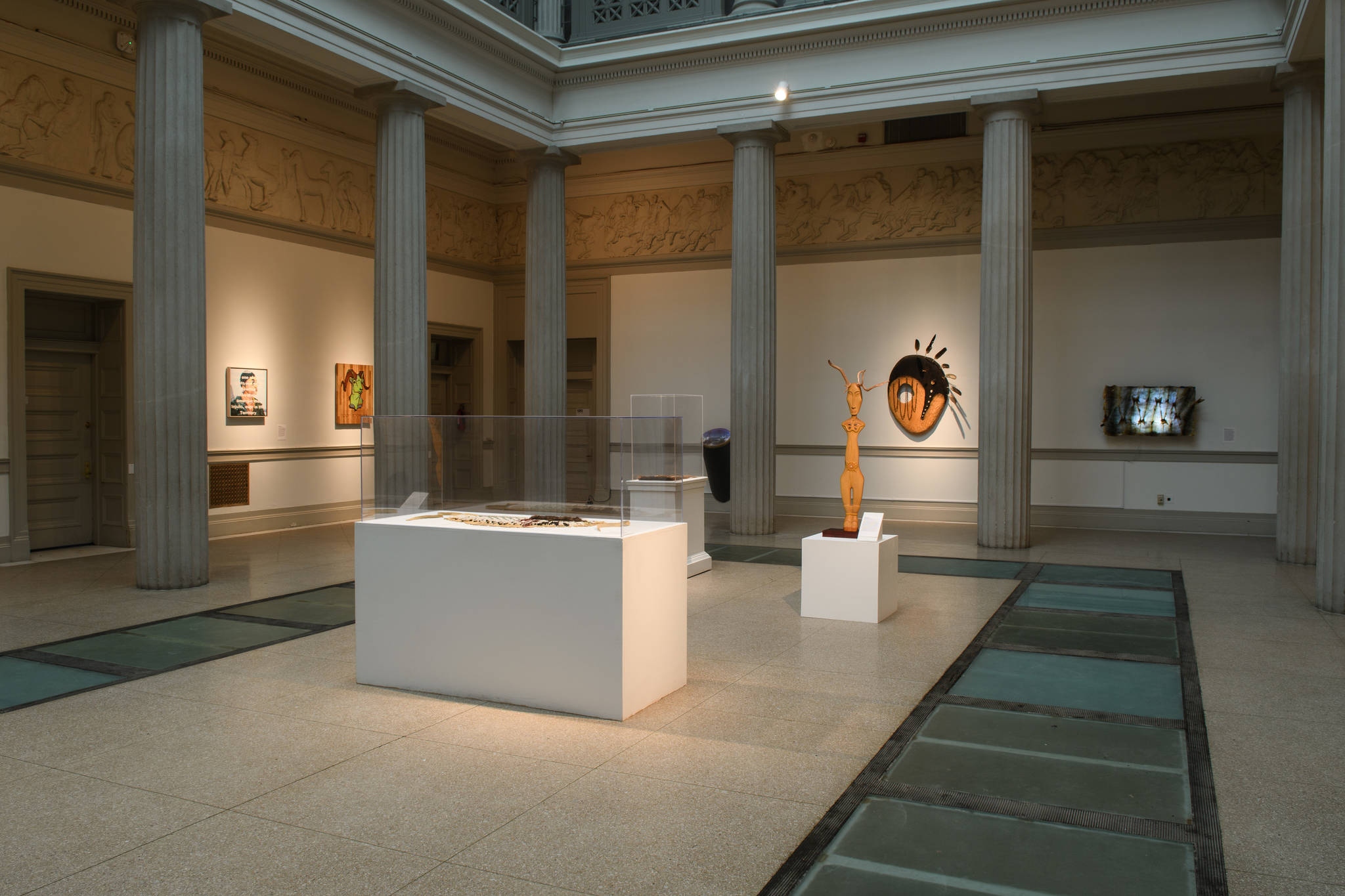
321;uqa’ ch’k’ezdelghayi Visions of Summer” is by Joel Isaak; it is a digital loop of video behind a fish skin screen. Isaak will teach a free fish skin sewing workshop on May 6.
