
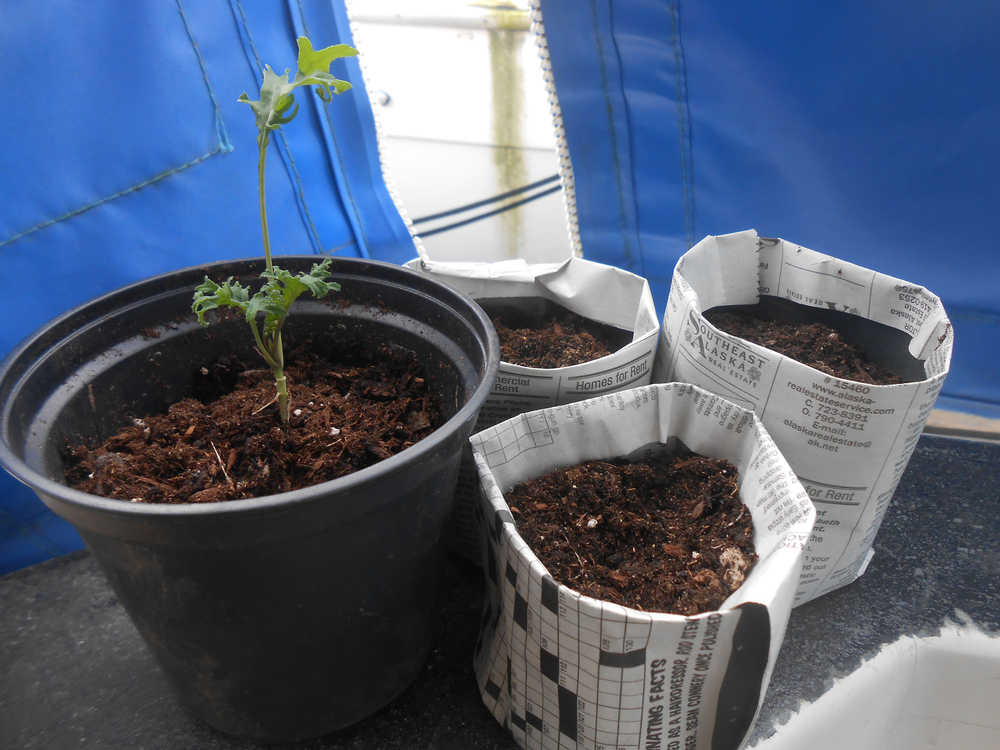
Despite a recent cold snap and snow, we here in Southeast Alaska are moving closer to spring. The light has changed, stretching earlier and longer. It’s time to begin the early starts.
The time to begin planting seedlings varies by location. It is based on the average last frost date. For Juneau, we consider that date to be around the second weekend in May, or Mother’s Day weekend, but this is just an average.
If you find your planting date is later than that, or earlier because your yard gets plenty of early sun, the water nearby regulates the lows from the highs, or you simply don’t live by a huge chunk of ice, consider that planting date as a reference point. When we begin starts, we need to think about when we’ll be planting our seedlings.
Plants that you want to begin 8-12 weeks before planting include onions and leeks. Tomatoes and peppers should also be started now. Although these plants are raised indoors, in a greenhouse, or in a sheltered place, they have a slow maturity rate and we want to begin them as soon as possible.
Gather up all the things you’ll need — containers, soil mixture, and seeds. I’ve found it less messy if I have an open container filled with the starting soil. I use an old Rubbermaid tote for larger projects and an old dish tub when I don’t need that much. It’s easier to scoop the soil into the pot rather than using a spade to pour the soil into the container.
You can use whatever containers you have available, or you can purchase what you need. I’ve made an easy pot out of a sheet of newspaper that I rolled around a tin can. Then I flattened the bottom edges and tucked in the top. This container was nice because I was able to cut it away when I planted the start, preventing any root disturbance. It’s also a nice way to recycle this newspaper.
If you use a small, plastic pot from a previous year, be sure to wash it and then put it in a bleach solution. Some people feel comfortable with merely dipping the container in the solution, while others let it sit for 30 minutes.
An interesting device to use is a soil block maker, which compresses the growing medium into a cube. You fill it up, press the soil in and it compacts the soil into cubes, which eliminates the need for a pot. Soil cubes have the advantage of not creating any barriers for roots. Many times seedlings become root bound in a pot. You can’t really see that it’s happened until you take it out and are left to detangle the roots. In a soil cube, you can see the roots coming out and can transplant it.
Use a starting mix rather than potting soil when you begin plants indoors. This looser material allows the plant roots to form without having to work as hard. A starting mix is usually a combination of potting soil and vermiculite or another additive. If you are doing a lot of starts, it might be a good idea to wear a face mask as you’ll find this light soil will hang in the air like dust.
After your seeds are planted, water them thoroughly. As my friend Gail once said, there are times when you give a plant a drink of water and there are times you give it a bath. Give them a thorough soaking.
Place the pots in a sunny spot. You can use grow lights (lights that use the red and blue spectrum to control the amount of light the plants get.) However, if you have fluorescent lighting available, which just has the blue spectrum, it can be as effective as grow lights. If the light is not placed overhead, then make sure you rotate the pots to allow the seedlings to grow straight.
Now that you’ve planted your first seeds of this year, step back and smile. Check the plants regularly and as they emerge and grow, know that you are that much closer to spring.
• Corinne Conlon is a freelance writer based out of Juneau. She can be reached at dirtgirlgardening@gmail.com.
