
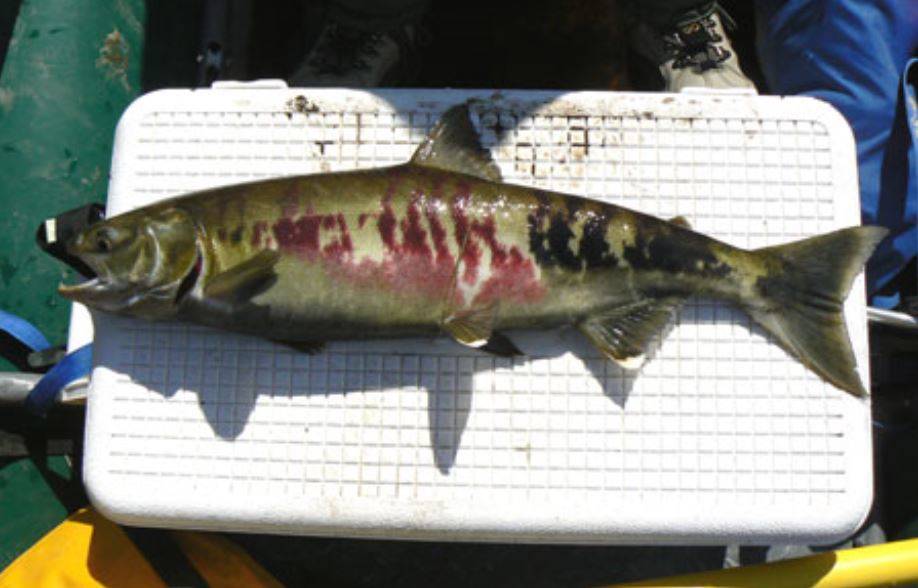
1. Téel’, dog salmon, chum salmon, Oncorhynchus keta, calico salmon, keta salmon, silverbrite, fall salmon, autumn salmon.
Sitting on our fishcamp porch watching the ocean, my dad tells me how to identify a dog salmon. They do a lot of swimming. They fin the surface. They don’t jump all the way out of the water. They are a lazy jumper. The seiners call them diving dogs because of the way they dive to escape the purse.
This is important information because my dad gifted me a subsistence net for my birthday. The net was custom made by Wrangell elder, Dan Nore.
2. Ocean fresh dog salmon are metallic greenish-blue on the top with fine black speckles.
The Dog Salmon people are our neighbors, friends and family — Prince of Wales Coast Town Tribe, Takjik’aan Kwáan: L’eeneidí, Téel’ Hít (Dog Salmon House), Téel’ Yádi Hít (Small Dog Salmon House); Auke Bay Small Lake Tribe, Aak’w Kwáan: L’eeneidí, Téel’ Hít (Dog Salmon House).
3. Dog salmon are less oily than king salmon or sockeye. The flesh is lighter colored and has a milder flavor.
I grew up in a fishing community believing dog salmon was undesirable, but dog salmon are a historically important food source for interior and coastal Alaska Natives. Dog salmon make the best dried fish because of the low oil content. It’s also great for grilling and smoking.
4. Dog salmon have the widest distribution of any Pacific salmon: Korea, Japan, Okhotsk Sea Bering Sea, British Columbia (Canada) and in the U.S. from San Diego to Alaska.
My friend Owen James can fillet a dog salmon in 36 seconds.
5. Ocean bright dog salmon are hard to distinguish from sockeye and coho without looking closely at gills, fin and scales. They have fewer, shorter and heavier gillrakers and large eyes, a narrow tail base, and their tail fin is deeply forked.
Dad’s story: I walked up Pat’s Crick Valley hunting for deer. I was in the muskeg and I heard some splashing and I went over and checked out the creek. It was about three feet wide and beneath the bank I could see some fish. I reached down and pulled up a fish by the tail and it was a dog. What the heck? I put him back. You wouldn’t think that it’d be so far inland. It was a mile or two upstream.
6. Dog salmon usually range in weight from seven-18 pounds and measure between 24-32 inches long. The largest recorded dog salmon is 42 pounds and 44 inches long, caught in British Columbia.
You have to be a Philadelphia lawyer to understand the fishing laws from the Alaska Department of Fish and Game (ADF&G), my dad says.
7. Juvenile dog salmon eat zooplankton and insects, small adult fishes, squid and even comb jellies.
Read what we call “The Directions,” a sport fishing regulations booklet. Get a resident fishing license. Get a subsistence permit from ADF&G, or a personal use permit: it’s free. Go online and print further directions. Keep track of where you fished and what you fished and how many you caught — make sure you take a pen with you. Fifty dog salmon (chum) in possession, no annual limit. All streams except sockeye streams. No streams flowing across road systems. Call the local ADF&G. Ask questions. Every answer leads to another question. Go down to the local ADF&G office to ask more questions. Know definitions: customary and traditional, resident, rural area, subsistence use, personal use, possession, vessel, domicile, take, one permit per household.
8. Dog salmon fry do not stay in the rivers. They migrate soon after hatching to the estuaries and ocean, in contrast to most other Pacific salmon species.
Spawning male dog salmon develop the characteristic Pacific salmon hooked snout and large teeth. Males turn olive green with what some call “tiger stripes.” Female spawners have a dark horizontal band along their sides, and their green color and purplish/red bars are paler than males.
Like an alien creature from a movie or new camo technology, spawning dog salmon can shift their colors in seconds, depending on the salmon’s moods. And the smaller male dog salmon shapeshift into female colors to avoid competition and fighting with larger male salmon. These males join the female gatherings acting and looking like females. They mingle and wait until the right time, hoping to fertilize eggs.
9. Female dog salmon can lay up to 4,000 eggs.
I hold a skein of brined salmon eggs in my hands and gently rub it over the grate, manipulating each bright orange egg into the bowl. It is an intimate and delicate process. I try the eggs: ocean-y with a hint of soy sauce. At the end of the day, my hands smell like dog salmon eggs. It’s a good smell. Grandson Timothy and I take some jars of ikura shoyu (soy sauce marinade salmon eggs) to Wrangell Cooperative Association (WCA) to distribute to our elders.
10. Dog salmon patties, dog salmon enchiladas, dog salmon with dog salmon eggs on rice, dog salmon mac-n-cheese, dog salmon and their eggs in spring rolls, dog salmon eggs in salad.
Revered for their eggs. The longest migrating salmon. The shapeshifting salmon. The drag show salmon. The salmon with bear scars. The salmon wearing a woven cedar robe. The salmon who fights for life. The chief of all salmon. The sustaining salmon. The adaptable salmon.
11. Dog salmon spawn in the lower reaches of large rivers and coastal streams and often the same rivers as coho, but coho spawn further up. In the Yukon River there are summer chums and fall chums.
We set the net and catch 15 dog salmon, some huge 30 pounders. We clean salmon on our fish-cleaning table into the night. Our daughter Nikka helps package the fish for freezing until we can get to the smoking later in the summer. Our smokehouse is ready and waiting.
12. In the Pacific Northwest, dog salmon are the last species to enter fresh water and begin spawning.
Dog salmon fill up the tote. They’ve come a long way to get to my fish-cleaning table. I consider the long journeys we sometimes make. The dog salmon house screen from Tuxecan returns to Klawock. Dog salmon are known to migrate 2,000 miles up the Yukon River. I consider my ancestors, the Sámi, migrating from one season to another, one landscape to another: sea to forest to tundra. You bring your home with you is a common Sámi saying. Better to be on a journey than staying put at one place. We are home because we are present in the landscape, wherever that may be. We eat from the landscape. We pick berries. We catch fish. We fillet dog salmon. We dine on flesh and eggs. We make soup from fish bones. I reach into the tote and grab a dog salmon by its gills and place it on the fish cleaning table. I pick up the knife beside me — Giitu, Gunalchéesh, thank the fish, and begin.
13. The oldest salmon fossil ever found is 50 million years old, give or take a few years.
We’ve been eating salmon for a long, long time.
*Any mistakes in Tlingit orthography or house/clan names are the author’s.
• Wrangell writer and artist Vivian Faith Prescott writes “Planet Alaska: Sharing our Stories” with her daughter, Vivian Mork Yéilk’.
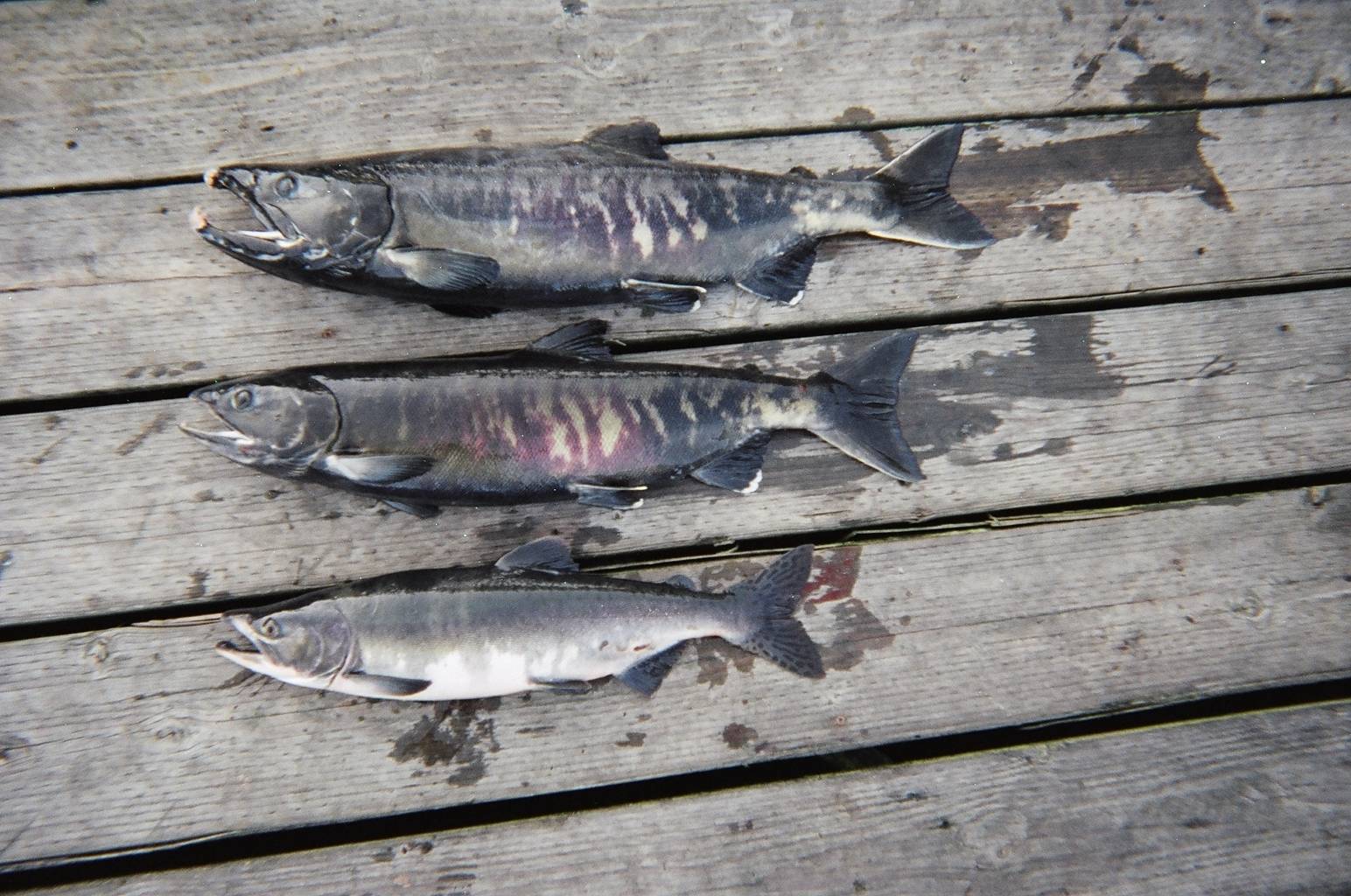
Dog salmon, breeding colors. (Courtesy Photo | “Vineyard,” Wikipedia Creative)
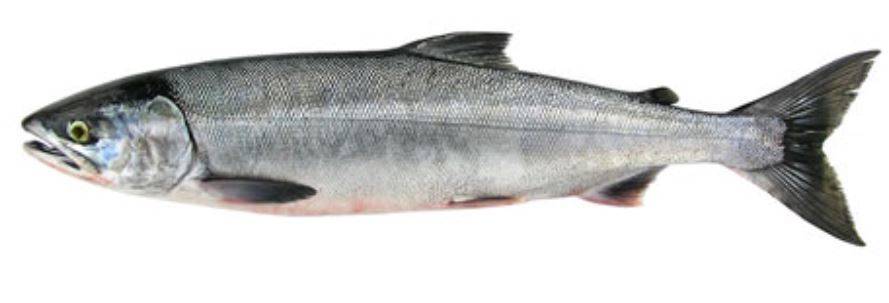
Chum salmon, aka dog salmong, aka silverbrite salmon (Courtesy Photo | Alaska Department of Fish and Game)
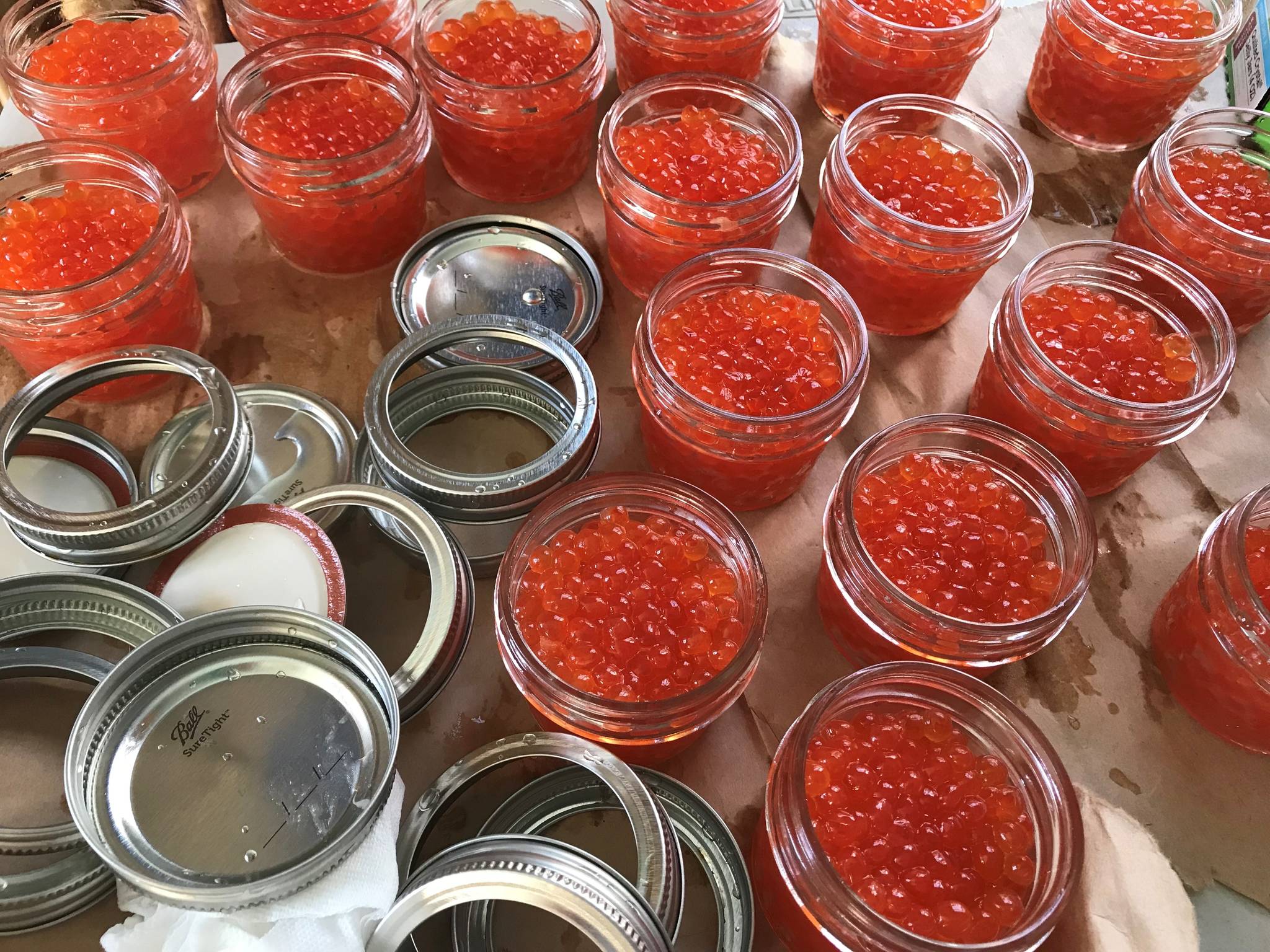
Dog salmon eggs in jars (Vivian Faith Prescott | Capital City Weekly)
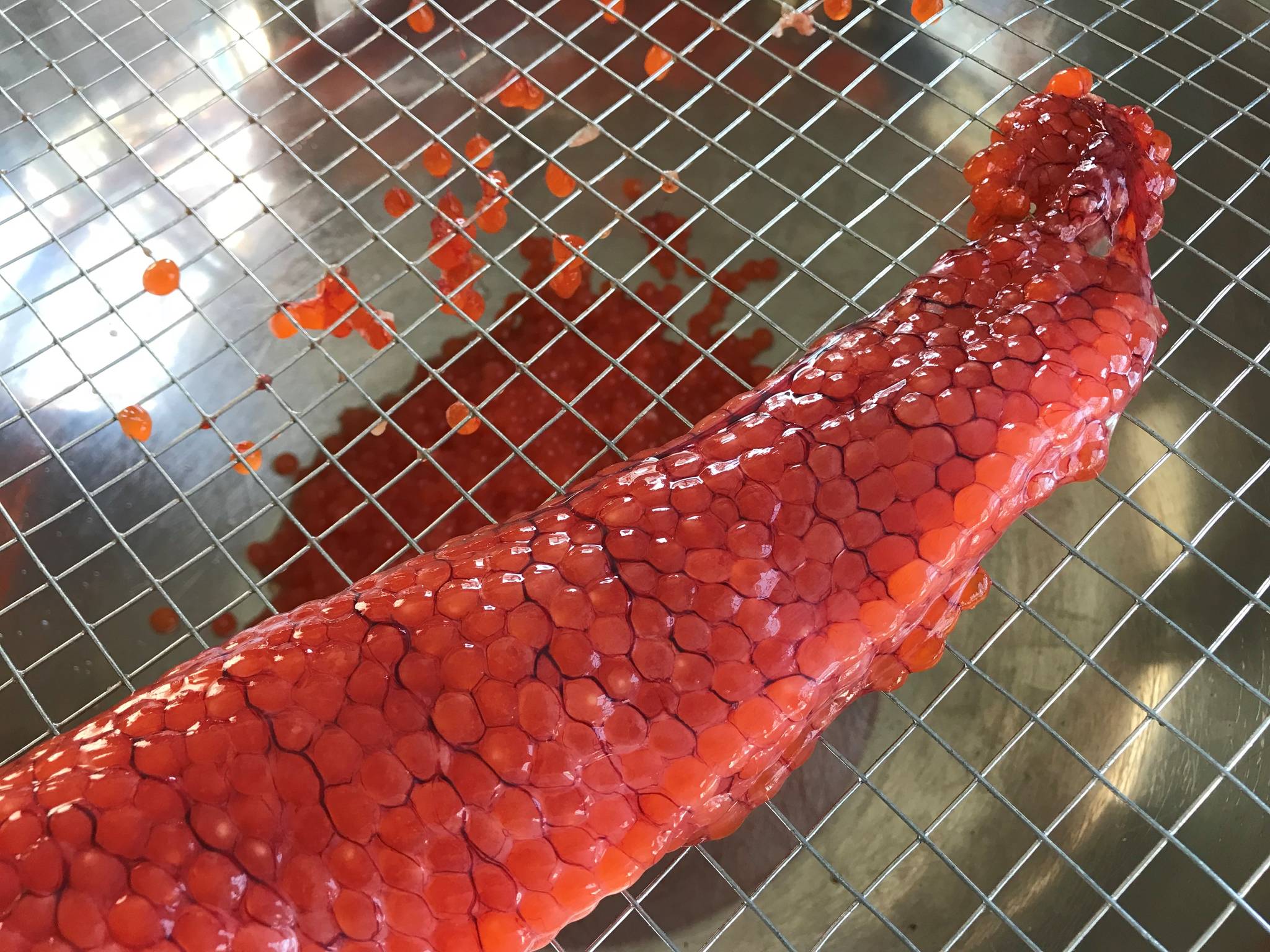
Skein of dog salmon eggs (Vivian Faith Prescott | Capital City Weekly)
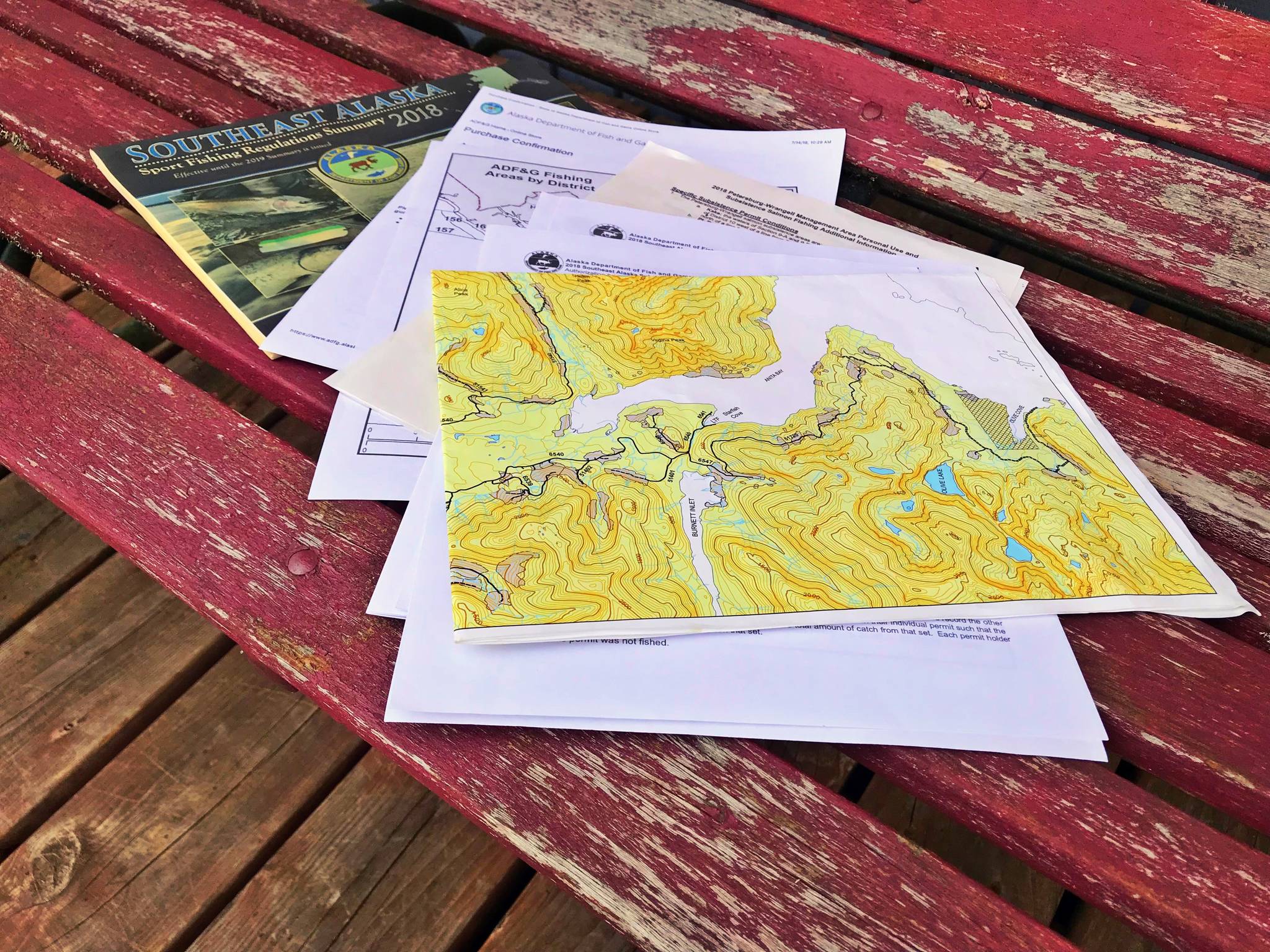
Subsistence paperwork for the Alaska Department of Fish and Game (Vivian Faith Prescott | Capital City Weekly)
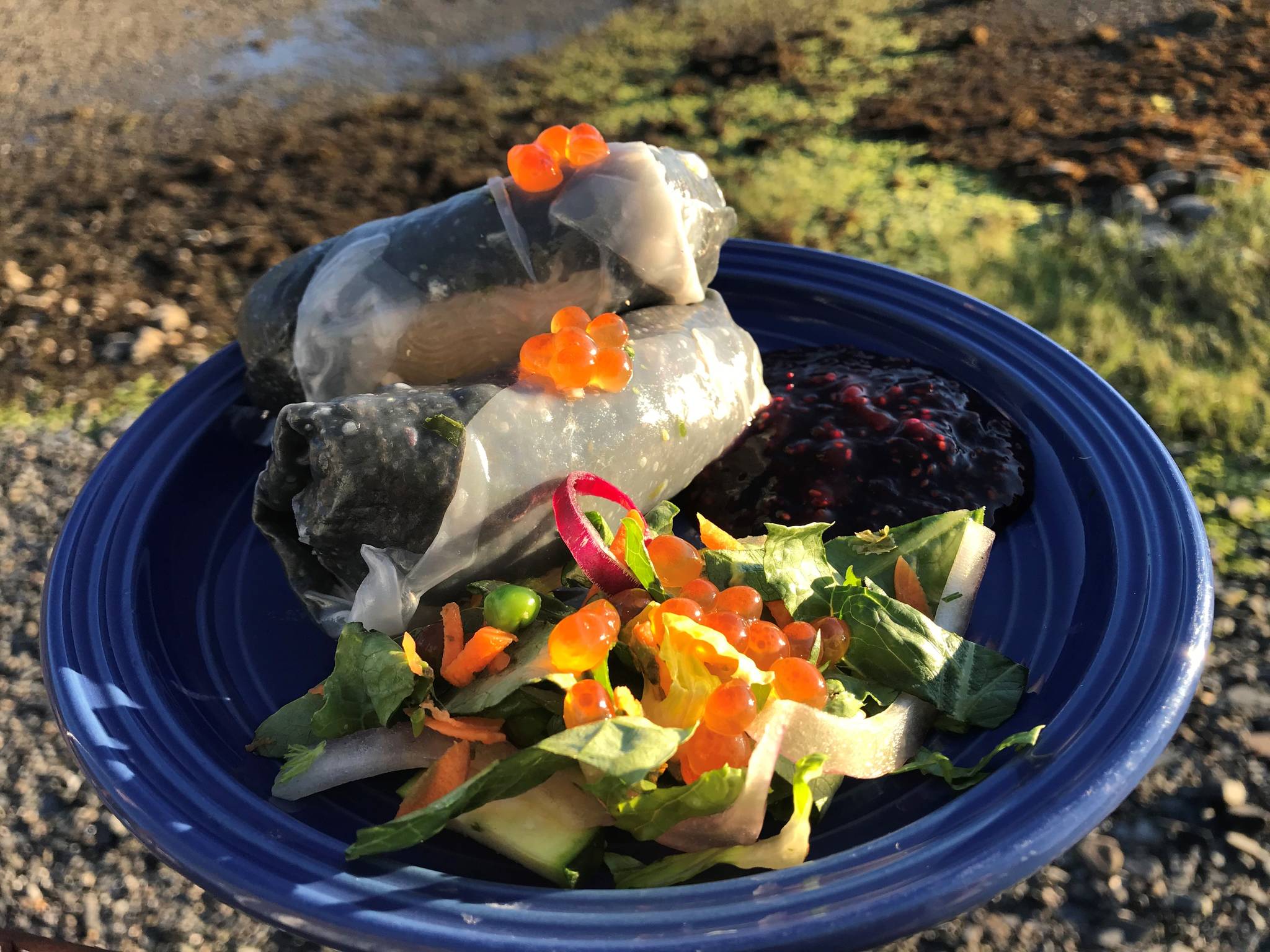
Spring rolls with dog salmon (Vivian Faith Prescott | Capital City Weekly)
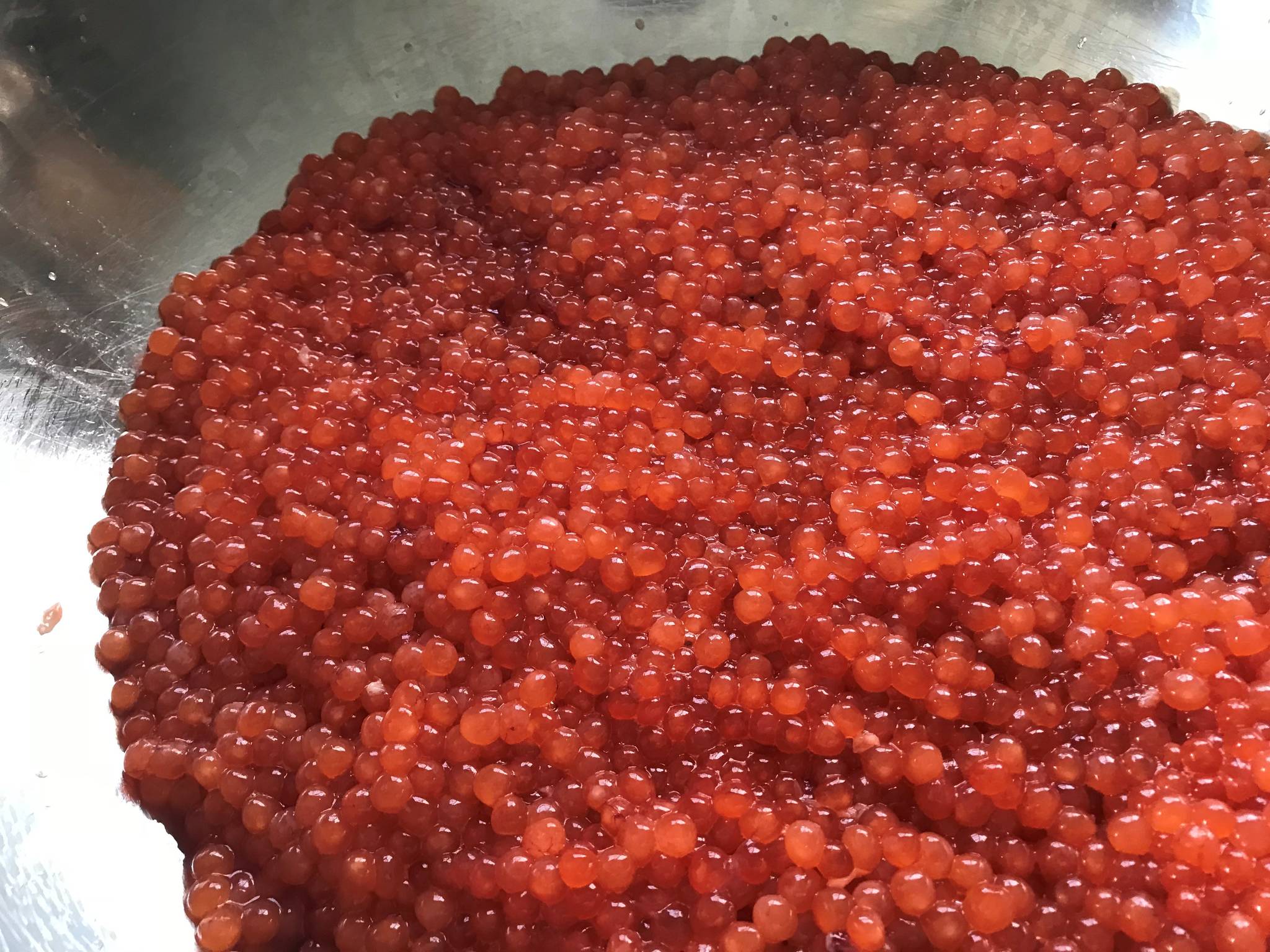
Bowl of dog salmon eggs, removed from skein (Vivian Faith Prescott | Capital City Weekly)
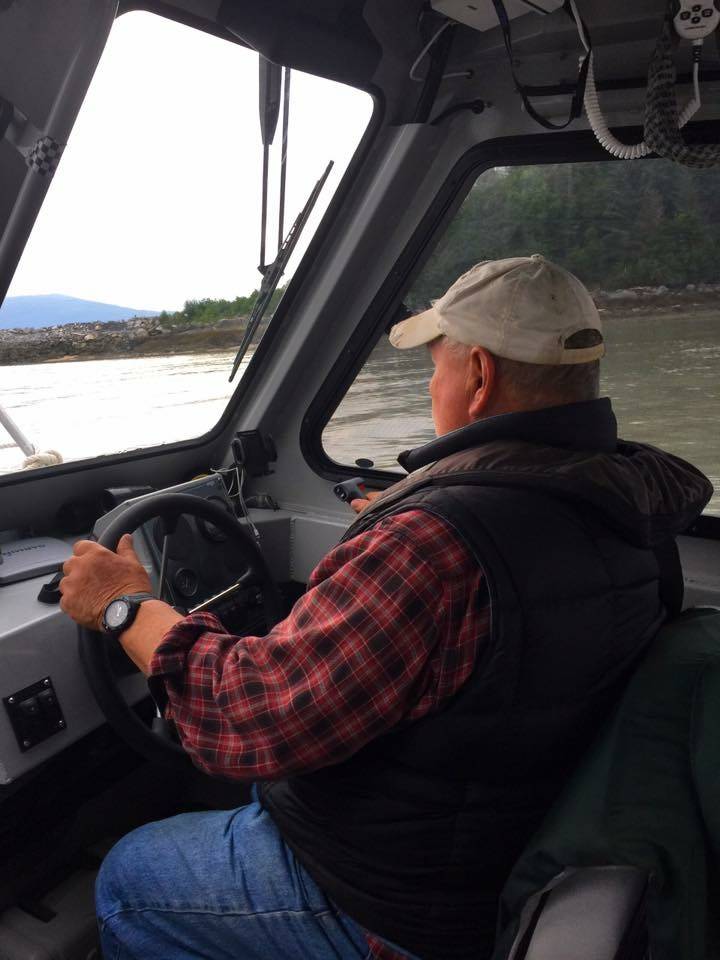
Mickey Prescott, headed out fishing. (Vivian Faith Prescott | Capital City Weekly)
