
We use the word “engineer” in a confusing variety of ways and contexts, but here I mean to refer to organisms that create physical structures or changes in the environment — physical changes that affect other kinds of organisms. The concept is still very broad — one could say (and some researchers do so) that a forest of trees or large kelp, or a tallgrass prairie or an eelgrass bed, produces an environment in which temperature, humidity, air or water currents, precipitation patterns, or soils may be altered, thus affecting many other organisms by providing habitat or access to resources.
However, here I want to consider other “engineers” — those that deliberately, intentionally make or modify physical structures for their own purposes, with collateral consequences for other organisms.
The most well-known ecological engineers in the natural world are beavers. By building dams, they impound water, raising the water table, creating ponds, sometimes preventing floods, but also flooding low-lying areas. Although they may instinctively respond to the sound and feel of running water by trying to build a dam, they make deliberate choices about the size and shape of a dam and its component parts; they also maintain their structures continually. Beaver ponds provide good habitat for fish, especially juveniles, aquatic insects, various birds, and certain plants, although they obviously destroy portions of the adjacent area by flooding it. Some dams are hundreds of yards long and some are many feet high, depending on the terrain. A well-constructed, well-maintained beaver dam can last for many years, and its effects on the landscape may persist long after the beavers have moved on: the pond gradually fills with sediment and dead vegetation and eventually turns into a meadow.
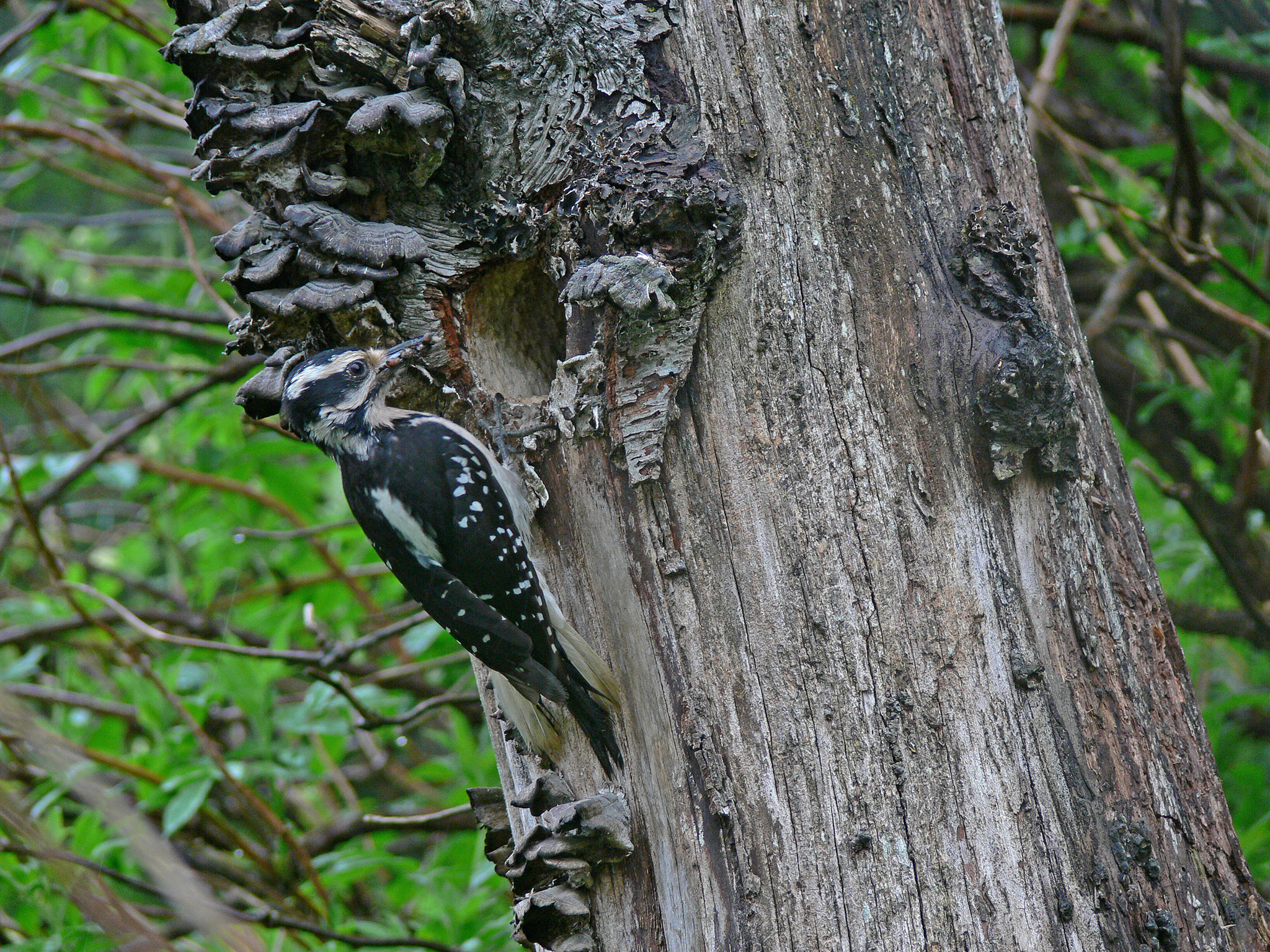
Woodpeckers are engineers too. They excavate nesting cavities in trees; the holes persist for years and are used by other birds, such as chickadees, bluebirds, small owls, and certain ducks, flying squirrels, as well as insects and fungi. Experiments have shown that the density of cavity-using critters in an area depends on the availability of woodpecker-made holes. Woodpeckers known as sapsuckers are doubly active as engineers: their nest cavities provide essential nest sites for swallows in parts of Colorado and the swallows are reported to be absent in forests that lack the sapsuckers. The second engineering function of sapsuckers is their characteristic drilling of sap wells in the bark of selected species of trees, a physical change that alters the distribution and abundance of food resources by other birds (e.g., hummingbirds), squirrels and insects (e.g., wasps and butterflies). The trees eventually heal the wounds in the bark, so the effects of this engineering feat are less long-lasting than that of the nest cavities.
Terrestrial burrowing critters modify drainage patterns and create micro-terrain that alters plant communities. And there are many burrowers (e.g., ants and termites, earthworms, pocket gophers, moles, badgers, mice and so on). Prairie dog colonies (before humans plowed up most of the prairies) change soil condition over large areas, which then supported plant communities different from surrounding areas. Their burrows also make nest sites for burrowing owls and refuges for snakes. Kingfisher nesting burrows may sometimes alter riverbank stability, but they also provide nesting holes for rough-winged swallows. Marine burrowers, such as certain molluscs or worms, stir up sediments, dig holes in submerged wood and rock, and change erosion patterns.
Even bird nests can be considered to be engineering feats; carefully selected materials are woven together, creating structures that provide habitat for certain insects and microbes and sometimes for other birds. Most nests are quite ephemeral, disintegrating in a year or two, but that’s not the case for the nests of eagles, for instance, nor for the Australasian birds known as megapodes or incubator birds, which build huge mounds of decaying vegetation in which the heat of decay incubates the eggs.
It has been said that “humans are tool-using organisms that specialize in engineering.” We seem to be compulsive engineers. People have been and still are the main agents of environmental change virtually everywhere on the planet. Think of all the dam-building, forest clearing, prairie burning and plowing, mining and quarrying, channel dredging and straightening, water diversions, and whatnot. Historically, much of that engineering has been done without any serious consideration of the ecological consequences, but those consequences have been enormous, long-lasting, and mostly negative for the environment. In recent years, there has developed a small impetus to reduce ecological damage resulting from our engineering, but human gratification usually wins the day.
• Mary F. Willson is a retired professor of ecology.
