
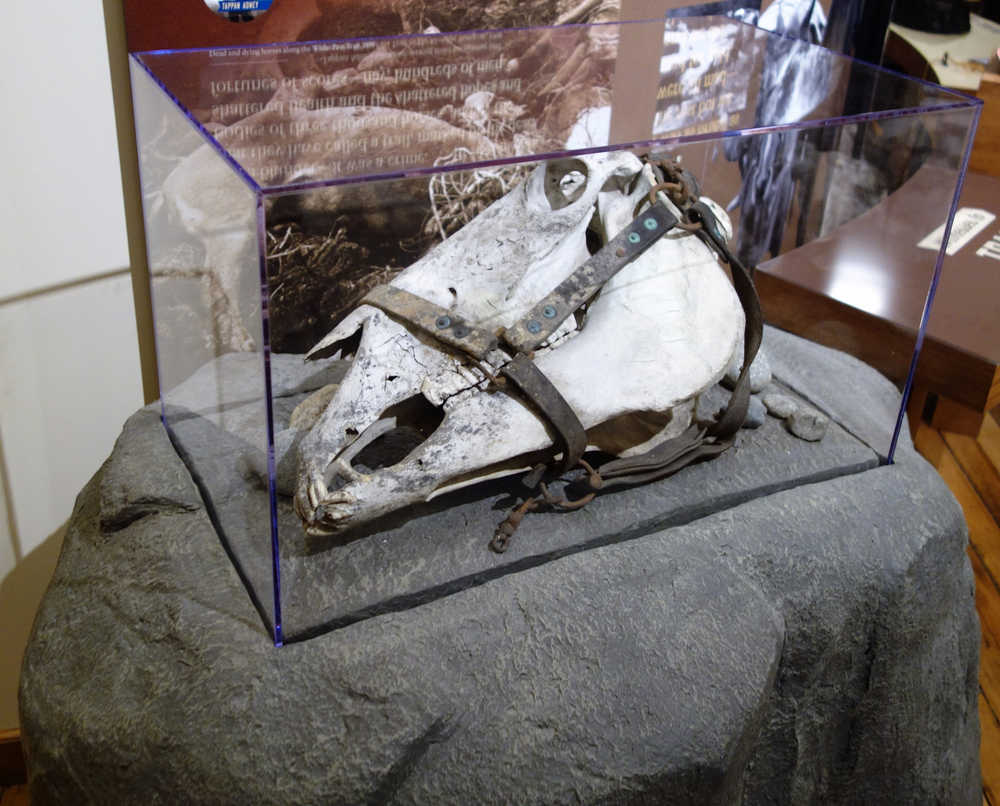
Skagway — The Klondike Gold Rush Historical Park exhibits used to be what National Park Service employee Benjamin Hayes described to the Capital City Weekly as “a visual experience.”
By that he meant “artifacts sitting in cases.”
But now that’s changed.
In 2012, the park received funding to update its exhibits, and construction began in 2013. The first Friday in December, at the tail end of 2016, the park had its grand reopening.
For the exhibit overhauls, Hayes said, the park focused on accessibility for all guests, whether visually impaired (there are now audio tours and signs in braille) or who use wheelchairs (all the exhibit plaques have been lowered for easy access).
“1980 did not have people with disabilities in mind,” Hayes said. That’s when the last update to the park was done (the Americans with Disabilities Act became law in 1990). Thinking about access for those without sight was central in leading to the park’s now more immersive experience.
In one section of the park, guests can smell sourdough or hooligan oil in little jars. They were commonly used to make food or preserve it. Nearby, a visitor can see plastic displays of what the common stampeders’ meals consisted of – bacon, beans and bread –compared to what the local Tlingits consumed, like fish and berries.
Another exhibit has phones guests can lift to hear sounds from the Klondike Gold Rush — like miners whooping over found gold, or the sound of an avalanche.
During the grand opening, an elderly lady smiled as she rested on her walker and watched children zoom from exhibit to exhibit.
“It’s a great museum because it tells kids to touch,” she said.
Some signs direct people to feel a model of a mountain with a train hugging the edges to give guests a sense of the sharp slopes. Another invites them to step into a model mud foot print to see how far they would sink on unmaintained portions of the trail.
“Wow, didn’t look like this before,” one man said to his group upon entry.
The visual component of the museum is still quite important, especially for those whose English skills might limit them. For example, there’s a model boat for guests to sit in as they watch a video of rapids on the Yukon River, so they can experience what it was like to paddle them. Up in a corner, two life-size mannequins march into the ceiling on a model of the treacherous Golden Staircase, part of the Chilkoot Trail.
“It’s a journey dictated by geography,” Hayes said at one of the exhibits located near the theatre — a three-dimensional map raised on a waist high table. The display shows the mountains and valleys between Skagway and Dyea and the Chilkoot and White Pass trails leading to the Klondike Gold Fields. The Chilkoot was faster but steeper, the White Pass more tried and true – but longer – a deterrent for the many to whom time was of the essence.
“This changed Alaska forever,” Hayes said of the Klondike gold rush. ‘We’re telling this international story, which amplified the importance of Alaska to the world.”
The overhaul also included more diversity to the voices of history, not just the stampeders themselves. To tie all these exhibits together, the park included the narratives of five historical people, dispersing parts of their tales throughout the museum so people can follow along when they go through the exhibits. They picked Jack London, Chief Isaac, Emily Craig, Mollie Brackett, and Tappan Adney.
“One of the most famous people we follow along is Jack London,” Hayes said; London is a writer famous for “White Fang” and “The Call of the Wild” amongst other works. He traveled north in the late summer and fall of 1897. “Other people are not so famous but they had interesting experiences.”
Chief Isaac was a Tlingit entrepreneur; he led the effort for Alaska Natives in the area to make money carrying stampeders’ supplies on the Chilkoot Trail.
Craig, a nine-year-old girl, made it all the way to Dawson City. Brackett was an amateur photographer and her family ran a toll booth. Adney was a journalist covering the rush.
Most people didn’t strike it rich, and one of the displays that emphasizes that is a wheel of fortune. A person can spend the wheel and land on death, turning back on the trails, setting up shop in Skagway, working as a skilled packer, and more to emphasize the many paths diverging from striking gold.
Guests have been able to leave comments on the new exhibits. One lamented dying on the wheel of fortune and drew a frowny face. Another drew a headstone with “RIP” in remembrance of all the horses who died on the trail, while others left compliments.
What past visitors might notice missing from the historical park is the “ton of goods display,” which used to be one of the most popular exhibits, Hayes said. It’s on loan to Parks Canada at Lake Bennett. A new “ton of goods” is under commission.
“We thought purposefully about whether it should stay or go. What we have decided is to move it outside. We will have a ‘ton of goods display’ outside the museum. There will be a new statue of a stampede so people can ride up right in a wheelchair for a photo op.
Instead of the guy standing he will be seated on a sled,” he said.
For more information on the new exhibits, go to nps.gov/klgo/index.htm.
Contact Capital City Weekly staff writer Clara Miller at clara.miller@morris.com.
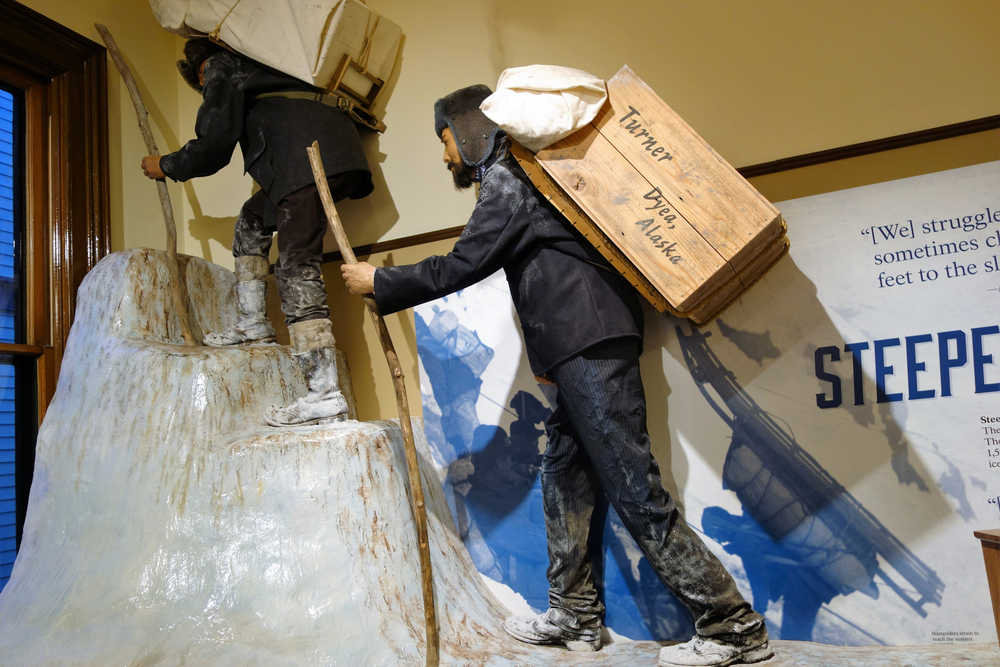
Stampeders climb the Golden Staircase in this Klondike Gold Rush exhibit.
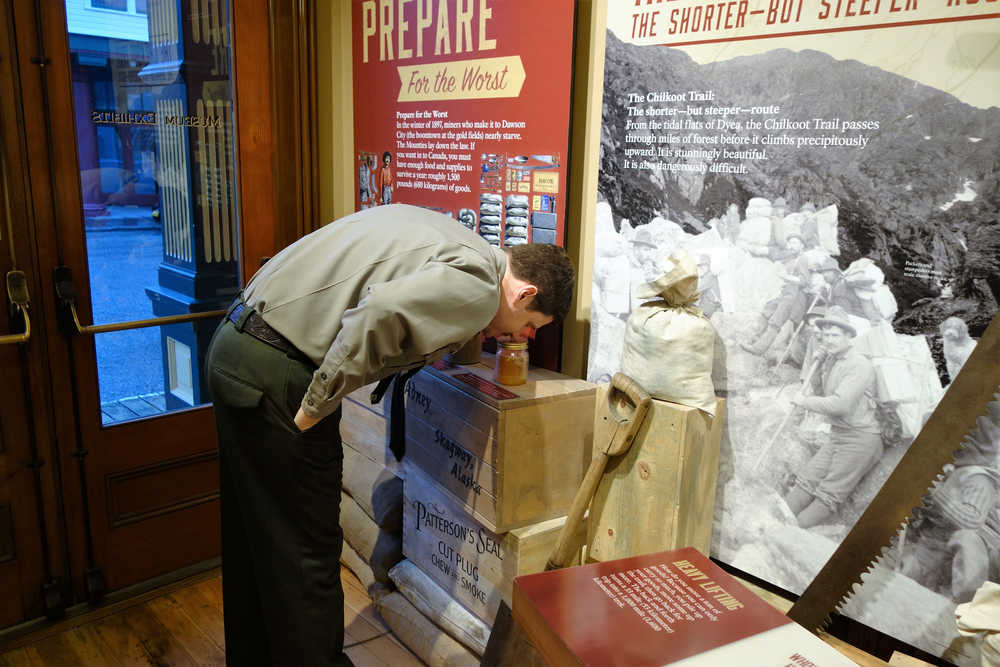
National Park Service employee Benjamin Hayes smells hooligan oil, a staple food for Tagish and Tlingit packers on the trail. it was a dip for dried fish and was used to keep berries, roots and salmon eggs fresh. The other jar is a sourdough starter for bread, biscuits and flapjacks.
