
Sealaska Heritage Institute (SHI) has launched its first apps that teach the Haida (X̱aad Kíl) and Tsimshian (Shm’algyack) languages, both of which are considered to be endangered.
Two of the free apps teach vocabulary and phrases in Haida and Tsimshian, while another teaches Native words for birds and ocean animals in an interactive environment. Both are available for iOS and Android mobile devices.
The effort is part of SHI’s quest to revitalize the Indigenous languages of Southeast Alaska, said SHI President Rosita Worl, Ph.D.
“We know when ancient languages are lost, a whole universe of wisdom dies with them. Indigenous languages contain so much knowledge about our planet, including history on ancient geographical events, such as glacial movement and climate change,” she said.
“We must do everything we can to revitalize our languages and to preserve Indigenous knowledge, and these apps are a part of that.”
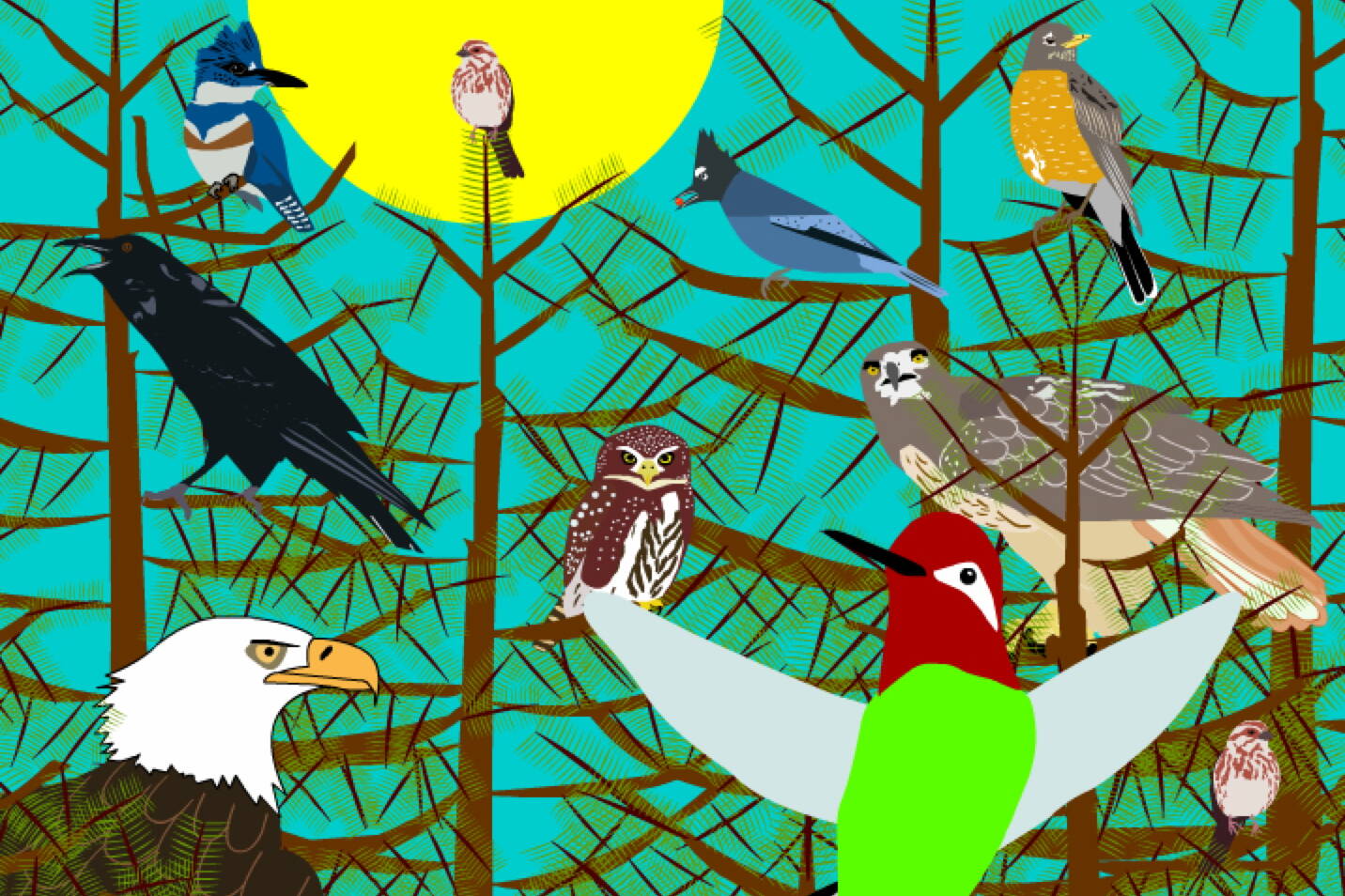
“SHI: Language Games,” builds on a platform formerly offered in only Tlingit. Now, users can scroll down to select Lingít, X̱aad Kíl or Shm’algyack. The app includes two programs that teach the words for birds commonly seen in Southeast Alaska and ocean animals indigenous to the region. As the birds and ocean animals move, users can click on them to see and hear the Native words.
The “Birds!” game teaches the words for eagle, raven, owl, hawk, Steller’s jay, robin, sparrow and kingfisher. The “Ocean Animals” game teaches the words for beluga whale, blue whale, humpback whale, seal, sea lion, porpoise, killerwhale, squid, jellyfish, herring and ocean.
Both games include quizzes and a feature that allows players to track their highest scores.
The “Learning X̱aad Kíl” and “Learning Shm’algyack” apps include sections on vocabulary, phrases and their respective alphabets, plus indices that show all of the words and phrases in alphabetic order by English translations. The apps also include links to YouTube videos that teach elements of the languages.
The Haida vocabulary is grouped into 41 categories that include animal body parts, animals, art, bathroom, beach, birds, body parts, buildings/structures, clothing, colors, commands, cultural art, fishing and hunting, food and meals, foods, home, insects, landscapes, location, mammals, matter/minerals/materials, Native Youth Olympics, numbers, nursery, ocean and beach, outside, person/people, plants, recreation, regalia, school, sea animals, sea vessels, sky/atmosphere, time, tools, transportation, verbs, water, weaving and wellness and health.
The Haida phrases include categories for plants and weather.
The Tsimshian vocabulary is grouped into 26 categories that include bathroom, beach, birds, body, building/structure, clothing, colors, cultural, fish, food, home, insects, kitchen, mammals, numbers, nursery, occupations, ocean, plants, pronouns, recreations, school, sea creatures, sky/objects in the sky/weather, tools and transportation.
The Tsimshian phrases include categories for beach, birds, body, building/structure, clothing, colors, cultural, fish, food, home, insects and kitchen.
Users have the option to turn off the English words and audio to immerse in the Native languages. Both apps include quizzes and a feature that allows players to track their highest scores.
SHI will continue to update the apps as new words and categories are added.
Haida translations were done by Skíl Jáadei Linda Schrack, Dag Júus Robert Yates, Kugíin-g Dúu Lauryn Framke, Susie Edwardson and Kelsey Thompson. Haida audio was recorded by Schrack and English audio was recorded by Thompson.
Tsimshian translations were done by Ggoadm ‘Teebn Victoria Mckoy and Shiggoap Alfie Price and audio was recorded by Price.
Both apps were developed for SHI by Wostmann & Associates of Juneau.
